- Tuesday, 9 June 2026

Local Governments In Local Development

Development is a deliberate process through which governments, communities and stakeholders work together to improve people’s economic, social, environmental and institutional conditions. It is a multidimensional multi-agency process. In Nepal, local development has gained new importance after the promulgation of the Constitution of Nepal 2015, as it established a federal system with three levels of government. The creation of 753 local governments provided greater authority, resources and responsibilities for local development. This was a profound change in the earlier decentralisation model.
Given its geographic and socio-cultural diversity, Nepal faces many development challenges such as poverty, inequality, unemployment, migration, weak infrastructure, climate vulnerability and limited institutional capacity. Many local governments and communities have introduced innovative practices to address these challenges and have demonstrated concrete results. These innovations have helped improve governance, environmental management, livelihood opportunities and citizen participation.
Community forestry
One of Nepal’s most successful and innovative local development activities is community forestry. Since the late 1970s, local communities have been given responsibility to manage nearby forests through Community Forest User Groups (CFUGs). This approach replaced centralised forest management with participatory local governance. Federalism has provided additional momentum to this silent revolution. Community forestry has significantly improved forest conservation and biodiversity protection. Forest cover in many areas has increased due to active local participation. At the same time, local people benefit economically through the sale of forest products such as timber, bamboo, herbs, and non-timber forest products. Revenue generated by community forests is often invested in schools, drinking water systems, roads and social welfare programmes. This has helped ground local development.
Another important innovation is the growing use of digital governance by local governments. Several municipalities have introduced technology-based systems to improve transparency, efficiency and public service delivery. For example, municipalities have implemented online tax payment systems, digital grievance management, online building permit approval, electronic attendance systems in schools and digital record management. These initiatives reduce bureaucratic delays and foster development at the local level. Citizens can access services in a faceless, cashless and faceless manner. During disasters and emergencies, digital systems also help improve coordination and communication for rescue, relief and rehabilitation operations.
Some local governments are moving toward “smart municipality” concepts by integrating information technology into urban planning, traffic management, health services and education systems. Although still in its early stages, digital governance represents an important step toward modernization and the accountable local administration needed for faster local development.
Participatory local governance has become another major innovation following federalisation, replacing the earlier centralised, top-down approach. Local governments increasingly involve citizens in planning and budgeting processes through ward meetings, public hearings, citizen forums and social audits. Communities are encouraged to identify local priorities and participate directly in decision-making. This bottom-up approach has helped ensure that development activities reflect the actual needs of local people and resources are allocated accordingly. This has also fostered ownership and inclusion in local development.
Local Economic Development (LED) has emerged as a key strategy for promoting employment and reducing poverty. Many municipalities are supporting local enterprises, agriculture commercialisation, tourism and small industries. Some local governments are promoting local products such as coffee, tea, allo fiber products, lokta paper, honey, herbal products, etc. Municipalities also organise agricultural fairs, entrepreneurship training and market linkage programmes in collaboration with federal, provincial governments and other development partners such as the private sectors, cooperatives and NGOs to support value chains and local industries.
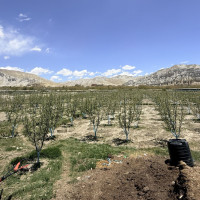
Tourism-based local development has also expanded. Rural municipalities promote homestays, eco-tourism, cultural tourism and religious tourism. These initiatives generate income, create jobs and help preserve local culture and traditions. The innovative aspect of LED lies in utilizing local resources, local skills, and local identity for sustainable development. Many local governments are also introducing innovative agricultural practices to improve productivity and climate resilience. Examples include organic farming promotion, drip irrigation systems, climate-smart agriculture, plastic tunnel farming, seed banks, farmer cooperatives and agroforestry systems.
Many local governments are implementing disaster risk reduction and climate adaptation programmes. Community-based early warning systems, river embankments, bioengineering techniques and climate-sensitive budgeting are becoming increasingly common. Such innovations help communities become more resilient while protecting natural resources and livelihoods.
Several local governments have also introduced innovative programmes in the education and health sectors. Smart classrooms, digital learning tools, teacher attendance monitoring systems and scholarship programmes are being implemented. In the health sector, local governments organise mobile health camps, nutrition programmes, maternal health services, telemedicine initiatives, and community health awareness campaigns. These programmes are particularly important in remote and underserved areas where access to services remains limited.
Challenges
However, Nepal still faces several challenges in implementing innovative local development activities. Many local governments lack technical expertise, skilled manpower and financial resources. Coordination among federal, provincial and local governments is still weak. In some cases, local governments struggle with procurement management, project monitoring and data systems. Further, many local governments face geographical difficulties, poor infrastructure and limited internet connectivity. These all have undermined local development efforts.
To conclude, many innovative local development activities of local governments demonstrate the growing capacity of local governments and communities to address development challenges. They have contributed to improving governance, livelihoods and environmental sustainability. The federal system has created opportunities for greater local autonomy and citizen participation. Although many challenges remain, Nepal’s experiences show that local innovation can become a powerful driver of local development.
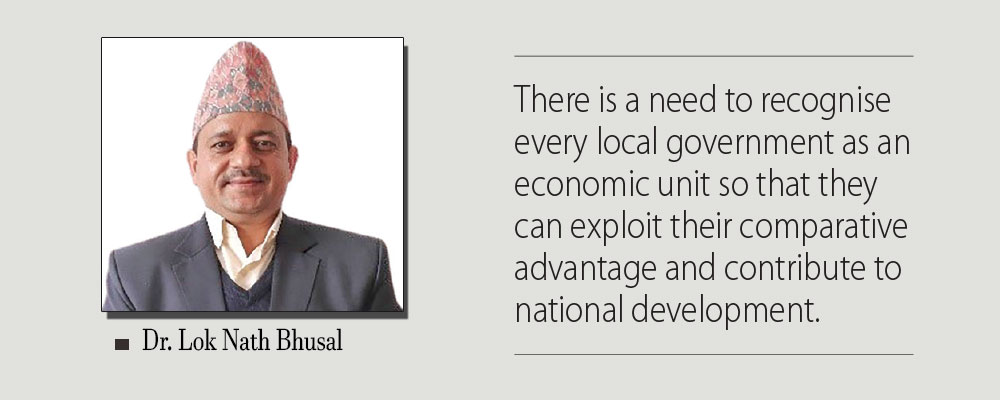
In the future, strengthening institutional capacity, improving technology, enhancing transparency and promoting inclusive participation will be essential for further progress. National development is impossible without local development. There is a need to recognise every local government as an economic unit so that they can exploit their comparative advantage and contribute to national development. This will also make them experimental laboratories for local development.
(Dr. Bhusal writes on developmental issues.)