- Tuesday, 2 June 2026

Institutional Change Ends Structural Violence

Poor people often struggle to acquire essential needs for their freedoms. This struggle aims to shun the pain of structural injustice. Its abolition requires modification in cognitive, rules and organisational behaviour. The easing of pain lies in dealing with unjust norms and institutions that start from the life’s full span from childhood to adulthood. For example, for long, Nepali girls are trained in tolerance, discipline and silence while boys in freedom, adventure and initiatives. Nepali constitution aims to rectify historical discrimination based on caste, race and gender through the creation of an equal society. It has endorsed many UN legal rules and human rights conventions, aiming to abolish injustice. Nepali state is a party to 24 international human rights conventions, including the elimination of all forms of discrimination against women and race. These templates orient Nepali state to policy change, allocation of budget and improve the standards of living. The state, NGOs, civil society, communities and social movements are fostering social and gender justice. Nepal has set up inclusive national commissions for women, labour and social groups to monitor the state of their rights and adopt institutional measures for their advancement. The government has openly apologised to Dalits and marginalised groups for the discrimination they faced and pledged to alleviate their anguish.
Fair inclusion
Fair inclusion of social groups in the state and public institutions through proportional representation, social enclosure, quota and positive discriminations can rectify the latent violence through institutional innovation and change and mainstream their life-possibilities. Patriarchy makes socialisation, differentiation and occupation in society, economy and political system for male and female unequal. Institutional change is a positive incentive which can bring society to an egalitarian path. In many conservative families, girl child suffer discrimination from the beginning of their birth in opportunities and roles in the public and private spheres. This happens in a latent way, in a sad silence and as a part of social prejudice. But this silence speaks to deep-seated woes and dissimilar conditions for life-prospect.
Structural violence is systemic in nature and its endurance turns society uncompetitive. It paralyses the social mobility of the weak by powerlessness, thus allowing social control of powerful though unfair social, economic and political practices. It creates an unequal society which is prone to conflict as the victims often defy order. Violence embedded in social, political and economic institutions sub-consciously marginalise weaker segments of Nepalis and flag their potential to realize self-worth. The vertical domination of classes, castes and gender in no way can be morally justified under democratic system. But the adoption of modernity has made the social control mechanism of power elites outdated. Nepali constitution provides equal rights and equal opportunities.
Still, the educational, economic and psychological preconditions to realise them are muddled thus creating a gap between legal equality and factual inequality in income, social status and an access to political agencies. In Nepal, this demands governance reforms to mainstream the poor, weak, women, Dalits and other groups in the structures. Maltreatment within families, nursing homes, hospitals and public spaces has exposed them to wounded dignity. The life of street children, older people, disabled, widows, beggars, low-skilled job-holders is awaiting humane treatment, not putting them under the carpet. Persons who complain face fear prosecution from authorities. Micro minorities complain about institutional discrimination in opportunities. They cannot compete with the already privileged on equal terms when their initial endowment is dismal. Nepali society is too diverse.
In many areas people are not effectively mobilised with the culture of democracy, human rights and modernity, enabling them to exercise their rights. Political mobilisation has provided a certain consciousness about the role of leaders, entrepreneurs and various authorities and thus demanding their accountability to break the spiral of silence. But poverty hits them hard while selective offering of opportunities to the articulate section of society makes the constitutional rights to work, health, education, social justice, social security, social protection etc. non-actionable. Reforms in the old practices of Chaupadi, Jhuma, Badi, witchcraft, widowhood, etc. in the rural society in the name of fatalism are demanding policy attention. Caste discrimination too amounts to unwritten transcripts of society entrenched in structural violence.
Now reforms of the patriarchal system, enforcement of law and abolition of the culture of impunity are underway. Many cases of violence have gone unnoticed in the past, some of them ending up in informal mediation deemed in Nepali “milapatra” are opening up. The lingering transitional justice is another area requiring policy intervention to address direct, structural and ideological violence. Oppression of Generation Z revolt against media freedom, anti-corruption and a demand for good governance witnessed direct violence consuming the lives of 76 youths and ruins of private and public property worth billions of rupees. It has, however, brought change in the political landscape and inclusion of a new generation of social and political leaders in the governance.
Economic efficiency
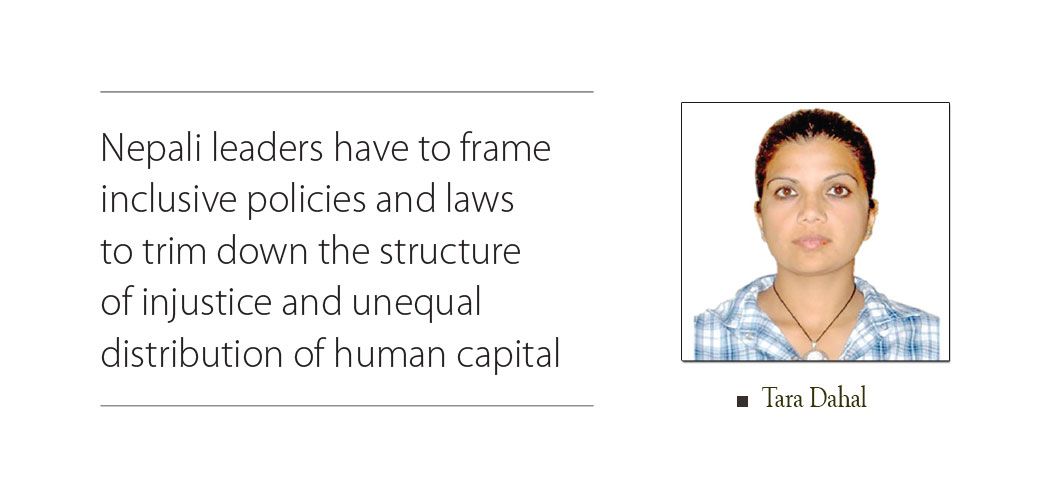
Children and youth are often placed in the forefront of any political stirs. Politics as an area of privilege, profit, position, impunity and “othering” of rivals impede social modernisation. It is vital to slice latent and manifest violence. Many steps are needed: the first step is the transformation of the public sphere to remove the structural condition of discrimination. Second step is social justice with economic efficiency. Nepali leaders have to frame inclusive policies and laws to trim down the structure of injustice and unequal distribution of human capital that has left about 20 per cent of people in the bottom of progress. Third step is the diffusion of education, information and skills to ease social mobility. Nepal has adopted rights-based democracy and development. Political will to implement them and international obligations can be expected to spark positive change.
Fourth step is fair income, property ownership, jobs, health, freedom and participation in productive resources. It can lay the edifice of positive peace. Material, institutional and capital support to the less privileged groups can uproot the structural causes of gender, class and caste inequality and nullify the future source of violence. And finally, inclusive politics infused with social justice can promote a process of nonviolent social change in the pattern of human rights, reconcile and heal the wounds, nurture social cohesion and promote fair accessibility to common good.
(Dahal holds an MA in Peace and Conflict from Otto-Von Guericke University, Germany.)