- Tuesday, 2 June 2026

Prosperity through cannabis farming
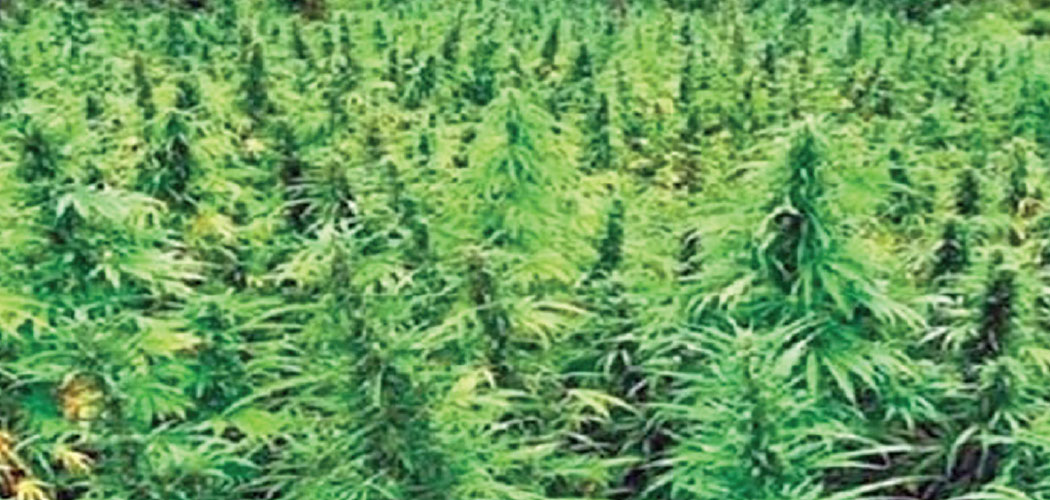

By Phadindra Adhikari, Lekhnath, May 4: Wild cannabis that grows naturally across Nepal’s hill regions has multiple uses, from roots and stems to leaves and seeds.
Yet, due to legal prohibition on one hand and the lack of industrial and medicinal utilisation on the other, it has largely remained confined to being treated as a narcotic.
Professor of pharmacology Panna Bahadur Thapa sums up its potential with a proverb, “For those who understand, it is like sandalwood, for those who don't, it is merely a hoe handle.”
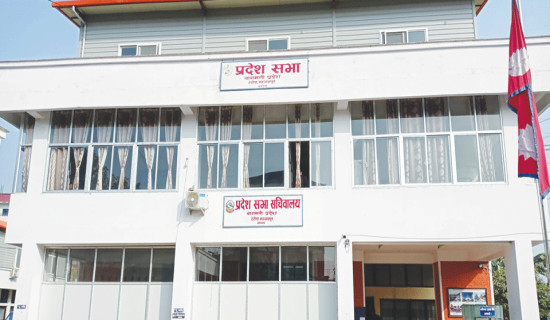
With the goal of boosting employment and economic growth, the Gandaki Province government is preparing a bill to regulate cannabis cultivation for medicinal and industrial purposes. This marks the country’s first attempt to legalise cannabis in a controlled framework.
“Cannabis is highly useful,” says Thapa. “It is used in medicines for epilepsy in children, pain relief, rheumatism, and loss of appetite.” “Research is also ongoing into its use for diabetes and cancer. It is a multi-purpose plant,” he said.
He adds that cannabis can be used to produce textiles and cosmetics, and that its cultivation may also have environmental benefits through carbon credits.
Dr. Ganesh Aidi, who has been studying cannabis and developing related products, says he has already brought hundreds of cannabis-based products to market and is exporting them abroad.
A Bill related to cannabis farming is currently under review at the provincial Finance and Development Committee. Committee chair Bhojraj Aryal says a report with recommendations will be prepared soon. “We have already held eight meetings on the bill,” he said.
“Experts and stakeholders have provided mostly positive suggestions. Even poison from a snake can be used as medicine,” said Aryal.
In Baglung district, cannabis (locally known as bhang) is cultivated in Tarakhola and Nisikhola rural municipalities, and products such as pickles made from it are available in markets.
Tarakhola Rural Municipality chair Dhan Bahadur B.K. says cannabis has long been used locally. “It can be used to make fibre, sacks, pickles, and medicines,” he said. “It is a herb; what matters is knowing how to use it,”
Nisikhola Rural Municipality chair Surya Bahadur Gharti supports granting legal recognition for its medicinal and industrial uses.
Gandaki Chief Minister Surendra Raj Pandey also says the proposed legal framework will allow cultivation strictly for these purposes.
Before 1976, cannabis cultivation and trade were not prohibited in Nepal.
However, after the enactment of the Narcotic Drugs Control Act that year, its cultivation, storage, consumption and sale were criminalised.
In recent years, as several countries have reconsidered cannabis cultivation for medicinal and industrial use, Nepal has also begun exploring its potential.
Some stakeholders, however, have expressed concerns that cannabis cultivation could lead to increased violence, social problems, and a rise in drug tourism.
Legal experts have also questioned whether the proposed bill may conflict with existing narcotics laws and face implementation challenges.
Senior Superintendent of Police Kul Bahadur Karki from the Provincial Police Office stated that drug control is already difficult, and legalisation could increase misuse. “There is also a need for technology to detect cannabis consumption,” he said.
“With current resources and manpower, monitoring and enforcement would be challenging.” Despite strict laws, cannabis cultivation continues in various areas.
Rights activist Sunil Pandey argues that naturally growing cannabis could be cultivated under strict conditions and used to produce medicines and other goods for economic benefit.
Key provisions of the bill
The bill proposes designating fallow, barren or low-productivity land for cannabis cultivation where feasible. Those interested in cultivation must obtain permits by meeting specified conditions, including prior consent.
Applications for less than two ropanis of land will not be granted prior approval. Before obtaining a licence, applicants must ensure infrastructure readiness and secure agreements with legally registered pharmaceutical or industrial companies guaranteeing the purchase of cannabis.
The bill allows authorities to designate specific areas for cultivation.
Licences may be revoked if holders operate without compliance, sell to unauthorised parties, fail to prepare infrastructure, or do not maintain proper records.
To ensure effective monitoring, the bill proposes a directive committee chaired by the Chief Minister, a regulatory and management unit under the ministry and local monitoring committees at ward level in cultivation areas.
Cultivation without permission, use of unauthorised land, or sale in violation of the law will incur penalties under narcotics legislation.
Other violations, such as failure to maintain records or transporting cannabis without proper sealing, could result in fines ranging from Rs. 50,000 to Rs. 500,000, depending on the severity of the offence.
The bill also includes a provision allowing the provincial government to halt cannabis cultivation if future research shows adverse effects on human health.