- Wednesday, 22 April 2026

Movement on 2nd round of US-Iran ceasefire talks
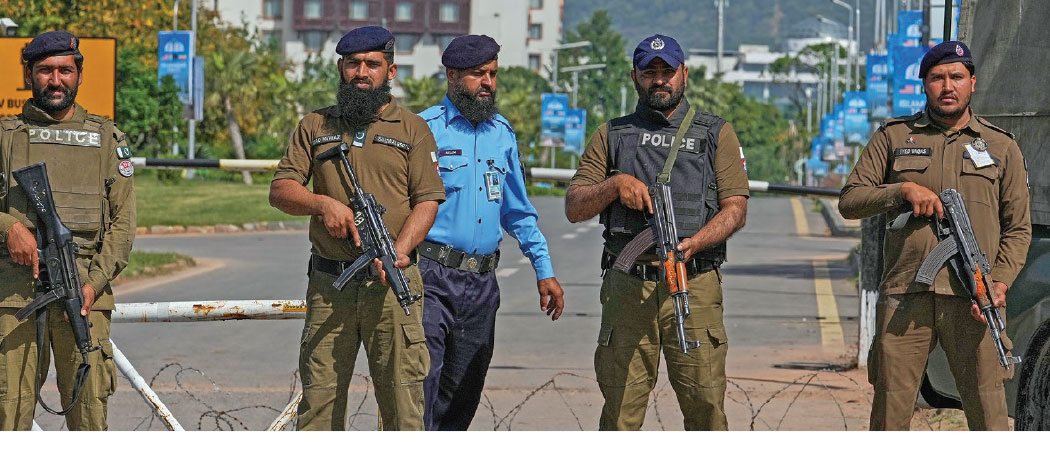

Islamabad, Apr. 22: There appeared to be movement toward another round of U.S.-Iran ceasefire talks Tuesday as two regional officials told The Associated Press that both countries have signaled a return to Pakistan for discussions. There was no immediate word on timing of talks.
A fragile ceasefire is set to expire. The countries have sent mixed messages, while global markets and consumers wait.
Iran's chief negotiator, parliament speaker Mohammed Bagher Qalibaf, had said Iran wouldn't negotiate in the face of threats, while U.S. President Donald Trump had declared he was in no rush to end the conflict.
But now both Qalibaf and U.S. Vice President JD Vance are expected to arrive in Islamabad early Wednesday. The navy says it successfully conducted a live firing of the Taimoor air-launched missile. The announcement comes amid the Pakistani navy's ongoing efforts to escort merchant vessels transiting key routes including the Strait of Hormuz.
The Pentagon on social media says U.S. forces "conducted a right-of-visit maritime interdiction" and boarded the M/T Tifani "without incident." Ship-tracking data showed the Tifani in the Indian Ocean between Sri Lanka and Indonesia. The announcement described the boarding as happening overnight. It added that "international waters are not a refuge for sanctioned vessels." Neither the U.S. nor Iran have publicly confirmed the timing of talks. Iranian state television has denied any official is already in Pakistan's capital.
Pakistan-led mediators received confirmation that the top negotiators, U.S. Vice President JD Vance and Iran's parliament speaker Mohammad Bagher Qalibaf, will arrive in Islamabad early Wednesday, the officials told The Associated Press. The officials spoke on condition of anonymity because they were not authorized to brief reporters.
"We are now urgently calling on Iran to come to Islamabad and engage in constructive negotiations with the United States," Foreign Minister Johann Wadephul said Tuesday on the sidelines of the European Union foreign ministers meeting in Luxembourg.
Wadephul pointed out that U.S. Vice President JD Vance is ready to travel to Pakistan and that "Iran should now take this outstretched hand in the interest of its own people." He also called on the American side to continue to keep its openness to negotiate with Iran. "I believe there is still a window of opportunity to end this war through negotiations," Wadephul said.
The German foreign minister also called on Iran "to immediately restore free and safe navigation through the Strait of Hormuz." The conflict in the Middle East has triggered "the most severe energy crisis in a generation," U.N. Secretary-General António Guterres said on Tuesday, speaking remotely from New York to a climate conference in Berlin.
The current crisis, he said, makes it clear that "fossil fuels are not just wrecking our planet, they are holding economies hostage."
Guterres said that the energy crisis should be solved without exacerbating the climate crisis and that can be done by investing in homegrown renewables, developing the infrastructure to support them and providing financing for less developed economies to transition away from fossil fuels.
The Iran war has locked the world in much higher fossil fuel costs for months and likely years to come, U.N. climate chief Simon Stiell said on Tuesday in Berlin. "Fossil fuel driven stagflation is now stalking economies, driving up prices, driving down growth, pushing budgets deeper into the quagmire of debt and stripping away governments' policy options and autonomy," he said.(AP)