- Tuesday, 21 April 2026

Syangja children learn sarangi from elders
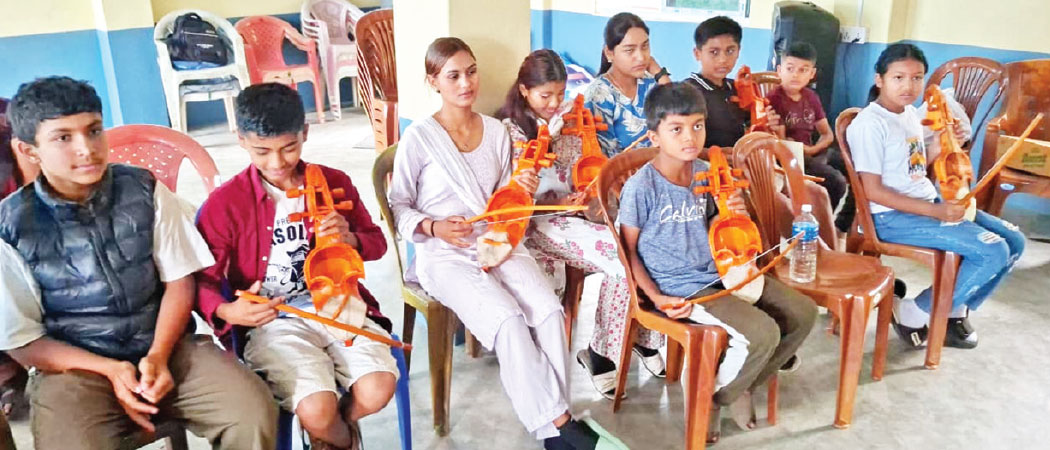
Photo: Arjun Kafle

By Arjun Kafle, Syangja, Apr. 21: In the past, sarangi was played to convey informational messages to villagers through song and also to express the joys and sorrows through the melodious tunes of the instrument. Today, however, such scenes have become rare in villages and marketplaces.
Sarangi, a traditional musical instrument, is no longer commonly played in rural areas, as the new generation has lost interest in it.
Jivika Pariyar, a seventh-grade student at Syangja Higher Secondary School, has been enjoying a term break as the academic session has not yet begun. During this time, she has learned to play the traditional Nepali instrument, sarangi, from a senior citizen.
Similarly, Susant Gandharva, a student at Tribhuvan Adarsh Secondary School, said that learning to play sarangi, both a traditional instrument and part of a fading profession, will support his dream of becoming a musician in the future.
Like Jivika and Susant, 20 children in the area have learned to play the sarangi during the break before the new academic session.
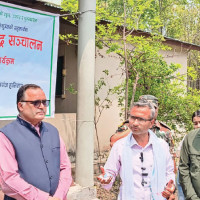
The Gandaki Province Integrated Service Office, Syangja, has initiated a programme to pass on sarangi-playing skills to children. This effort is part of a 10-day intergenerational knowledge, skills, and experience transfer programme organised in Putalibazaar-13, Lampata.
Jeevan Poudel, Chief of the Integrated Service Office, Syangja, said that sarangi, a traditional instrument of the Gandharva community, is a priceless asset of Nepali culture and heritage. He added that its preservation, promotion, and transmission can positively influence children’s creativity, patience, concentration, and emotional development.
Trainer Suryaman Gandharva said that passing on the skill of playing the sarangi is not only about teaching an art form but also about preserving culture, identity, and values.
Juddha Bahadur Rana, Ward Chair of Putali Bazaar Municipality Ward No. 13, said that when senior citizens and children exchange skills, it fosters mutual love, respect, and understanding. He added that such interactions help maintain harmony within families and society, inspire children to become artists in the future, and ensure the transfer of social values and experience.