- Monday, 8 June 2026

Economic Reform Essential For Growth

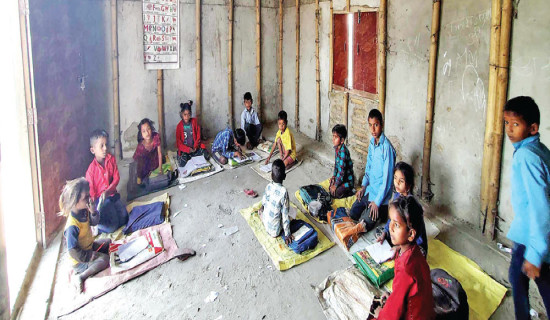
Following the election on 5 March 2026, the Rastriya Swatantra Party has formed a government with a landslide victory. A chance of political stability presents a crucial opportunity to initiate long-overdue economic reforms to meet the aspirations of prosperous Nepal. Some socio-economic progress has been achieved in the past: per capita income has risen to approximately $1,500, and social indicators such as literacy, female school enrolment, and life expectancy have improved. Infant and maternal mortality rates have dropped. Access to electricity, clean drinking water, and telecommunications now reaches close to the entire population, and the road network has reached all district headquarters.
However, beneath these achievements lies a sluggish and weak economy. Nepal’s average growth rate is hovering around 4 per cent, resulting in the lowest per capita income in South Asia. The lack of enough domestic employment opportunities forces millions of youth to seek foreign employment. The post-COVID-19 period has seen stagnating investment and a declining gross capital formation-to-GDP ratio. Despite excess liquidity in banks with historical low interest rates, credit uptake has been very low, reflecting weak investment. Non-performing loans are rising, challenging the financial stability. Many saving and credit cooperatives are in trouble, depriving many depositors of getting their own savings.
Cooperative crisis
Cooperative crisis has also contributed to recent economic slackness because many Micro, Small, and Medium Enterprises (MSMEs) rely on it for credit. On the other hand, rapid out-migration has reduced the aggregate domestic demand. Private sector morale is low, and the real estate market is sluggish. Nepal is in FATF's grey list due to poor governance and weakness in preventing money laundering activities. The quality of education, health, and drinking water is low, and public service delivery is still weak. Poor project selection, inefficient budget allocation and weak implementation have caused time and cost overruns, yielding low economic returns. Consequently, growth and revenue mobilisation remain weak, though public debt has jumped up to about Rs. 2.9 trillion.
The external sector is also vulnerable. Exports are weak, imports are high, because of which the trade deficit has been widening continuously. Although remittances inflow has been contributing to building up foreign exchange reserves, the dominance of imports over exports has been weakening demand for domestic goods. As Nepal is transiting this year from a least developed country status, it will further risks losing grants, export preferences, and easy use of intellectual property. This is going to further weaken exports, eliminate jobs, and dampen economic growth.
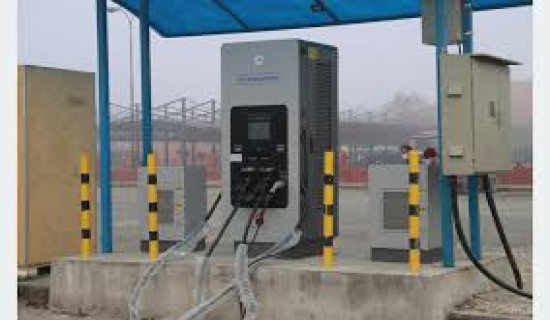
Despite these challenges, significant opportunities exist. Nepal can produce massive amounts of hydropower for domestic use and export. Recently, electricity exports to India have outpaced imports. However, due to a lack of sufficient reservoir projects, Nepal itself lacks year-round self-sufficiency. Tourism holds high potential, but only about 1.2 million tourists visit Nepal annually. With 46 per cent forest cover, forest-based industries and production of high-value medicinal herbs are possible. So far, there are untapped minerals such as petroleum gas in Dailekh and iron ore in Dhauwadi, which offer further potential. Cement production from abundant limestone has already made Nepal self-sufficient in cement. While industrial competitiveness is hampered by landlocked geography, information technology (IT) offers a new hope, as reflected in rising IT service exports.
Nepal’s main failure is weak implementation of policies, strategies, and projects, due mainly to weak institutional capacity and commitment, as a result of unstable politics, policy and bureaucracy, along with inadequate provisions of punishment and reward. The right people are rarely placed in the right roles. Projects are often selected by political motive rather than for economic returns. Many laws, rules, and regulations contradict each other. Lawmakers mainly focus on development works in their own constituency. Because of inadequate investment in study and research, policies are not much evidence based. The private sector also fails to innovate or build a competitive workforce. Population growth has been decelerating, resulting in labour shortages in agriculture, construction, and manufacturing.
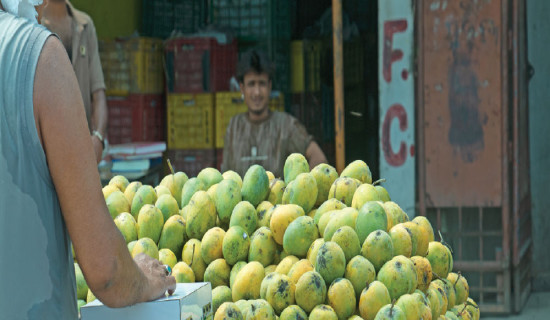
A wide range of economic reforms is needed, which must focus on achieving high economic growth by increasing both aggregate demand and aggregate supply. Aggregate demand includes consumption, investment, government spending, and net exports. Consumption is high, but we consume more imported goods. A policy should prioritise the consumption of domestic goods, and attempts should be made to reduce production costs by providing easy access to land, energy, and capital. Investment requires an investment-friendly environment, which can be built by removing legal and administrative hassles, building infrastructure, simplifying taxes, ensuring credit access, promoting entrepreneurship with startup ecosystems, facilitating technology transfer, and encouraging foreign investment.
The cooperative crisis should be resolved amicably by establishing a rescue fund and managing the assets of troubled cooperatives. Capital expenditure must increase the productivity of the economy. Project development units within ministries or the National Planning Commission should be established to improve project selection and preparation, focusing on high-return projects. Fiscal policy across all three government levels must be expansionary. External competitiveness should be enhanced by implementing the National Integrated Trade Strategy effectively, enhancing economic diplomacy, improving logistics, and addressing non-trade barriers, and through quality certification.
Investment
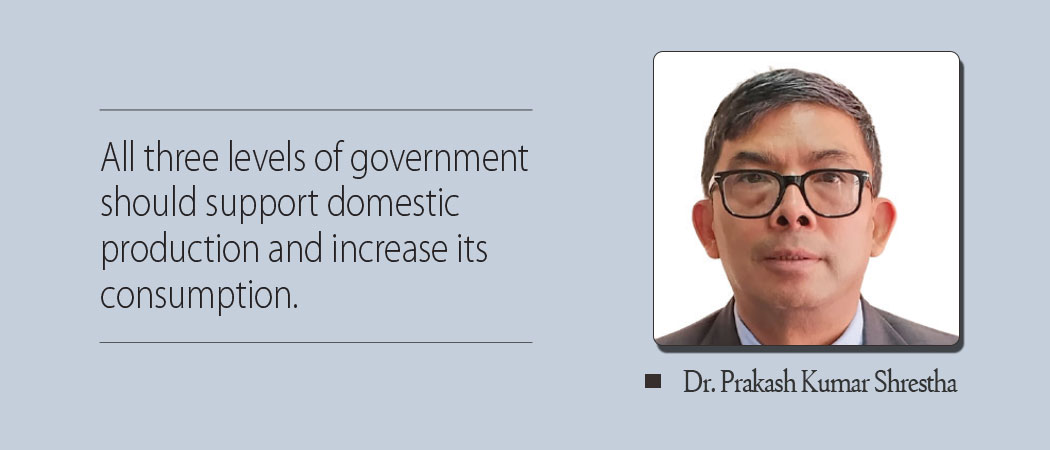
In the aggregate supply side, investment should be enhanced in agriculture, industry, tourism, hydropower, and IT by dismantling legal and administrative barriers. Reform should maximise the utilisation of available natural resources such as water, land, forests, and minerals; produce high-value agricultural and herbal products; develop quality technical education; reduce tax burden; and formalise the economy to increase the tax base. All three levels of government should support domestic production and increase its consumption. The working capacity of government machinery and public institutions should be improved.
At the end, the strong, near-two-thirds majority government has a unique opportunity to act without delay. The new government should enact necessary and long-overdue laws for the federal system, remove legal obstacles, distribute responsibilities among the three tiers of government, strengthen institutional capacity, and enhance good governance.
(The author is a former vice chair of the National Planning Commission.)
-square-thumb.jpg)