- Monday, 8 June 2026

Adhikari's lyrics still capitivate audiences

by Amar Raj Naharki
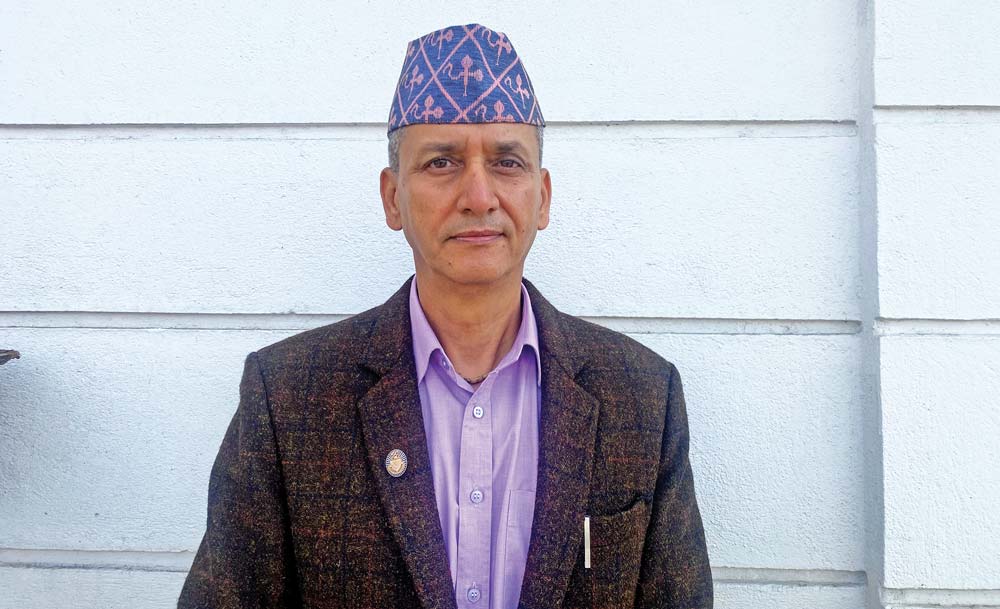
Tanahun, Apr. 8: Anand Adhikari is one of the few individuals who have consistently contributed to Nepali music.
Born on 17 January 1967 in Maharajgunj, Kathmandu, Adhikari is the eldest son of the late Madhav Raj Adhikari and the late Alka Devi Adhikari. With a passion for poetry from his school days, he has written around 400 melodious songs during a career spanning more than three and a half decades.
A defining characteristic of Adhikari’s work is the seamless integration of nature and human emotion. A notable example is the iconic song Himnadi Jhai Yo Maya from the film Aafno Manche.
Reflecting on its creation, Adhikari said, “The director requested a song that could link nature with love. Based on that, I used the metaphor of a glacier to reflect the vastness of nature and the depth of love.”
This song, featuring the voices of world-renowned singers Udit Narayan Jha and Deepa Jha, with music by Shambhujeet Baskota, remains a favourite among Nepali music lovers. In his lyrics, natural elements such as rivers, hills and mountains often seem to echo human emotions.
Another major hit in his career is Baanchunjelilai, which holds the distinction of being the last Nepali song recorded by the legendary late singer Lata Mangeshkar.
Adhikari’s musical journey began in 1990 through Radio Nepal with the song Timi Haansi Deu Jindagi Haanscha.
Since then, many of his creations, including Orali Lageko Harinko Chaal Bho, Hira Katne Hiraima Rakhera, and Phoolko Thunga Mathi Mutu, have become timeless classics.
Even in the digital era, his lyrics continue to break records. The song ‘Maya Luki Luki’ has garnered over 165 million views on YouTube.
An accomplished academic, Adhikari holds Master’s degrees in four different subjects. He has been honoured with prestigious awards like Prabal Gorkha Dakshin Bahu and Suprabal Janasewashree for his service to the nation.
In the field of music, he has received awards including the Chhinalata Geet Puraskar and the Natikaji Bishishta Sangeet Samman.
Having travelled to over 67 countries, Adhikari views life through the profound philosophy of music.