- Sunday, 7 June 2026

Bagmati Provincial Assembly sans Speaker for over six months
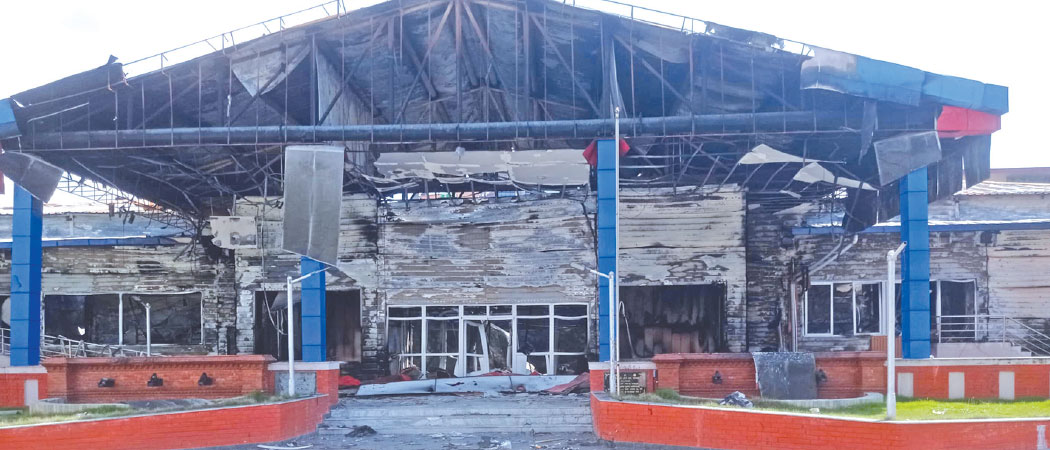
Photo: Rammani Dahal The Bagmati Provincial Assembly building damaged by arson during the Gen-Z protests in September

By Rammani Dahal,Makwanpur, Mar. 31: The Bagmati Provincial Assembly has remained without a Speaker for more than six and a half months.
The position has fallen vacant since September 17, following the resignation of the then Speaker, Bhuwan Kumar Pathak. With the Speaker’s post lying vacant, several functions of the Provincial Assembly have not been carried out effectively.
Pathak had announced his resignation via social media, Facebook, shortly after the Gen-Z protests of September 8-9 and formally stepped down on September 17. Assembly Secretary Ram Kumar Paudel stated that there has been a delay in electing a new Speaker.
He informed that this delay has stalled discussions and the passage of both existing and newly registered bills in the Assembly. The delay in electing a Speaker has been attributed to a lack of consensus between the ruling coalition partners in Bagmati Province, the Nepali Congress and CPN-UML. Both parties have been staking
their claim to the position.
According to procedural provisions, once a Speaker resigns, the Assembly must be informed either during a sitting or through a public notice if the Assembly is not in session.
Accordingly, on November 20, Secretary Paudel published a notice confirming that Pathak resigned from the post on September 17. Pathak is a Provincial Assembly member from the Rastriya Prajatantra Party.
The sixth session of the Bagmati Provincial Assembly, which began on May 19, 2025, was prorogued on the night of November 20.
During this session, the Assembly convened 24 meetings over 21 days, according to the Provincial Assembly Secretariat.
Secretary Paudel reported that a total of 64 hours and 57 minutes were spent on parliamentary proceedings during this period.
Despite being the budget session, the government was unable to provide sufficient business to the Assembly, resulting in limited progress in law-making.
The sixth session has been regarded as weak in terms of legislative output.
Although it remained in operation for 186 days, much of the time was consumed by disputes over the budget, repeated adjournments, internal conflicts within the ruling parties, government formation and dissolution, and votes of confidence by the Chief Minister.