- Thursday, 30 April 2026

Jajarkot earthquake victims still homeless, Dalit, marginalised hit hard
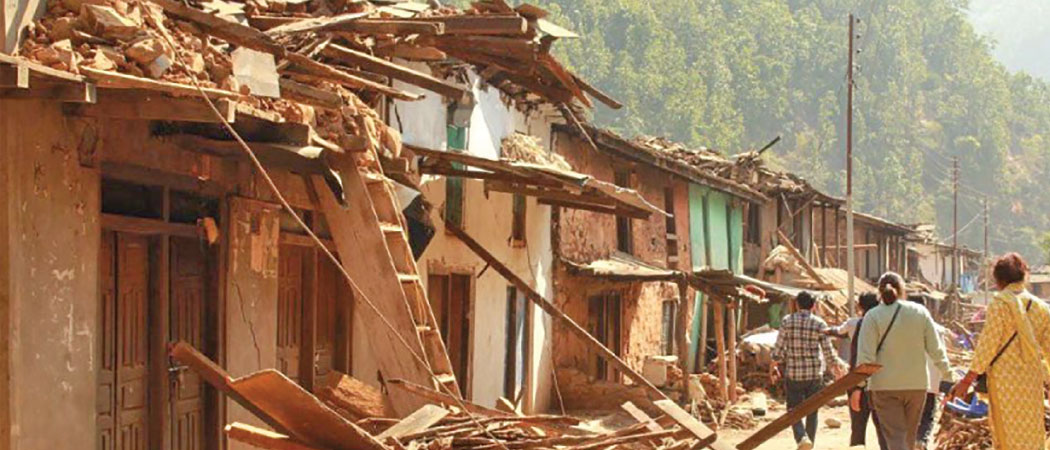

BY BASUDEV SHARMA, Jajarkot, Mar. 29: Three years have elapsed since the earthquake victims began waiting for reconstruction. Hoping that the government would provide funds to rebuild their homes, many victims have been forced to live under tin roofs after long delays in receiving financial support.
In Rawat village of Bheri Municipality-1, a village predominantly inhabited by poor, Dalit, and indigenous communities, around 36 residents lost their lives in the earthquake. Approximately 150 households are still forced to live under temporary shelters. Due to the weaknesses of local authorities and concerned agencies, they have been deprived of safe housing.
Many earthquake-affected families, who survive on daily wage labour just to manage their basic meals, are still suffering as reconstruction work has not gained momentum, even though it is supposed to be in its final stage. The slow pace of reconstruction has left poor, Dalit, and marginalised families in serious difficulty. Even after three years, the lack of progress has left victims increasingly disappointed.
Chief District Officer Raju Prasad Paudel stated that seven local governments had initially submitted details of 48,516 beneficiaries after the earthquake. Based on this, the government distributed the first instalment to 41,711 beneficiaries and the second instalment to 35,583 beneficiaries. However, 6,128 beneficiaries have still not received the second instalment.
According to Paudel, although 48,000 households were initially identified as beneficiaries, detailed damage assessments (DDA) later confirmed 26,989 households. Among those assessed, 14,225 houses require reconstruction, while 12,744 require retrofitting.
Although the agreement process for 4,595 beneficiaries has moved forward, only 720 beneficiaries from Ward Nos. 3, 8, and 11 of Bheri Municipality have signed reconstruction agreements among the seven local governments. He stated that the lack of seriousness from local authorities and concerned agencies had worsened the situation of earthquake victims.
Rajendra Bikram Shah, coordinator of civil society, said that instead of spending time in meetings and discussions, authorities should begin rebuilding houses for families who lost members in the disaster. He added that beneficiaries who had already signed agreements should immediately receive reconstruction grants, those who had completed procedures should be promptly contracted and funded, errors in the detailed damage assessment should be corrected, and those left out should be reassessed. He stated that despite raising these concerns with the authorities, no action had been taken.
Bir Bahadur Nepali of Bheri Municipality-1 said that although he signed an agreement with the local government for reconstruction, he has not received any funds. Even after waiting for two years with hopes of rebuilding their homes, delays from local authorities and concerned agencies have forced earthquake-affected families to continue suffering.
Another local, Purna Bahadur Rawat, said that while the pain of losing family members in the earthquake still lingers, negligence from authorities at all three levels of government has made life even more difficult. He said that poor, marginalised, Dalit, and working-class people who rely on daily wages were struggling to survive. Families barely managing their daily meals cannot afford to build houses and had hoped for government assistance, but are now disheartened. He added that the failure of local governments to address people’s problems on time had worsened their hardships.
Locals have urged the National Disaster Risk Reduction and Management Authority and the District Disaster Risk Reduction Committee to prioritise immediate reconstruction efforts rather than just conducting programmes. Chief District Officer Paudel said that efforts were being made toward reconstruction for earthquake victims.
He also said that delays had occurred due to the absence of local-level officials in key programmes and the lack of sufficient manpower within the authority. Additionally, improper submission of beneficiary data had created obstacles in fund disbursement.
-original-thumb.jpg)