- Thursday, 30 April 2026

Ban on Diclofenac protects vulture
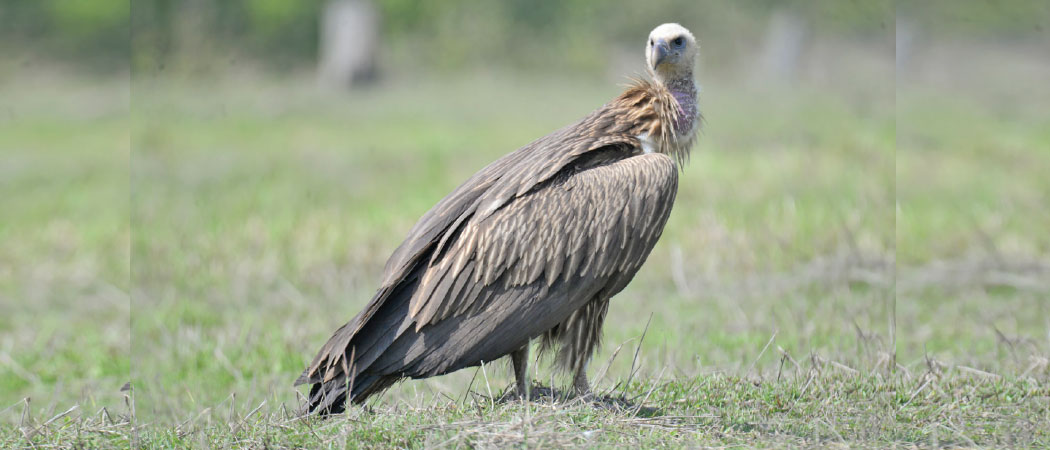
Photo courtesy: Hirulal Dagoura The mountain vulture seen in Baitadi.

By Gokarna Dayal,Baitadi, Mar. 27: According to Hirulal Dagoura of Bird Conservation Nepal’s (BCN) provincial office in Dhangadhi, a study was conducted among veterinarians, medicine sellers and local communities across several districts. The findings confirmed that diclofenac, a drug previously banned due to its deadly impact on vultures, is no longer in use. Instead, safer alternatives such as meloxicam and tolfenamic acid are currently being used to treat livestock.
Baitadi is home to several endangered vulture species, with nesting sites found in different parts of the district. Known as nature’s cleaners, vultures play a crucial role in maintaining ecological balance.
BCN has been actively surveying vulture populations in the area. During these surveys, Himalayan griffons have been recorded nesting on high cliffs across the district. The study also found that the breeding success rate of vultures in the district stands at around 75 per cent.
Of the nine vulture species found in Nepal, Baitadi has the highest population among hill districts in Sudurpashchim Province, after Kanchanpur and Kailali, Dagoura said. Nests of endangered vultures have been located on steep cliffs around Khodpe in Patan Municipality-8.
Similarly, nests of long-billed vultures have also been found in the neighbouring Dadeldhura district. Other species recorded in Baitadi include Egyptian vultures, white-rumped vultures, Himalayan griffons, bearded vultures and red-headed vultures. Officials from BCN have been visiting Baitadi and other districts in Sudurpashchim to monitor and protect vulture populations. Dagoura said the district appears to be a suitable and relatively safe habitat for vultures. Food shortages and forest fires pose challenges.
Despite their importance, vultures in hill districts are increasingly facing a shortage of food. Farmers are now burying dead livestock, reducing food availability for scavenging birds. In addition, forest fires have been threatening vulture nesting sites.
Gumani Datta Panta, acting chief of the Veterinary Hospital and Livestock Service Expert Centre in Patan, Baitadi, said diclofenac is no longer used in livestock treatment.
“Earlier, when animals treated with diclofenac died and were eaten by vultures, it caused kidney failure in the birds. Now the drug has been completely phased out, and medicines currently in use do not harm vultures,” he said. However, he added that burying dead animals may be contributing to food shortages for vultures.
Dagoura also identified forest fires as another major challenge in Baitadi. Studies have shown that vulture populations have declined by up to 90 per cent over the past two decades in Nepal.
“Vultures breed between December and February, laying eggs and incubating them for around 75 days. The chicks hatch around March to April, which coincides with the forest fire season in Baitadi. This has put nesting sites at serious risk,” he said.
Last March/April, severe forest fires broke out in the forests of Patan Municipality-8, 9 and 10, where vultures had built their nests.
Bhakta Raj Giri, chief of the Division Forest Office in Baitadi, said awareness programmes will be conducted through community forest user groups to prevent forest fires in the future.
-original-thumb.jpg)