- Thursday, 30 April 2026

No fertiliser shortage in Koshi
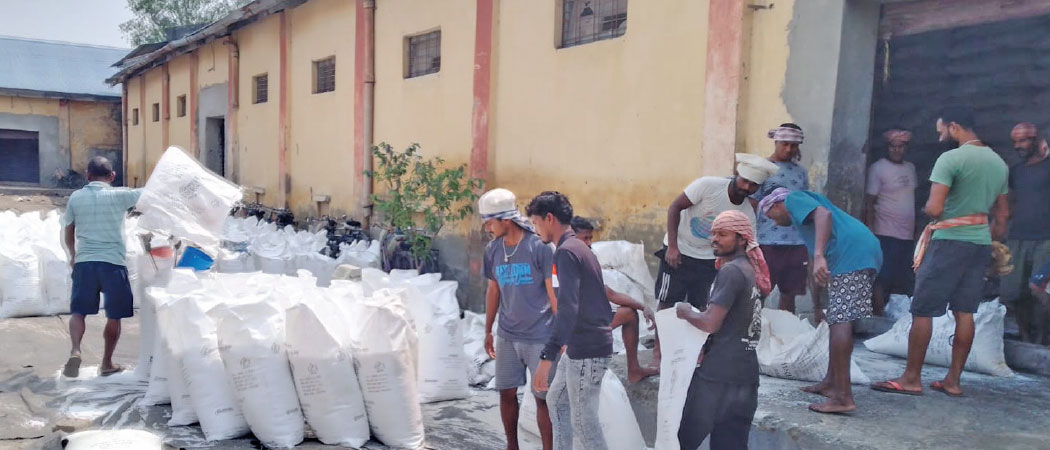

By Shahidhar Parajuli,Biratnagar, Mar. 21: Farmers in Koshi Province, who in previous years faced acute shortages of chemical fertiliser at the start of the planting season, have experienced relief this year, with no complaints reported so far.
In particular, there have been no reports of shortages during the winter maize and spring paddy cultivation seasons.
According to the regional office of Agricultural Inputs Company Limited in Biratnagar, fertiliser supply and stock levels in the region are currently satisfactory.
Acting Chief of the Company Kamal Pokharel said that distribution has been streamlined across 16 districts, 14 in Koshi Province and two in Madhes Province, namely Siraha and Saptari.
The latest data show that the Biratnagar office alone holds around 14,000 metric tonnes of urea fertiliser in stock.
At the provincial level, total reserves stand at 16,856 metric tonnes of urea, 2,472 metric tonnes of DAP, and 3,412 metric tonnes of potash. Of this, approximately 7,000 metric tonnes have been set aside as buffer stock for emergencies.
“We have been ensuring regular fertiliser supply throughout the winter this year,” Pokharel said. “While dealers received fertiliser only three times last year, deliveries have already been made up to six times this year.”
Despite high demand for urea, DAP and potash in maize cultivation, he claimed that improved supply management has prevented any shortages. In Biratnagar, the price of urea has been fixed at Rs. 750 per sack, with slight variations elsewhere depending on transportation costs.
To streamline distribution, around 750 cooperatives have been mobilised across Koshi Province. Of these, the Biratnagar office supplies fertiliser through 325 cooperatives in Morang, Bhojpur and Sankhuwasabha districts. Distribution in other districts is being managed through branch offices in Biratnagar, Birtamod, Itahari, Inaruwa and Dhankuta.
The company has also accelerated preparations for the upcoming spring and monsoon paddy seasons. Required quotas have already been determined and requested from the central office, which has initiated the tender process, raising confidence that shortages will not occur in the future.
However, Pokharel cautioned that international developments could pose challenges. “Fertiliser availability is sufficient at present, but if the ongoing conflict in the Middle East is prolonged, it could disrupt the global supply chain,” he warned. He suggested that the government take timely measures to maintain a steady supply.
For now, farmers in Koshi are continuing their maize and spring paddy farming activities without concern.