- Sunday, 31 May 2026

Everyday hazards emerging as deadliest threat
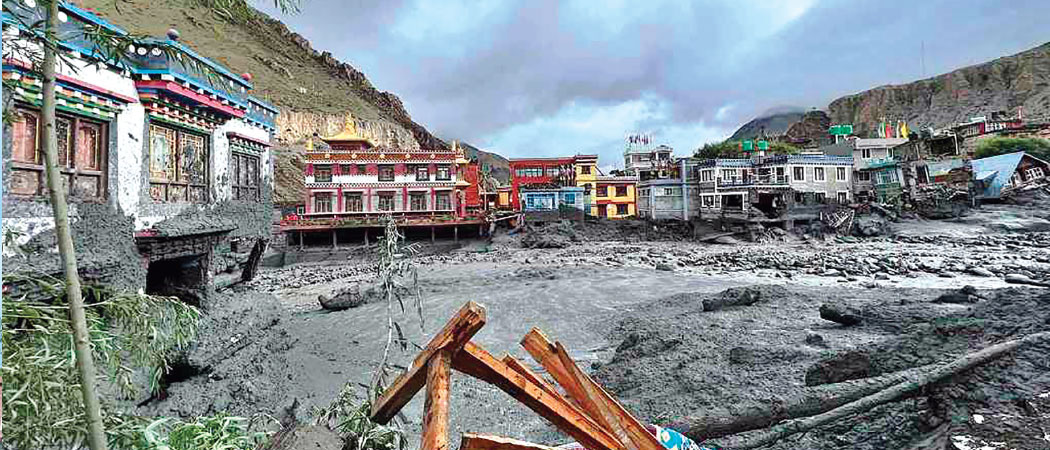

Kathmandu, Mar. 18: As the country continues to grapple with the realities of climate variability and geographical vulnerability, the challenge is no longer just about responding to disasters when they strike. It is about recognising the dangers that strike quietly, repeatedly, and often unnoticed.
Yet, a closer look at recent nationwide data reveals a more unsettling truth: in the country, it is not the rare catastrophes but the quiet, recurring hazards that are claiming the most lives every year.
According to compiled figures, the country recorded a total of 6,739 disaster-related incidents, affecting over 13,500 families and resulting in 497 deaths in the last 12 months from mid-April, 2025 to mid-March, 2026.
While landslides and floods remain significant threats, the most pervasive and deadly danger comes from a far less conspicuous source, snakebites.
With a staggering 3,366 recorded incidents, snakebites account for nearly half of all disaster cases. More striking still, they have led to 100 deaths, the highest among all categories. In rural communities, particularly across the Tarai plains, encounters between humans and snakes are not unusual. But the scale of these incidents underscores a deeper issue, limited access to timely medical treatment and awareness.
“People often underestimate snakebites because they happen individually, not as a single large event,” said disaster management expert Dr. Gangalal Tuladhar. “But collectively, they form one of the country’s most serious public health threats.”
Closely following in fatalities are landslides, which have claimed 74 lives in 596 incidents. These typically occur during the monsoon season, when heavy rainfall destabilises hillsides, burying homes and blocking vital roads. Floods, too, remain a persistent danger, with 46 deaths and hundreds injured, said Dr. Tuladhar.
However, it is lightning strikes that emerge as the leading cause of injury. With 503 people injured across 514 incidents, lightning represents an often overlooked but highly dangerous natural hazard. In open agricultural fields, where many work without adequate shelter, a sudden storm can turn deadly within seconds.
Fire incidents also stand out for their widespread impact, affecting 3,304 families, second only to snakebites. Though causing comparatively fewer deaths, fires frequently destroy homes and livelihoods, leaving long-term economic scars, opined Dr. Tuladhar.
In contrast, large-scale disasters such as earthquakes, avalanches, and epidemics appear almost negligible in this dataset. Yet experts caution against complacency. “The absence of major earthquakes in this period does not mean the risk has diminished,” Anil Pokhrel, former CEO of NDRRMA, said.
“It simply highlights that our everyday vulnerabilities are already overwhelming,” claimed Pokhrel.
He said that the implications for disaster management are profound.
Traditional approaches, often geared towards emergency response for major events, may need rethinking. Instead, there is growing recognition that preventive measures, public awareness, rural healthcare access, early warning systems, and local preparedness, could save more lives.