- Tuesday, 14 April 2026

Preparation completed for Seto Machhindranath chariot festival
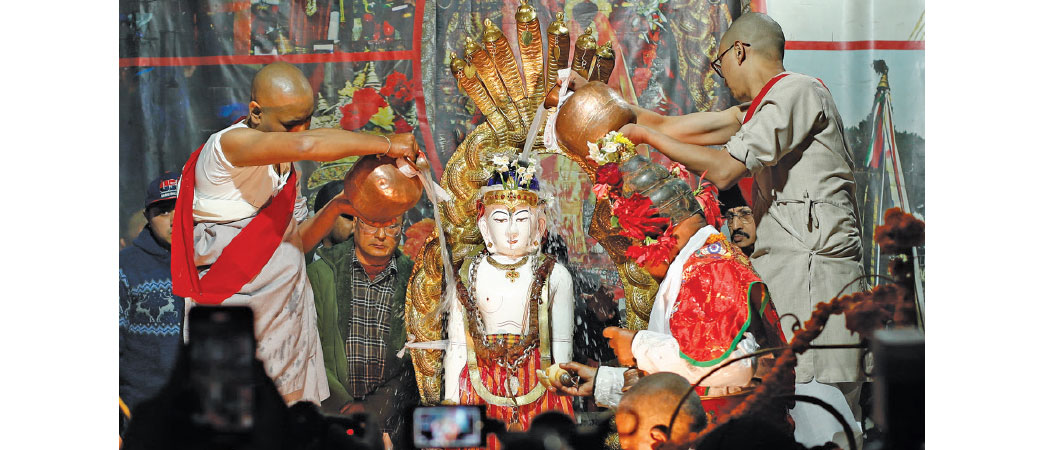

By A Staff Reporter,Kathmandu, Mar. 17: The Seto Machhindranath Rathyatra Management Committee (SMRMC) has completed all the preparation works for this year’s Seto Machhindranath chariot procession.
Nilkaji Shakya, coordinator of the committee and priest of the Seto Machhindranath Temple, said that the painting of the Seto Machhindranath idol has been completed.
The Guthi Sansthan of Kathmandu will begin the construction of the Seto Machhindranath chariot at Tindhara Pathshala in Jamal from March 19. He further said that representatives of the SMRMC invited the President to inaugurate the festival on Monday, March 16. This year, the festival falls on March 26.
The committee coordinator, Shakya, said that preparations for the chariot procession have already begun.
The chariot will be designed in a triangular shape following the traditional method.
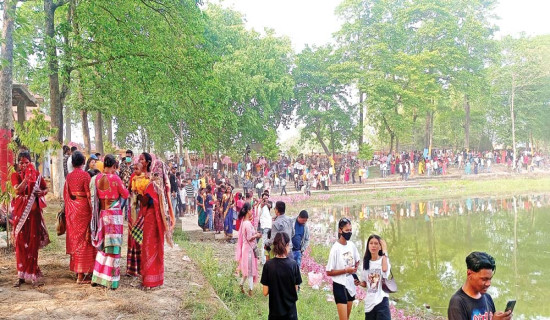
Seto Machhindranath is a widely revered deity in the Kathmandu Valley, and the chariot-pulling festival of the deity is a three-day-long cultural event.
During the festival, the chariot is taken to several parts of the valley. The pulling of the chariot starts from Jamal and then moves to Ratnapark, Bhotahiti and Asan. On the second day, it is taken to Balkumari, Keltole, Indrachowk, Makhan and Hanumandhoka. On the third and final day, it passes through Chhetrapati, Jaishidewal, Janabahal and Lagan.
Normally, the festival is celebrated for three days, but it takes about seven days for the chariot to reach different parts of the city. Many people visit the chariot and offer prayers to the idol of Machhindranath inside the chariot during the festival.
The entire structure of the chariot is modeled in the shape of a temple. The chariot is pulled with large ropes from both sides. According to legend, Machhindranath was the teacher of Gorakhnath.
The festival of Seto Machhindranath is believed to have begun in 595 A.D. The deity is also known as Janmadyo, Aryavalokiteshwor, Karunamaya and Jamaleshwor.
Many people perform religious activities during the festival to attain prosperity in their lives and to fulfill their wishes. Every year, Nepali people celebrate the chariot-pulling festival with great devotion. It is believed that if the chariot festival concludes successfully, the year will be free from drought and famine.