- Tuesday, 14 April 2026

Nepal’s Silent Emergency
 Angela Ghising
Angela Ghising
Angela Ghising
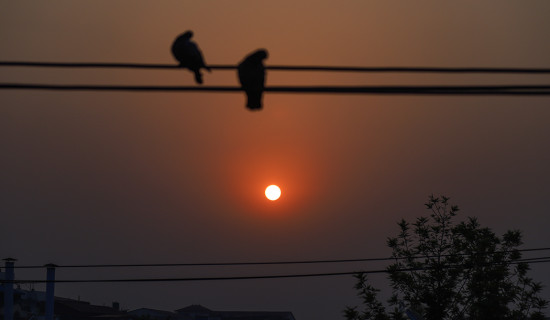
As the dust settles on the March 5 general elections, the air in Kathmandu is anything but festive. Behind closed doors, our politicians are busy negotiating a new alliance government. But the people who put them there are being choked to death by a familiar, gray foe. In the short time since Election Day, a thick, toxic haze has hung over the valley like a spectre, putting Kathmandu back into the top tier of the world’s most polluted cities.
According to data from IQAir, Kathmandu’s Air Quality Index climbed to 210 on March 10, placing it in the ‘very unhealthy’ category.” And yet the institutions responsible for environmental protection have offered little urgency or visible action on this escalating crisis. There is an ever-increasing mountain of evidence demonstrating that air pollution is the single largest threat to the world’s prosperity. The World Bank report "Towards Clean Air in Nepal," released in 2025, officially declares air pollution to be the number one risk factor for death and disability in our nation.
It is no longer simply a nuisance during the seasons; it is a systemic drain on our nation's future, resulting in 35,000 premature deaths every year. As we argue over our national deficit and budget allocations, we continue to overlook that air pollution is siphoning off 6 per cent of our GDP every year. We are losing billions of dollars in national income because our citizens are quite literally too sick to work, and we are losing billions of hours of labour due to environmental factors.
The tragedy, therefore, resides in the chasm between these scientific truths and the campaign rhetoric. A cursory glance at the manifestos of the elections indicates that the environment has been relegated to the status of a ghost. The Nepali Congress, for instance, has continued to promise a net-zero target for 2045, while the CPN-UML has been obsessed with the idea of mega-infrastructure development, which considers environmental protection to be "anti-development" barriers.
Not even the Rastriya Swantantra Party, which capitalised on the energy of the frustrated young, could manage to include the issue of pollution at the end of their list of priorities. This, however, stems from the fact that the party, like many others, has a poor understanding of what development means. A new highway, for instance, would be meaningless if the children growing up alongside the highway are developing stunted lung and heart capabilities before they reach adulthood.
The ironies of this political moment are such that the movement for change, the Gen Z movement, which asked for a move away from the old ways, is the very group most threatened by this crisis. Our political class is debating who shall sit in the Prime Minister's chair while they sit in an environment where the AQI is 25 times higher than the WHO-recommended safe level of PM 2.5, which enters the bloodstream directly, leading to long-term damage, damage for which economic growth is not an easy solution. This new government has but a brief window of opportunity to change this narrative.
Unless the newly elected cabinet makes it a point to prioritise the radical electrification of transport modes, industrial filtration, and transboundary diplomacy in its first 100 days in office, its electoral victory would be for naught. A leader who is incapable of providing his people with something as basic as clean air is not a leader at all. It is high time for the newly elected government to prove that its vision for Nepal is clear enough to see through the haze.