- Tuesday, 2 June 2026

Nepal's Course For Sustainable Development

Nepal is a country of diversity. The country is rich in its geography, culture, and resources, but we face development challenges. The federal structure has provided unprecedented opportunities for decentralisation and inclusion. However, it has been difficult to translate it for sustainable development. In reality, people are not feeling the change.
The need-based development is not limited to the construction of roads and buildings. It has to focus on the quality of life of people, considering the nature-based solutions. Nepal needs to manage the budget to achieve holistic development across social, economic, and political dimensions. Citizen awareness, engagement, and uncompromising integrity may fuel the rapid path of innovative entrepreneurship. The sustainable development roadmap is a much-needed pathway to make our dreams a reality.
Balance
Sustainable development is the balance among social justice, economic equity, political stability, and environmental stewardship, with a focus on the natural environment. Awareness among people is essential to fuel participation and promote entrepreneurship as a vehicle for self-reliant development. Citizen-centric values can secure Nepal’s future. The consciousness of citizens determines the strength of a nation. Awareness is far more than literacy; it is a profound consciousness of one’s rights and, crucially, one’s duties towards the nation. Until we evolve from "me and mine" to "we and our nation," sustainable development will remain elusive.
Literacy is rising, but civic awareness lags. People are claiming rights while neglecting duties and responsibilities. Civic education is essential for responsible citizenship. Schools, media, and civil society should play pivotal roles in promoting constitutional values, critical thinking, and informed voting to build a conscious society committed to collective progress and democratic responsibility.
Public participation is the soul of democracy. There is a need for active involvement of citizens in the entire development cycle, from planning to implementation and monitoring. Federalism has created a powerful arena for local governments for participatory democracy. However, the participation of people is low in local-level budget management. It is necessary to promote tools like "social audits," "public hearings," and "public inquiries" for public engagement and encouragement. We must also harness the power of technology, using digital portals to broaden participation, especially among the youth.
Real participation is inclusive. It remains incomplete until the voices and the meaningful participation of women, Dalits, Janajatis, and other marginalised groups are ensured. Development is meaningless if it only benefits the powerful. The ownership of people creates the path for long-term sustainability. The nation must work on the principle of "for all, with all."
Rampant corruption has been obstructing Nepal's development, weakening the performance of the government, and eroding trust between the state and its citizens. The national policies are well-crafted but lack honesty in their implementation. Self-discipline is a moral pillar for resolving this by doing the right thing. The deficit of honesty in the bureaucracy and a lack of self-discipline among citizens have created obstacles to the intended transformation of the country.
We have to cultivate honesty as a collective public culture. It is possible to start from the family. More importantly, our leaders must model exemplary conduct. When those in power demonstrate integrity, its impact cascades through society. Finally, we must address social ills: corrupt behaviour must be met with a public boycott, not a shrug. We need an environment where honesty is respected and unethical behaviour is shamed. Such an environment is needed to develop the culture of good governance for nation-building.
Nepal's economy is based on three external pillars: foreign aid, remittances, and imports. Though they seem beneficial in the short term, their volatile nature has weakened us from within in the long run. An aid-dependent development stifles innovation, and non-productive sectors' use of remittances does not make sense for industrialisation and job-creating industries.
Trust, accountability, and opportunity may thrive through mutual dedication between citizens and the government. Progress can be made when individuals are engaged positively, and institutions are committed to integrity. Nepal has to move with determination, transparency, and collective responsibility to turn the national vision of "Prosperous Nepal, Happy Nepali" into a reality.
Economic challenge
Nepal's most pressing economic challenge is youth unemployment and migration for jobs. Entrepreneurship is the only way to generate jobs within our borders. Entrepreneurship is a mindset: the ability to see problems as opportunities and the courage to take risks. There are various sectors, such as eco-tourism, value-added agriculture, information technology, and green energy, all of which can be leveraged to develop enterprises.
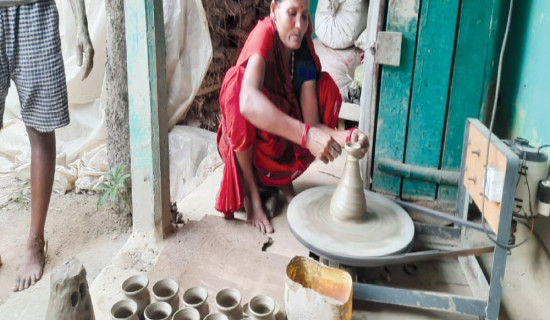
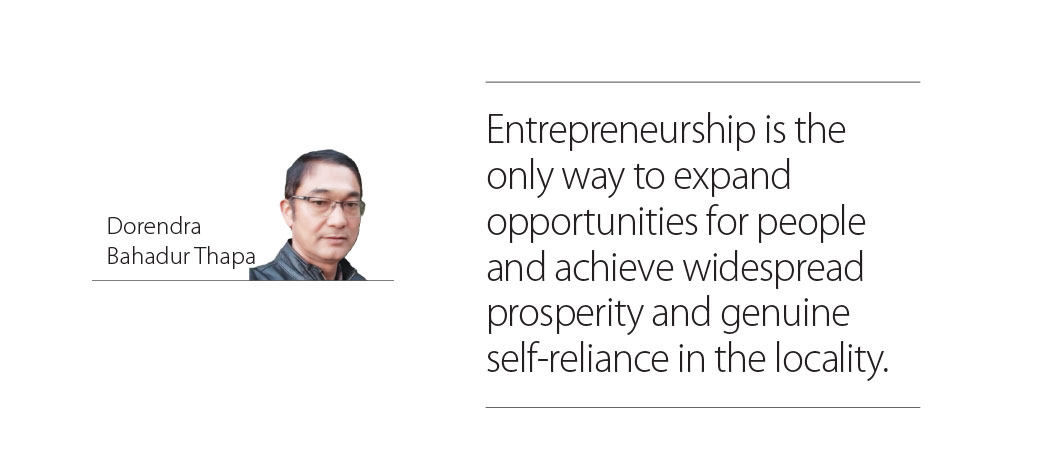
There is a need for a "startup ecosystem" having access to credit, incubation centres, and market linkages. Empowering women entrepreneurs is crucial for promoting micro-enterprises based on traditional handicrafts and local resources. Entrepreneurship is the only way to expand opportunities for people and achieve widespread prosperity and genuine self-reliance in the locality.
The development processes are founded on social, economic and political factors that are intertwined. The aspects of real progress are social justice, prosperity, and political stability. The future of Nepal lies in awareness, participation, honesty, self-reliance and entrepreneurship. Through the collective efforts of citizens and the government towards establishing trust and opportunity, the vision of Prosperous Nepal, Happy Nepali, can be realised.
(The author is a researcher.)