- Sunday, 3 May 2026

Make Roads Safe


Road accidents are alarmingly common in Nepal. Not a single day passes without reading or hearing news of fatal road crashes. These road accidents leave scores of passengers and pedestrians dead or maimed. In one of the latest incidents, 13 members of a wedding procession were killed, and 25 others were injured when a bus carrying them veered off the road in Baitadi district on Thursday evening. Although the bride and groom were safe as they were in a separate vehicle, two of the groom's brothers and other relatives died, turning their wedding into a tragedy.
According to a news report published in this daily the other day, the bus fell 200 meters off the road from a bend in Parchaudi Municipality-7 of the district. A report by Nepal Police presents a harrowing picture of road safety in the country. According to it, over 2,500 people lose their lives in road accidents in Nepal every year -- about seven a day. In 2025 alone, a total of 28,692 road accidents were recorded, claiming 2,549 lives and leaving 6,976 people seriously injured. Likewise, 37,283 suffered minor injuries. Analysing the data, police have concluded that, on average, seven people die and 121 are injured in 79 road accidents each day.
Among the vehicles involved, the two wheelers accounted for the largest share at 25, 142 (58.5 per cent), followed by cars/jeeps at 6,644 (15.39 per cent) and three wheelers at 2,478 (5.74 per cent). Interestingly, microbuses and tippers -- often blamed for the deadliest crashes -- were involved in the fewest accidents, at 654 and 646, respectively. A total of 172 animals were killed in road accidents in 2025. In the first six months of the current fiscal year, 2,088 road accidents with 69 fatalities were reported.
According to the police data, the country witnessed 10,675 road accidents in the fiscal year 2022/23, which fell to 8,881 in the fiscal year 2023/24 and further declined to 7,169 in 2024/25. Although the number of accidents has decreased, the death rate has risen to 7.34 per cent from 7 per cent over the years. The report also shows that accidents are more frequent on Wednesdays and Fridays and during January and February than on other days and months. These figures indicate that more people die in accidents in Nepal than in natural disasters such as floods and landslides, to which the country is prone.
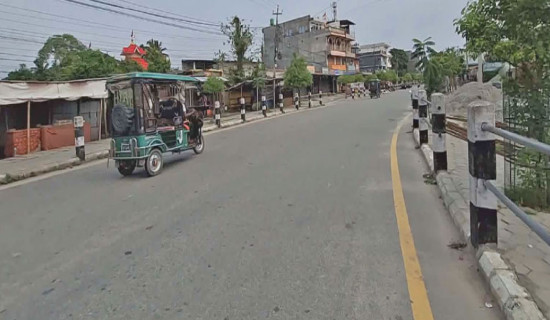
Poor road conditions across difficult terrain, adverse weather, ageing vehicles, overloading, and negligence on the part of the drivers are among the major causes of fatal road accidents. The number of road accidents and fatalities can be reduced by improving road conditions, phasing out old vehicles, and strictly enforcing traffic rules. However, little has been done to prevent old and unsafe vehicles from plying on the roads for various reasons. Upgrading and blacktopping rough roads will also help reduce accidents.
Above all, there must be no compromise in enforcing traffic regulations and safety policies. Most accidents can be prevented simply by obeying traffic rules and improving road and vehicle conditions. Therefore, the government and all concerned stakeholders must act without delay to address these persisting shortcomings in road transport so that no wedding procession ends in tragedy like the one in Baitadi.

-square-thumb.jpg)

-original-thumb.jpg)