- Monday, 25 May 2026

Strong institutions essential to restore public trust in polls
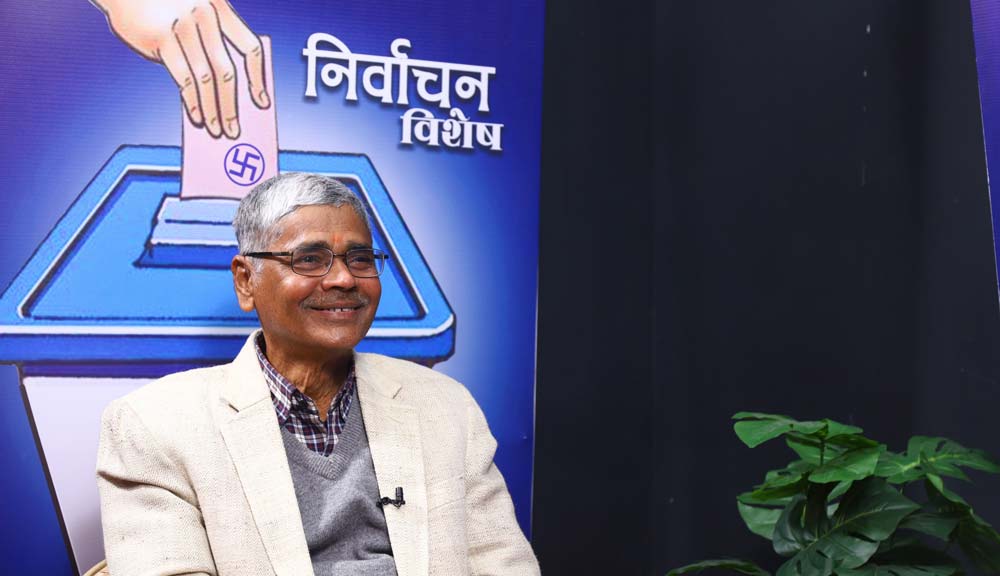
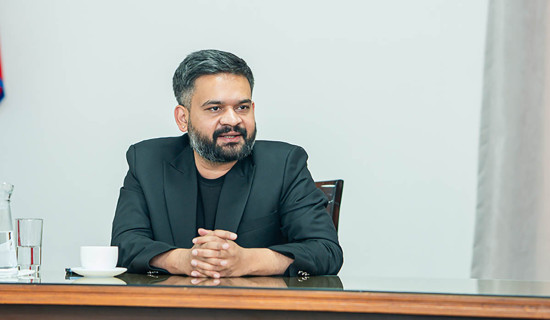
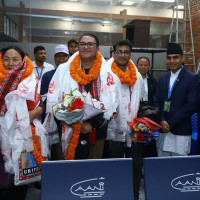
Photo: Manoj Ratna Shahi/Keshab Gurung

Nepal’s democratic story is often told through dates of political movements, constitutional milestones, and election cycles. Yet the quieter story, the one that unfolds behind ballot papers, polling stations, and institutional decisions, is rarely examined in depth. At the centre of that story are the individuals entrusted with safeguarding the electoral process during moments of national uncertainty.
Few have held that responsibility as long, or as critically, as Dr. Ayodhyee Prasad Yadav, former Chief Election Commissioner of Nepal. Serving for twelve years across two constitutional terms, Dr. Yadav presided over two Constituent Assembly elections and three major elections following the promulgation of Nepal’s Constitution. His tenure coincided with Nepal’s transformation from monarchy to republic, from conflict to constitutionalism, and from street mobilisation to institutional democracy.
A Gold Medalist and an election administrator shaped by both academic discipline and field experience, Dr. Yadav is widely regarded as one of the key architects of Nepal’s modern electoral system. In this extensive conversation with Pallav Bhusal of The Rising Nepal and the Gorkhapatra team he reflects on how elections have evolved, why money has become the most corrosive force in politics, how generational change is reshaping democracy, and what must be done if elections are to regain public trust.
You served as Election Commissioner from 2063 BS to 2075 BS, a period that included post-conflict transition, constitution writing, and repeated elections. When you look back, how different were elections then compared to now?
Every election is a product of its time. Laws, political contexts, public expectations, and institutional capacities change. However, across all the elections I supervised, one element remained constant, the people’s willingness to participate in the democratic process.
Even during the most unstable periods, Nepali citizens continued to engage. Whether in the eastern hills, the western plains, or the remote Himalayan regions, people came out to vote. That commitment is one of Nepal’s greatest democratic strengths.
The first Constituent Assembly election, in particular, was conducted under extraordinary circumstances. The country was emerging from conflict. Political trust was fragile. Fundamental questions about federalism, inclusion, and power-sharing remained unresolved. Political agreements were often finalised at the last moment, sometimes only hours before polling day.
Yet, despite these challenges, the election took place and was accepted broadly. That success did not come from perfect planning, it came from public ownership of the process. People believed that voting mattered.
After the constitution was promulgated, elections became more structured and institutionalised. Legal frameworks improved, administrative experience increased, and roles became clearer. However, institutionalisation alone does not automatically translate into democratic satisfaction.
You are often credited with conducting elections without major incidents such as booth capture or widespread violence. How did you approach election security?
There is a dangerous misconception that elections can be secured simply by deploying more security forces. Nepal’s own history proves this wrong.
During the royal regime, security deployment was extensive, yet voter turnout dropped to around 20 per cent. People stayed away not because polling stations were inaccessible, but because they felt alienated and fearful.
Security is necessary, but security alone does not create democracy. Elections succeed when people feel safe, respected, and confident, not intimidated. The role of security forces should be to build confidence, not fear.
What truly ensured peaceful elections was local participation, youth involvement, community observers, and political restraint. Democracy cannot be imposed through force, it must be accepted voluntarily.
What do you see as the most pressing challenge facing elections today?
The most serious challenge today is the transition of political power between generations.
Nepal’s political leadership comes largely from a generation shaped by movements, struggles, and ideological battles. The younger generation, however, is shaped by different realities including unemployment, labour migration, rising living costs, and unfulfilled democratic promises.
This has created a gap in expectations. Younger voters are less patient with symbolism and more demanding of results. They are also more vocal and sceptical, largely because of social media.
This generational shift is inevitable and necessary. However, if not managed responsibly, it can lead to instability rather than reform.
How has technology changed the electoral landscape?
Technology has transformed every stage of politics including campaigning, mobilisation, scrutiny, and accountability.
Earlier, political narratives were controlled by parties and traditional media. Today, communication is decentralised. Anyone with a smartphone can shape public opinion.
This has positive aspects, such as increased awareness and scrutiny. But it also brings risks, misinformation, emotional polarisation, and superficial mobilisation without policy depth.
Election management bodies must adapt to these changes without compromising neutrality or credibility.
Many new political parties have emerged in recent elections. Are they driven by ideology or social media momentum?
Nepal’s history shows that political change occurs when people feel excluded from economic opportunity and social justice.
Democracy cannot survive on elections alone. If people vote regularly but continue to struggle for jobs, education, healthcare, and affordable justice, frustration accumulates.
New political forces are expressions of that frustration. Whether they succeed depends on whether they can move beyond protest politics and demonstrate governance capacity. Mobilising anger is easier than managing institutions.
What role do election manifestos play today?
In principle, a manifesto is a written contract between political parties and the people. In practice, it has become largely ceremonial.
If political parties had implemented even a fraction of their commitments over the past decades, Nepal would not need elections so frequently. Repeated elections often signal governance failure rather than democratic vibrancy.
At the constituency level, candidates sometimes fulfil promises because they face direct accountability. At the national level, manifestos often disappear after elections.
Elections are becoming increasingly expensive. Is this pushing democracy in the wrong direction?
Elections require resources, which are unavoidable. However, unchecked spending distorts democracy.
Official figures suggest per-voter administrative costs ranging from approximately NPR 400 to NPR 600, depending on the election. These figures do not include underground political spending by parties and candidates.
The real danger lies in the imbalance between money and political competition. When wealth determines viability, democracy excludes capable individuals who lack financial backing.
Where does political funding come from today?
Historically, political parties provided modest support to candidates, supplemented by local donations. Many candidates sold personal assets, land, livestock, and even family property, to contest elections.
Today, funding sources are far less transparent. Corruption, misuse of public office, and future rent-seeking are increasingly linked to electoral financing.
Despite regulations requiring bank-based transactions, enforcement remains weak. Without transparency, politics becomes inaccessible to honest individuals.
Is it realistic to control money power in elections?
Yes, but only with strong political will.
All election-related transactions must be bank-based and traceable. Post-election audits must be rigorous, not symbolic. The central banks should analyse cash flow patterns before and after elections.
The media and civil society also have vital roles in exposing irregularities.
However, the most important safeguard is voter integrity. Democracy collapses the moment citizens accept money in exchange for votes.
Invalid votes remain high despite technological progress. Why?
Invalid votes, often around 5 per cent, result from multiple factors including voter illiteracy, large and complex ballot papers, inadequate polling infrastructure, and challenges faced by elderly and disabled voters.
Zero invalid votes are unrealistic, but they can be reduced through voter education, simpler ballot design, better lighting and space at polling stations, and accessible voting assistance.
Voter turnout appears to be declining. How serious is this trend?
Declining participation is a warning sign. It reflects declining trust.
Legal reforms are necessary including postal voting, overseas voting, mobile polling units, and even compulsory voting should be openly debated.
Low turnout undermines the legitimacy of elected governments and weakens democratic accountability. This trend must be addressed through legal reforms, better voter education, easier access to voting, and more responsive governance. Democracy cannot function effectively if a significant section of citizens chooses not to participate.
Local governments must also take responsibility for voter mobilisation. Democracy cannot survive if citizens disengage from the process that legitimises power. However, active participation of youths and their interest in the current election can be seen. There has been a steep rise in registering for voter ID for this upcoming election by the people.
Did you personally face political pressure during your tenure?
No, I did not face direct political pressure during my tenure. This was largely because all major decisions in the Election Commission were taken collectively and unanimously. The law provides institutional independence, but independence also depends on personal integrity.
Political leaders understood that I would not compromise on principles. When election officials remain consistent and transparent in their decisions, political pressure becomes ineffective. Institutions weaken only when individuals allow themselves to be influenced.
What must political parties and government do differently?
Political parties must understand that elections are not just about winning power, but about protecting democratic legitimacy. They must ensure a level-playing field by avoiding the misuse of state resources, money, intimidation, or inducements. Parties should take responsibility for the conduct of their cadres and practise financial transparency.
The government, meanwhile, must act strictly as a neutral referee. Its role is to guarantee security, fairness, and institutional independence, not to influence outcomes. Strong, impartial institutions are essential if public trust in elections is to be restored.
Finally, what is your message to young voters?
Young voters are the most important stakeholders in Nepal’s democratic future. Your frustration is understandable, but real change requires participation, not withdrawal. Voting is not optional if you want accountability and reform.
Protest and criticism have their place, but democracy also demands responsibility, patience, and long-term engagement. Use your vote wisely, reject money and fear, and help prove that young people can strengthen institutions, not just challenge them.