- Monday, 25 May 2026

Legitimacy, security and fairness are foremost priorities
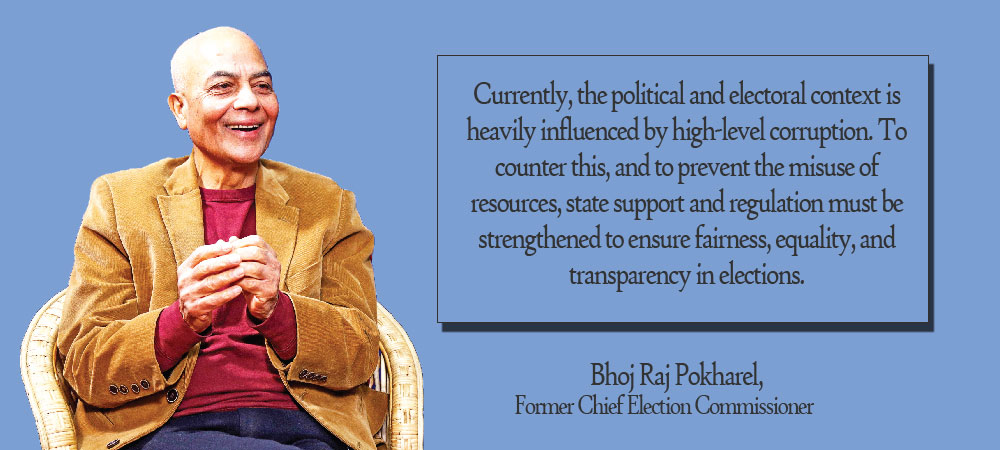
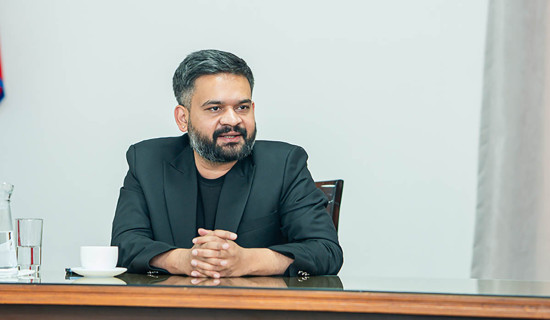
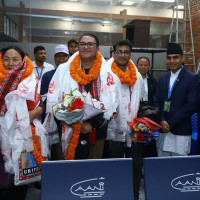
Photo: Manoj Ratna Shahi/Keshab Gurung

With preparations under way for the House of Representatives election scheduled for March 5, concerns over security, electoral integrity, political conduct, and the growing influence of money in politics have taken centre stage.
In this context, Arpana Adhikari of The Rising Nepal and a team from Gorkhapatra spoke with former Chief Election Commissioner Bhoj Raj Pokharel, who led the Election Commission during the historic 2008 Constituent Assembly election. Drawing on his experience of managing polls in a post-conflict environment, Pokharel assesses the Commission’s current preparedness, compares past and present electoral challenges and outlines key measures needed to ensure a credible, inclusive, and widely accepted election. Excerpts:
How do you assess the Election Commission’s preparation and the overall environment for the March 5 polls?
The election we are conducting now has arisen out of extraordinary circumstances. Accordingly, preparations had to be carried out within a very limited timeframe and under unusual conditions. Given the short time available and the prevailing political and security environment, I can see that the Election Commission (EC) has been working to the best of its capacity to ensure that the election scheduled for March 5 concludes successfully. Had there been more time, preparations could have been more systematic. However, taking into account the time pressure, the Commission has moved forward with its preparations with a clear aim of ensuring the March 5 polls.
Looking at the upcoming election, do you think the EC is facing some major challenges?
Elections are inherently challenging even under normal circumstances, and this poll is being conducted under exceptional conditions. The Election Commission faces challenges both within and beyond its jurisdiction.
Internally, the main issues are severe time constraints, logistical pressures, and voter education. With limited time, ensuring that voters are adequately informed about the electoral process and the code of conduct remains a significant concern. Externally, the election faces political and security challenges.
Although political forces have formally committed to a peaceful poll, ongoing disputes and confrontational behaviour suggest tensions that could disrupt the process. Security is another concern, as recent developments have affected the morale, resources, and manpower of the Nepal Police and other security agencies. While arrangements will be made, the key challenge lies in creating a safe and confident environment for candidates, voters, observers, and election staff within a short timeframe. Despite these challenges, I believe they will not ultimately obstruct the conduct of the election.
In such a condition, what do you think political parties and the government of Nepal should focus on?
The government’s primary responsibility is security. Security arrangement does not fall under the EC, it is the government’s role to ensure that the Commission can operate safely. Secondly, the government must ensure that the Commission faces no shortage or logistical gaps, however minor, as even small deficiencies could complicate the election process. This means providing the Commission with adequate resources and support. Thirdly, the government must create a level-playing field, ensuring that all parties can compete in a fair and equal manner. Since the current government is independent, there is less risk of partisan interference, but we know from both domestic and international experience that governments often try to exert some influence over elections. It is therefore crucial that the government maintains its neutrality consistently throughout the process.
You served as Chief Election Commissioner in 2008, overseeing the first Constituent Assembly election. How would you compare the situation of the Commission then with its current state?
The context at that time was entirely different. We were managing a transition from a prolonged armed conflict to a peaceful democratic process, moving the country from bullets to ballots. There was no constitution, no clear legal framework, and no certainty about the electoral system. Everything had to start from scratch.
Because political parties were unable to reach agreement on these fundamental issues, elections were postponed three times. Nomination deadlines also had to be extended repeatedly to bring all stakeholders into the process, as the central challenge was transforming the conflict into peace.
Security conditions were extremely fragile. The Nepal Police were deeply demoralised, and the Nepali Army could not be freely mobilised. Ensuring security in such circumstances was a vastly different challenge, requiring new approaches from the ground up. That was the reality of the time.
The EC, however, was fully functional, with a complete team in place. Nepal had become a global priority, and we worked closely with national and international partners, including the United Nations, receiving continuous support. The national, regional, and international environment was therefore very different from what it is today.
With the advancement of information technology, many aspects of elections have since become easier, particularly in terms of visibility and access. Existing laws, rules, and guidelines have remained in force and have been gradually improved with each election. Challenges, of course, still exist, no election is without them.
Voter education was one of the greatest challenges. The electoral system was new and complex, and time was limited; even lawmakers struggled to fully understand it. To inform the public, we prepared materials in 17 scripts and languages and delivered them door-to-door, providing information on voter numbers, polling centres, and essential procedures.
Security remained another critical concern. Although the Maoists had joined the peace process, more than sixty armed groups remained outside it. Election officials, candidates, and staff faced serious threats, with offices bombed and, in some cases, officials forced to operate outside their own districts.
Does this mean that you consider the current election environment to be significantly less challenging compared to the previous one?
Political complexities still exist today, but the context is different. Back then, all the major political parties, 13 in total, were involved and in the legislative parliament, seven parties plus eight others from the peace agreement were part of the government, except for one. Today, however, the political landscape is more fragmented, with each party pursuing its own path. We can only hope that this will not hinder the election and that it will be successfully conducted.
Do you recall any notable statements, remarks, or pressures from the leaders, like the then Prime Minister Girija Prasad Koirala and Pushpa Kamal Dahal ‘Prachanda’ at that time?
During that election, the Constitution and the law were my top priorities. When I convened the first meeting, there were concerns about summoning acting head of state Girija Prasad Koirala or leaders like Prachanda. I clarified that attendance was required as party leaders, not as head of state, and created an environment where all major party leaders attended repeatedly.
I consistently reminded them that it was their responsibility to carry out their duties and at the very least, to speak the truth in front of the country. Any sense of pressure came not from them, but from my duty to uphold the nation, the system and the process, not personal interest. Of course, during the election process, smaller issues also arose, but it is not necessary to mention those minor details now.
Was there any pressure from the then King Gyanendra or supporters of monarchy to stop the Constituent Assembly election?
There was no personal pressure on me internally, nor any coercion from outsiders. The Interim Constitution stipulated elections by mid-June, but despite repeatedly summoning all leaders, the election law was neither passed nor was a date set. They insisted the elections would occur in mid-June, yet offered only vague assurances while doing nothing.
Once it became clear that nothing would happen, I had to act within my constitutional mandate, even if it meant making decisions beyond usual norms. The Commission had to clarify that elections in mid-June were impossible; elections could only be conducted 120 days after the law was passed. Informal authority, stronger than formal authority at times, influenced the situation.
There was also concern that the Palace opposed the Constituent Assembly and we feared halting the elections under its influence could cause indefinite delays, as had occurred previously. Despite this, parties seemed unconcerned with personal stakes, focusing on their own agendas. I, therefore, faced no visible pressure. The Commission ensured the 2008 elections were conducted legitimately and credibly.
What were the most difficult yet decisive decisions taken by the EC to ensure the 2008 election was free and credible, and how can those experiences be applied to the current HoR election?
One of the most challenging aspects is that the EC cannot conduct elections in a single day; what matters most is legitimacy, security, and fairness. To ensure this, all stakeholders must be fully engaged and must agree in advance on the laws, procedures and code of conduct. Once they participate within this framework, no one can later question the election’s validity.
Transparency in management was equally critical. From my first day at the EC, we allowed the media full access to the information and ensured that the public was regularly informed about decisions and progress. This enabled citizens to see the Commission’s efforts and the roles played by other stakeholders.
If you compare it historically, the electoral system in Nepal was previously at a very rudimentary stage, whether it was during the king’s rule or the local municipal elections, the election system’s credibility was extremely low. Over three to four months, with efforts from the United Nations and guidance from the UN Secretary-General, we reached a point where the EC was recognised as a credible institution in Nepal.
Another key aspect was the concentric and inclusive approach. We brought in representatives from all sectors to discuss issues affecting them in the election and how the Commission could support them. This inclusive policy helped achieve over 33 per cent representation of women and ensured proportional political representation for various social groups. In areas where strictness was necessary, we enforced it rigorously; where flexibility was needed, we accommodated it. This adaptive environment allowed the process to proceed smoothly.
We also ensured the use of credible observers, particularly international observers, alongside 63,000 domestic observers, to monitor the election. This comprehensive observation ensured transparency and fairness, making the election historic in Nepal’s democratic development.
Finally, the lesson is that by maintaining transparency, inclusivity, credibility, and careful management, elections can achieve legitimacy and public trust. The Election Commission must continue to adopt these lessons in future processes.
As the electoral system is highly complex and discourages ordinary citizens from participating, what measures should be taken to make elections more affordable, accessible, and inclusive?
I agree with this. Sometimes I feel that the current electoral system is being hijacked by money. This has led to elections where fair competition is almost impossible. Those with money have a clear advantage. Even if the money is obtained through legitimate means, its use in the electoral process creates negative trends, resulting in elected bodies that are weakened and often appear to operate under the influence of donors rather than independently.
To control this, there are various measures we can take. For instance, I have suggested that political parties and candidates should be allowed to spend their own funds in elections, as the Constitution permits them. Additionally, the state should support those who seek to work in public service or contest elections in areas designated by law, ensuring fair opportunities for all.
Political contributions should be regulated, and the state should increase support to ensure a level playing field. Currently, the political and electoral context is heavily influenced by high-level corruption. To counter this, and to prevent the misuse of resources, state support and regulation must be strengthened to ensure fairness, equality, and transparency in elections.
Although political parties are legally required to submit annual audits of their income and expenditure, many fail to do so transparently. What measures can the Election Commission take to ensure accountability?
We haven’t yet been able to instill a strong political culture. Political parties have not become fully institutionalised, and democratisation within parties is still a learning process. On one hand, the challenge is to establish transparency and good governance. On the other hand, if you look at the periphery, candidates and parties often spend large sums during elections, but when they submit expense reports to the Commission, they report slightly below the legal limits. Some even publicly claim they spent many millions, yet we have no effective mechanism to enforce accountability. This lack of enforcement has created a culture of impunity, which has grown over time.
There are many possible measures to address this, though I cannot explain all of them now. The key is to bring such practices within the legal framework and ensure that anyone who violates the rules is subject to visible, enforceable action. These were issues under the previous system, but now we need a higher-level, stakeholder-focused approach to control and guide political behaviour effectively.
The election code of conduct is in effect, yet party leaders have begun accusing each other and using inappropriate language. In this situation, what is your advice on how parties or candidates should proceed under the guidance of the Election Commission?
The most important point is that an election is about competition. Competition does not mean using abusive language or making accusations against others to win a parliamentary seat. Instead, parties and candidates should communicate their policies and what they intend to do to the public. Therefore, parties must act with restraint, remain within the code of conduct, and ensure their words, behaviour, and professional actions comply with it. If any provisions of the code are violated, the Election Commission must take continuous action from the very beginning. The law empowers the Commission to impose fines of up to Rs. 100,000 for violations, and even to cancel candidacies, if a candidate has already won, they can lose their seat. These laws are strict, and no party should act as if anything goes out of fear that the Commission will not enforce them. From the outset, the Commission has strengthened its enforcement. In 2007, we also designed a monitoring system, similar to how traffic police issue fines at random levels, officials with authority were sent to catch and penalize violations at random. Penalties must be applied consistently. Most importantly, if action is taken immediately, it provides an opportunity for educational communication. Therefore, everyone must fulfil their respective roles responsibly.
Considering the general elections of March, can Gen Z movement be seen as a manifestation of change? And with the emergence of both major, established political parties as well as new ones, how would you analyse this?
This is indeed a change, a kind of transformation. This is a crucial moment in the process of transformation. What the Gen Z movement demanded was, on one hand, policy transparency and the insistence on being transparent. It said there must be derivatives, and there should be a break in the concentrated leadership. Looking at the efforts that followed in the subsequent period, such an opportunity clearly emerged.
Now, everyone asks where the rise of the youth, or the emergence of small and new parties, came from. The emergence of new parties and their growth is also a continuation of the 2006 movement; it represents progress. One positive aspect it revealed is that, as the country’s politics revolved round three or four leaders, these ‘musical chairs’ were used not for good governance but for the exercise of poor governance. That needed to be broken.
Secondly, for many years, the political establishment had monopolised and tried to colour the country according to its own interests; this could mark the beginning of the end of that era. Thirdly, young people today cannot simply endure everything passively. They want to play an active and empowered role. For these reasons, the current process can be seen as a positive development.