- Monday, 25 May 2026

Elections must be conducted fairly


The Election Commission has claimed that 90 per cent of preparations for the House of Representatives election slated for March 5 have been completed, but political uncertainty continues to loom. The recent split in the country’s largest democratic party, the Nepali Congress, has intensified doubts whether the polls will be held as scheduled. At the same time, Nepali politics is witnessing intense polarisation, while public dissatisfaction with traditional parties is on the rise.
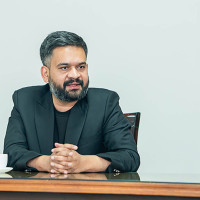
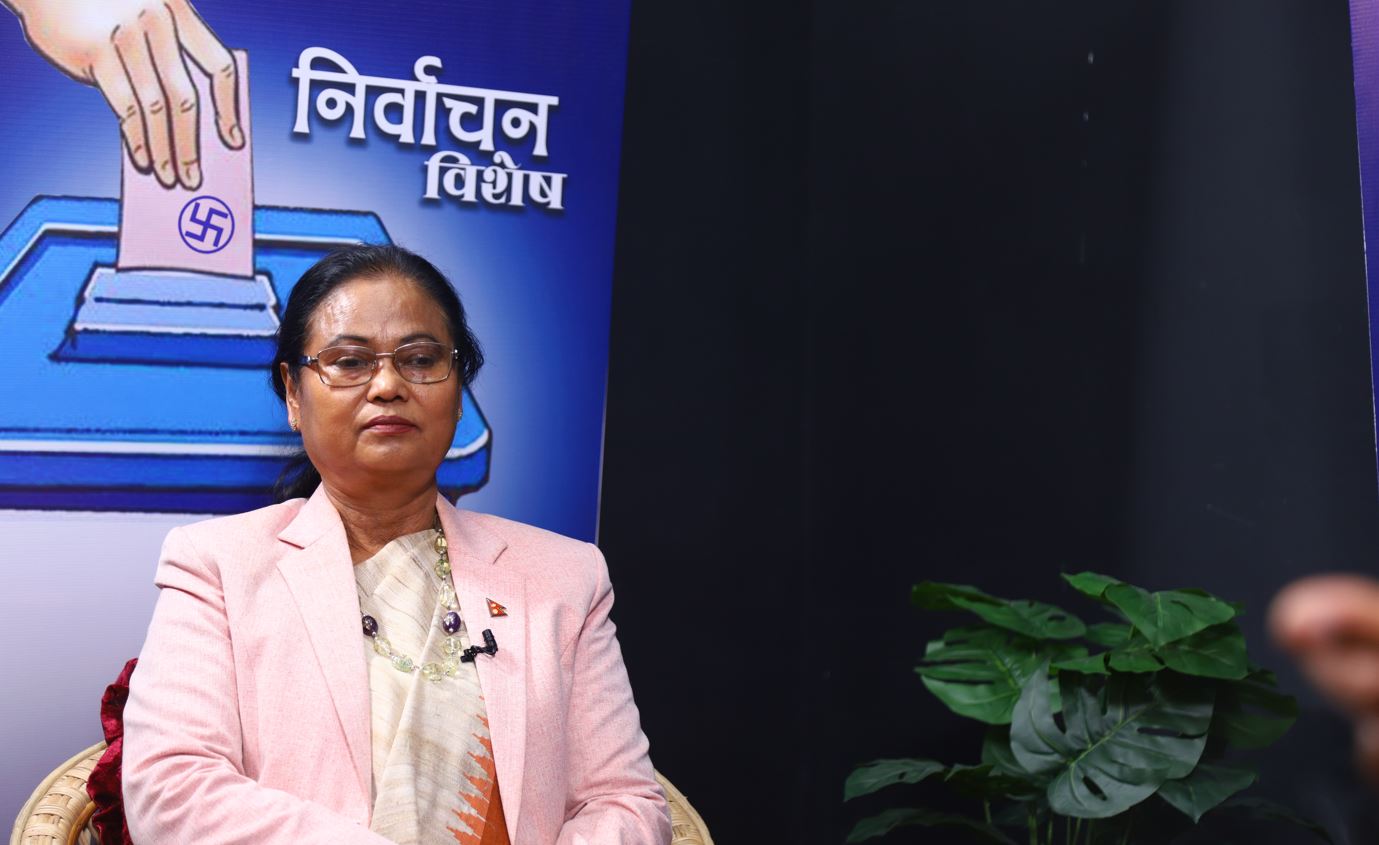
In this context, Arpana Adhikari of The Rising Nepal, along with a Gorkhapatra team, spoke with CPN-UML Central Committee member and former minister Bhagwati Chaudhary. In the interview, Chaudhary assesses the evolving political landscape ahead of the election and voices serious concerns over the government’s capacity to guarantee a free, fair and secure voting environment. She also emphasises the need for voter awareness, institutional neutrality and administrative transparency to safeguard constitutional legitimacy during this volatile transitional period. Excerpts:
The Election Commission says that it has made extensive preparations for the March 5 election. How do you analyse the state of election preparations?
We have analysed the preparations and our party has also conducted its own assessment, especially in this period of political change. The government, in principle, has only one agenda, to conduct the elections on March 5. If it fails to do so, there is a risk that its legitimacy will end. Because of this, the government has carried our preparations, it has instructed the Election Commission and directed all state mechanisms, from security forces to administrative bodies, to prepare accordingly.
Despite all this, we still do not feel fully confident. Even though the election date is right in front of us, our level of trust remains low. Why? Because many detainees, including some most-wanted individuals, are still absconding. We do not feel that security is guaranteed everywhere. There is uncertainty about which places are safe and which not.
To address these concerns, the Election Commission and the Government of Nepal should adopt proper measures through all-party consultations.
The government and the Election Commission say that preparations are almost 90 per cent complete and that the election is imminent. What do you think will be the political course of the country after March 5 election?
The deadline is quite close. Nominations are scheduled for January 20. Even if the election is conducted, our earlier concerns remain, about fairness, government neutrality and security management. The incidents, such as those on September 8-9, have further heightened our doubts.
In my own constituency, there are 42 polling centres, of which around 28–29 are considered sensitive. In such areas, there is a risk that security presence may be weak and that those with local dominance could influence the process. There is also the possibility of collusion involving officials. Therefore, even at this late stage, the government must build confidence among political parties through concrete actions.
We are an old democratic party rooted in democratic values, and we cannot simply avoid elections. However, we still expect reassurance from the state.
How is the situation in Sunsari- 3, from where you were elected in 2022?
I feel positive and prepared. However, the situation today is different from that of the 2022 election. The mandate was for five years, but circumstances changed midway due to political struggle and government change, influenced largely by the youth-led movements. If elections are held, neither the party nor an individual can shy away.
Given the changed political situation since the last election, marked by government change, parliament dissolution and the youth-led Gen Z movement, how do you assess the electoral environment?
The Gen Z-led movement emerged around key demands, such as opposing social media bans and calling for good governance and action against corruption, issues that are legitimate and relevant. Raising these issues is entirely legitimate, and no one can reasonably oppose them.
Nepal’s three-tier government, local, provincial, and federal, often leave grassroots citizens most affected. Irregularities and distortions persist at these levels, and addressing them is both possible and essential. In this sense, the movement’s core concerns were valid.
However, the September 9 protest saw infiltration. Children were present on the first day, and fatalities raised questions about the use of force. Security personnel are trained to fire below the waist, so injuries to the upper parts of the body suggested involvement of untrained outsiders, which calls for a thorough investigation.
The incident was unprecedented. Along with the physical damage, valuable historical documents and important records related to legal and administrative matters were destroyed by fire. Because of this scale of destruction, it is difficult to see the incident as a purely spontaneous youth movement. It appears that there was deliberate infiltration.
At a time when Nepal was progressing toward becoming a developing nation, these events appear to be an attempt to destabilise and suppress the country. This is not something that cannot be analysed or understood, anyone who examines the situation closely can reach such a conclusion.
Focusing specifically on the Gen Z movement, this debate about generational change has resurfaced. What does generational change actually mean?
Leadership requires experience, principles and ideas. When someone enters politics to become a leader, it should be with a spirit of selfless public service. Leadership also requires maturity gained through engagement with the people, their happiness, their suffering, and their everyday realities.
In Nepal, some aspects of what are described as a youth movement appear, at times, more like publicity-driven stunts or celebrity-style activism. This is visible on social media, where comments often fail to reflect the values of a civilised society. It raises serious questions about moral education and social conduct.
Is it enough to rely solely on being part of a new generation? Young people are undoubtedly fast with technology and future generations will be even more advanced. But being young alone does not automatically mean being capable or refined.
Understanding what society is, what its character is, and what civilisation means cannot be ignored. Labelling people or parties without understanding context only deepens negativity. For example, despite facing both domestic and foreign pressures, the CPN-UML has not destroyed state structures or administrative institutions. Its political approach is focused on development and governance, not on dismantling the system.
Generational change is not just about technological speed. Nation-building happens by means of strengthening communities, villages and social values. Destroying social structures and cultural norms does not build a country. Therefore, generational change must mean more than simply replacing one age group with another.
Since the announcement of the latest election, political parties have become increasingly polarised. What message does this political fragmentation and polarisation send to the public?
In a democracy, power, governance and public administration are meant to serve the people, protect their rights and uphold democratic values. However, in practice, those in power can sometimes become authoritarian, feudal in mindset, or overly influenced by a narrow circle, rather than making decisions based on proper analysis and merit.
Politics require sharp judgment, leaders must keep both their “eyes and ears” open to assess people's demands fairly, based on ability, contribution and ideas, not proximity or favouritism. Unfortunately, across many parties, individuals who are closer to leadership often receive more attention, while those who struggle or work at the grassroots are overlooked. This creates frustration.
Political parties are not objects to be fixed in place; they are made up of people with ideas, arguments and social responsibilities. Voices that represent communities or raise genuine concerns should be heard and evaluated thoughtfully. Granting or withdrawing power should not be arbitrary; legitimate demands and contributions deserve fair consideration. This culture of balanced and inclusive evaluation is still lacking within many parties.
The Nepali Congress, one of the country’s parties that considers itself a democratic force, is now on the verge of splitting. How do you analyse this?
When a major historical party splits, it inevitably affects not only its own members but also the broader political landscape. Even if we are technically part of the opposition, it still feels concerning when a party with such a legacy appears unprepared, especially right at the cusp of elections. Observers have already begun speculating whether the elections themselves might be delayed due to these internal issues. A split in a major party is never a positive development. If the factions can reconcile, it would be far better for political stability. If reconciliation is not possible, there is a risk that similar trends could emerge in other parties as well.
However, parties like ours have historically pursued a transformative agenda. For instance, the Nepali Congress advanced the socialist agenda, while CPN-UML adopted socialism advocating for a prosperous Nepal and happy Nepali. But if we start fragmenting and retreating into corners, achieving such a vision becomes impossible.
We need to approach these challenges strategically, ensuring that internal debates do not derail the broader revolutionary goals. Incremental splits and factionalism do not produce meaningful political change. The focus should remain on unity and constructive engagement, even amid disagreements, because only then we can advance the national agenda effectively.
In the context of the country’s current political and electoral environment, what steps should the government take to ensure that this election is conducted fairly and safely?
The government is now at the final stage. A cross-party, confidential consultation is still needed for another day or two. The state must, in a cross-party manner, ensure that security officials provide the necessary confidence to all stakeholders that the election will be conducted fairly and impartially. That is one key aspect.
Another aspect concerns external elements or groups that might try to interfere. At the borders, which are part of my constituency, there should be mechanisms to control such influences, whether through local officials or coordination with neighbouring national authorities, so that no illegal infiltration or disruption occurs and a stable, conducive environment is maintained. This correspondence and coordination must be handled by the government itself. If all these measures are taken in time, political parties can participate in the election with full confidence and prepare adequately. Otherwise, questions also remain about the role of administrative heads in transfers and postings, and how they will command locally during the elections.
At the same time, broad electoral preparations are underway, and candidates are ready. We will have to wait until the day of nominations to see what happens. Even after cross-party agreements are reached, until that day, uncertainties may still arise.
After the Gen-Z movement, debates arose over giving youth greater political space, with parties allocating roles in rotation. Do you see young leaders taking inclusive roles in the upcoming elections?
So far, it appears to be progressing in that direction. Our party, following its own statute, has already elected leadership through our convention and general convention. During the candidacy allocation process, many young people have been included, though a few positions are still pending, where youth and women will also be considered. In this way, we are expecting around 10–15 per cent youth representation.
We now have both a new generation and the old generation and we act as a bridge between the two. This allows us to understand both perspectives. Like other parties, we also engage in discussions about the issues raised by youth movements. However, while the energy of young people may suggest the possibility of rapid change in the country, we are heading into an election under a mixed electoral system, where no single party is likely to win a clear majority. Tomorrow, parties will still have to form a coalition government. Some argue that a direct executive system with a president or prime minister might bring change, but the current situation does not allow for constitutional amendments. If Parliament were to pursue amendments in the future, that could be possible.
Regarding the country’s development, the rotation of governments, sometimes led by UML, sometimes by Congress, sometimes by Maoists, has created challenges in areas such as infrastructure development and tackling corruption. If we had an executive prime minister serving multiple terms, the risk of autocracy needs to be considered, and the public’s perception would be crucial.
The discussion about an executive president is ongoing. Some prefer a ceremonial president with an executive prime minister, elected directly by the people. Voting could then be for both the prime minister and the representative. It’s important to consider that if a parliamentary prime minister fails to address corruption, empower youth, or develop the country, a directly elected executive president or prime minister might have even greater consequences.
You have served twice as a minister and participated in government. While the Gen Z movement criticised political parties strongly, the permanent bureaucracy remains. How do you view the role of the civil service while serving as a minister?
In my short first tenure, there was little work I could accomplish, as some bills never reached the Ministry of Law and tasks were often delegated to former secretaries. Cooperation with the bureaucracy was limited.
During my three-month second tenure, work improved with the support of the secretary and senior officials. Through the Ministry of Social Welfare, we conducted studies with organisations and established plans for women’s ministries in all seven provinces. Employee allocation was challenging, but we methodically approved assignments through board meetings, converting decisions into regulations. With more time, these offices could have been fully established. Had we got more than three months, these offices could have been fully established.
The effectiveness of the proportional representation system has come under scrutiny. Some argue it has deprived the very communities it was intended to empower, while others have exploited it. How do you view this issue?
Proportional representation was introduced to include women, marginalised communities, and experts. However, there have been distortions, with parties sometimes misusing it for cadre management rather than genuine inclusion. While the principle remains valid, reforms are needed to address the misuse. However, expertise is also important. Professionals, such as legal experts, may not have been directly elected or allocated a seat, but legislators need such knowledge because the legislature is responsible for passing bills, implementing laws, and addressing public demands. Therefore, the legislature must have people with some knowledge and expertise to provide feedback and help shape legislation. This need for expertise also applies within the proportional representation system.
What message should political parties, their cadres and young people take forward as the election approaches?
We are in a transitional period, with serious questions about constitutional legitimacy. In such a time, elections must be conducted fairly and credibly. Citizens must demand this, and the government must ensure it through all-party engagement.
I urge the people to use this opportunity wisely and vote for leaders who are capable, honest, and genuinely committed to the country and society. Your vote should not be wasted.