- Saturday, 6 June 2026

Tinker border closure affects cross-border entrepreneurship
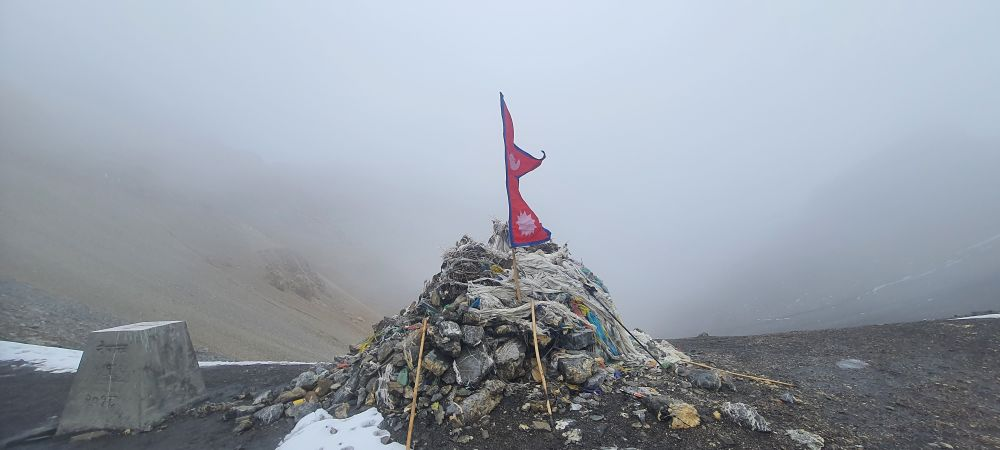
Tinker border point in Darchula.

By Narendra Singh Karki, Darchula, Jan 18: The Tinker border point in Darchula, situated alongside Nepal–China, once served as a backbone of local trade, mobility and cultural bonds for border societies.
From generations, local people carried out continuous trade through the route, trading salt, wool, food grains, and other essential goods.
Since the Covid-19 in 2020, authorities seemed failing to conduct the Tinker border point on a regular basis.
The prolonged disruption has stalled local trade, reduced employment opportunities, and left residents of border settlements feeling ignored by the state.
A local trader from Byas Rural Municipality -1, and a central member of the Nepal- China Himalayan Friendship Society, Yogesh Bohara, stated irregular border activities had generated adversity for dealers.
He asserted authorities have given partial operation this year, but they opened the border only once every 10 to 15 days, which prevented the steady movement of goods.
Bohara said, “The border point holds strong religious and cultural significance, and authorities must ensure its regular operation.’’
Entrepreneur Amit Singh Tinkari stated he reached Tinker after four years.
“A small quantity of goods has been brought this year, while losses from the past four years remain unresolved,” he said.
According to Ashok Singh Bohara, ward chair of Byas–1, the Tinker region represents not just a trade route but also an important religious and cultural heritage integrated to the Kailash Mansarovar pilgrimage.
Kailash Mansarovar stands as one of the most sacred pilgrimage sites for Hindus.
Since the covid-19, local people cannot bring even sacred water from Kailash Mansarovar through the border point.
Restrictions on bringing ritual water have created tough conditions in performing religious practices, Bohara said.
More than three dozen shops conducted by members of the Byasi Sauka community from Darchula in Taklakot, remained closed for over four years.
Entrepreneur, Temba Lama said traders managed to reopen their businesses only this year.
“Our primary entrepreneurship involves bringing goods from Taklakot in China and selling them at fairs and in Khalanga over Nepal and India,” he stated.
“Irregular border operations have affected our livelihoods,” he added.
Plans to establish an immigration office has remained stalled.
Locals believe even the establishment of a customs office would facilitate regular border operations.
A Cabinet meeting on November 24, 2024, had determined to open an immigration office at Tinkar, but no progress has been made since then.
Byasi community stated the delay reflects the state’s failure to prioritise border regions.
Representatives of Darchula’s local communities visited Kathmandu to submit a memorandum to the previous government concerned about problems arising from the lack of regular operations at Tinkar.
The memorandum urged political and diplomatic commencements with relevant authorities to ensure regular border operations and easier access for the Kailash Mansarovar pilgrimage.
They presented confidence that the government would pursue necessary diplomatic and policy decisions to address the long-standing problems faced by residents of the Kalapani region.
Authorities have brought into operation a foot trail connecting wards 1 and 2 of Byas.
Built at a price of Rs.55 million, the Dumling–Changru foot trail, which had remained closed for nearly a decade, reopened this year. (translated from RSS Nepali news)




-original-thumb.jpg)
-original-thumb.jpg)