- Sunday, 3 May 2026

Waterbird census concluding in Hetauda today
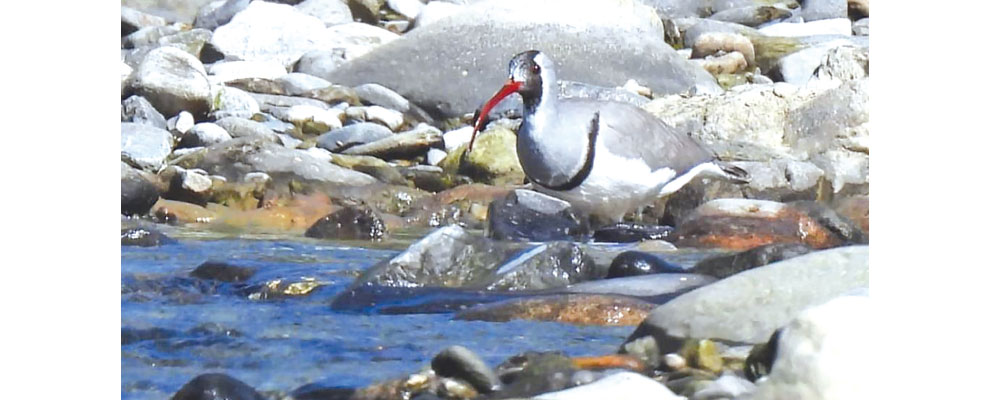
The Ibisbill seen in the Rapti River. Photo: Sushmita Chaudhary

By Anil Parajuli,Hetauda, Jan. 12: The winter waterbird census has begun in Hetauda. The count started on Saturday and will continue until Monday.
On the first day, birds were counted in the Kukhureni and Rapti river areas. On Sunday, the census was carried out around the Natural Wetland Fisheries Promotion and Conservation Centre.
According to Bibek Mehata, a third-year student of forestry and coordinator of Bird Conservation Nepal (BCN), Hetauda branch, around 60 species of waterbirds were recorded during the two-day count.
These included the Ibisbill (Tilahari), Great Cormorant (Thulo jalewa), Common Merganser, White-throated Kingfisher (Seto kanthe matikore), Ruddy Shelduck (Chakewa), Heron (Bakulla) and Red-wattled Lapwing (Hutittau), among others.
The presence of the bisbill and the Common Merganser was especially notable in the Rapti River. The census team said the Blue Whistling Thrush, which normally inhabits the high Himalayan regions of Dolakha and Rasuwa, moves to the lower areas in winter to escape the cold. Foreign birdwatchers are said to visit Hetauda to see this species.
On the final day, waterbirds around the Karra River will be counted.
The bisbill feeds on small insects and larvae found in clean, flowing water. Its presence is therefore considered an indicator of an unpolluted river.
The bird is known for its slender, long beak and a distinctive black, necklace-like band around its neck. It nests near the mountains and migrates to lower altitudes in search of food as temperatures drop.
Nepal conducts a nationwide waterbird census every year from January 3 to 18. Various organisations have been involved in the census since 1987.
Conservationists warned that waterbirds and aquatic life are under threat due to pollution caused by crusher industries, the unchecked operation of tippers and machinery in rivers, vehicle washing in the Rapti River, and chemical waste from dumping sites. It is estimated that around 200 species of water-dependent birds are found in areas around Hetauda alone.
Local conservationists said that regular bird counts help track changes in bird populations and river health. They also said that the findings from the census are useful for planning conservation activities and raising awareness among local communities about protecting rivers, wetlands and bird habitats.




-square-thumb.jpg)