- Sunday, 3 May 2026

Tiger census over in CNP's first block
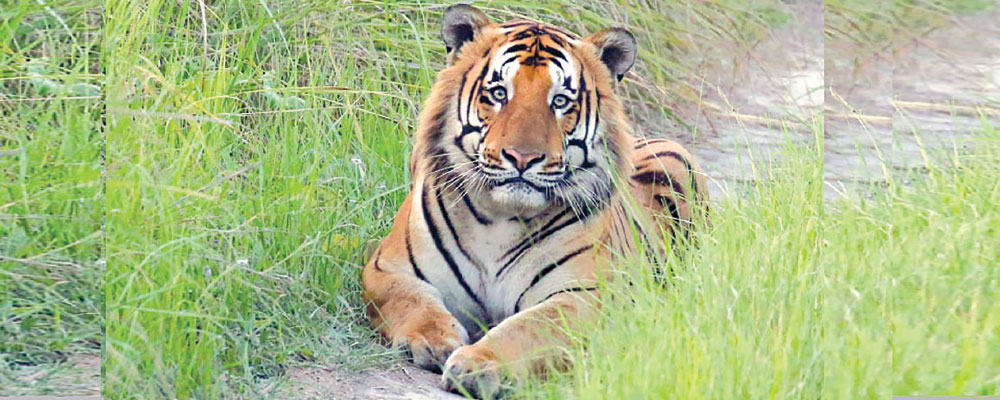

By Shaligram Nepal,Chitwan, Jan. 7: The tiger census has been completed in one of the three blocks of Chitwan National Park. The census began on December 16 from the park’s western section. Three blocks were designated under the Chitwan-Parsa complex for the count.
According to Dr. Ganesh Pant, Chief Conservation Officer of the park, the census in the first block-stretching from Triveni in the west to the Tikauli forest-has been completed. “Out of the three blocks, the census has been completed in only one so far,” Dr. Pant said.
Camera traps were installed for at least 15 days in the first block. These cameras will now be removed and reinstalled in the next block. Dr. Pant said that due to budget constraints, it was not possible to deploy camera traps across the country at the same time.
The cameras will next be installed in the second block, covering the area from Madi-Thori to the Aadhabhar region of Parsa National Park. Installation is expected to take a few days. After completing the census in the second block, the cameras will be moved to the third block.
The third block includes parts of Parsa National Park as well as forests stretching from Pathlaiya to Nijgadh in Bara district, and Chandranigahapur in Rautahat up to the Bagmati River. The census will cover buffer zones, national forests and surrounding areas.
After completing the work in Chitwan-Parsa, the census will move to Shuklaphanta Wildlife Reserve in western Nepal. The entire census in the Chitwan-Parsa complex is expected to be completed by mid-February.
Many tigers have been captured in camera traps in the first block, according to park officials. Information Officer Avinash Thapa Magar said the area from Triveni to Tikauli offers good tiger habitat. “The second block also has a healthy tiger population. Camera trapping will begin there within a few days,” he said, adding that preparations are underway to extend the census to national and adjoining forests in Bara and Rautahat.
According to the park, 150 enumerators trained on December 16 and 17 have been deployed for the census. The first phase covered Triveni, Amaltari, Kasara and the Barandabhar area, which was divided into 286 grids.
For the second block, 13 camps will be set up for enumerators. Camera traps will be installed across areas, including Sauraha, Khagendramalli, Lothar-Pratappur, Bote Simara, Someshwar, Bagai, Ambuwa and Sikari Bas. This block has been divided into 336 grids, with one pair of automatic cameras placed in each grid for two weeks.
Altogether, 958 grids have been created for the tiger census in the Chitwan-Parsa complex, with each grid covering two square kilometres. Tiger censuses are also underway in Banke, Bardiya and Shuklaphanta national parks.
The nationwide census will take around three months. The census in Chitwan-Parsa and Bardiya is being conducted simultaneously, while Shuklaphanta will be covered after completion in Chitwan.
Nepal conducts a tiger census every four years. Park staff, technicians from the National Trust for Nature Conservation, local volunteers, students and conservation partners are involved. Temporary technical camps are set up at central points within grid areas.
Enumerators monitor camera traps placed in eight to 12 grids daily, depending on terrain. After the cameras are retrieved, data analysis begins. Automatic cameras are installed along frequent tiger movement routes, and individual tigers are identified by their unique stripe patterns.




-square-thumb.jpg)