- Saturday, 6 June 2026

Impressive Progress In Immunisation
 Jhabindra Bhandari
Jhabindra Bhandari
Jhabindra Bhandari
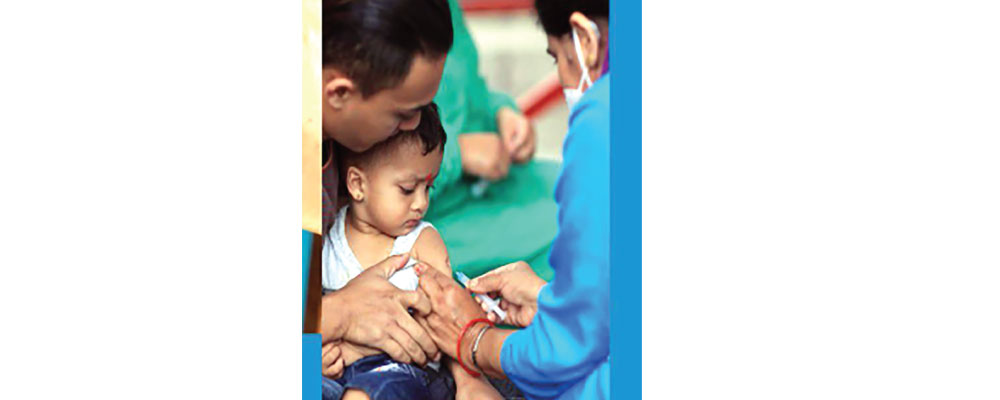
Charimaya Praja, in her early 20s, is a mother of a child in Chainpur of Raksirang Rural Municipality in Makwanpur district. While she was pregnant a few years ago, for the first time she heard about the importance of immunisation from a Female Community Health Volunteer (FCHV) who used to visit every household to inform about the routine immunisation, among other maternal and child health care in the families.
During my ethnographic fieldwork in the last week of November this year. I met her at Thadechuri, where she lives in a small house. Her husband is away for work. Her interesting story about child health and the local health situation drew me closer. “Now we have a hospital at Thadechuri, which is near my home. I am aware of the benefits of immunisation as it greatly improves our children’s health and social well-being. That is why my child is immunised at the hospital. All children in our communities are now fully immunised.
Access to health care was not easy in the past. “Our mothers faced many problems and barriers to access safe motherhood services, including immunisation as there was no health facility around. They had to walk for about an hour to reach Manahari, which is a small town on the highway for the vaccination and other health care services. For poor and the most marginalised families, it was not even possible to go to health facilities. In addition, prevailing social norms, cultural beliefs and traditional practices of the communities were the barriers to accessing the vaccination,” says she with a frustrated look.
Improved situation
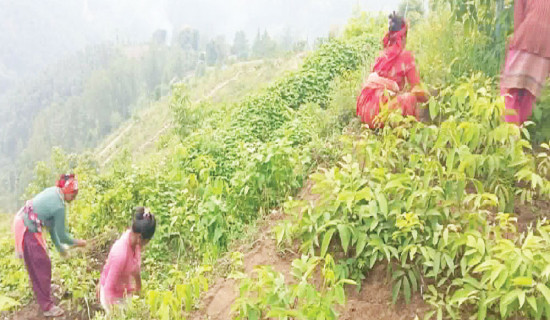
But the situation has improved. As I wanted to know more about their observations and experiences from other families, I visited the houses of Suntali Praja and Dipa Praja in Thadechuri, who were harvesting vegetables from the kitchen garden. Their children were playing outside. As I asked whether their children were vaccinated or not, they readily smiled at me and said with confidence: “Our children are fully immunised by now.” Indeed, this is an encouraging response and observation during my fieldwork. My anthropological curiosity was to explore more about how immunisation is socio-culturally constructed in the communities.
Moreover, it is also important to understand how their awareness, attitude and motivation towards immunisation services are shaped by socio-cultural, political and historical contexts. They added: “The FCHV and other health workers come to our homes and ask if our children are vaccinated.
They usually share the immunisation schedule, site and provide detailed information about the needs and benefits of vaccination. Other community leaders and school teachers also encourage us for immunisation, nutrition and other safe motherhood services available in the hospital. They want to ensure our children are not left out. During COVID times, we also visited the hospital for vaccination.”
Apart from this, local government is responsive and accountable for ensuring that all children are vaccinated for their good health and survival. “Our families suffered a lot from high child morbidity and mortality in the past. This is a remote village where indigenous Praja or Chepang communities are living for years. We have effectively mobilised FCHV, school teachers, health care workers, civil society networks, media, traditional healers and religious leaders to improve immunization coverage. Furthermore, we have earmarked additional resources for reaching out to poor and socially marginalised communities in remote areas,” says Raj Kumar Malla, Chairperson of Raksirang Rural Municipality in Makawanpur.
“We provide financial incentives to the Praja families whose children are fully immunised. This is another motivating factor for them towards vaccination. The political leadership, community engagement, communication services, outreach and micro-planning for immunisation have been effective for demand generation at the local level,” says Bijay Kapri, chief of health section at the Municipality.
Undoubtedly, vaccines are critical to prevent and control many preventable diseases. However, immunisation coverage varies widely within and across social groups. In particular, the poorest, the most marginalised and vulnerable groups have poor access to immunisation services. In order to address people’s demands for immunisation services, targeted interventions are necessary for understanding and overcoming barriers to vaccination, particularly socio-cultural and gender related barriers in accessing immunisation services.
Despite challenges in the health system, Nepal has made impressive progress in immunisation. In Nepal, the Expanded Programme on Immunisation (EPI) was launched in 1977 as a high-priority initiative to ensure that every child receives essential vaccinations to prevent diseases such as polio, measles, and rubella.
Frontline health workers are playing a crucial role in reaching remote areas to ensure immunisation services are accessible to every child. “Nepal has made impressive achievements towards high immunisation coverage as 94 per cent. And our concerted efforts are underway to further improve and sustain the progress. Political leadership and commitment have been progressively significant in the country context. In addition, the Immunisation Act, 2016 has been instrumental in driving political engagement within and across the provinces.
They are progressively engaged in national campaigns, high-level meetings and advocacy events to enhance community participation and ensure vaccination for all,” says Dr. Abhiyan Gautam, Chief of Immunisation Section at the Department of Health Services.
Undoubtedly, immunisation reaches more people than any other health service and is a vital component of primary health care. He adds further: “The technical support from Gavi, the Vaccine Alliance, along with core partners such as WHO and UNICEF have been instrumental in achieving the high coverage by enhancing demand generation for immunisation. Their support has been vital in capacity building of health workers, community engagement, social and behaviour change communications, and micro-planning at the local level.”
The 2025 HPV vaccination campaign in the country marked a milestone in advancing adolescent health and cervical cancer prevention through inclusive, community-driven efforts. According to UNICEF, the campaign highlighted opportunities to strengthen coordination, data use, communication, and service delivery – especially in reaching the most marginalised groups.
By embedding these insights into routine systems, strengthening cross-sectoral collaboration, and empowering community platforms, we can move towards a more sustainable and equitable model for adolescent immunisation by ensuring that no one is left behind.
However, more efforts are still needed towards capacity building of health institutions, front-line health workers, local governments in the area of micro-planning, digital literacy, behaviour change interventions, participatory monitoring and evaluation. Targeted interventions for migrants and displaced populations in urban areas are needed to ensure that they are not missed out.
Elimination of rubella
Additionally, Nepal has eliminated rubella as a public health problem. It is a remarkable achievement to make concerted efforts to protect from vaccine preventable diseases. Nepal introduced the rubella-containing vaccine in its immunisation programme in 2012 with a nationwide campaign for the age group 9 months to 15 years. A second dose of rubella-containing vaccine was added to the routine immunization schedule in 2016. Over the years, the subsequent national campaigns with rubella vaccines were effective in achieving over 95 per cent coverage. Innovative strategies such as outreach to vaccinate missed children and motivation for the districts to declare fully immunised have been notably significant so far.
More importantly, Nepal has met the WHO’s Immunisation Agenda 2030 by halving the number of zero-dose children—those who have never received even a single dose of routine vaccines—in 2023, seven years ahead of schedule. According to a report published in The Lancet, a leading international medical journal, apart from reducing the number of zero-dose children by 50 percent, Nepal is also in line to achieve 90 per cent coverage of diphtheria, pertussis and tetanus (DPT3), pneumococcal conjugate Vaccine (PCV3) and the second dose of the measles-containing vaccine.
Nepal was officially declared polio-free in 2014. The recent update shows that Nepal has achieved a significant milestone in terms of surveillance of suspected polio cases for the year 2025. Now the country ranks ahead of India, Bangladesh, Bhutan, South Korea, the Maldives, Myanmar, Sri Lanka, Thailand, and Timor-Leste.
Despite notable progress, Nepal’s journey to immunisation cannot end here. We should ensure that all people and communities value, actively support, and seek out immunisation services. Sustaining the progress is a key challenge for a country like ours, where resources are still limited in the changed socio-political context. Therefore, alignment with broader health agendas such as health-related Sustainable Development Goals (SDGs), primary health care and universal health coverage is critical to further harness the progress of immunisation services.
(Bhandari is a health policy analyst interested in anthropology. )