- Sunday, 3 May 2026

Nepali children vulnerable to trafficking in India

By Gokarna Dayal,Baitadi, Dec. 25: Nepali women and children from Baitadi and other districts of Sudurpaschim Province have been falling victim to human trafficking and sexual violence after travelling to India’s Pithoragarh district in search of work, according to local organisations.
A total of 75 women and children affected by trafficking, forced labour and sexual abuse have been rescued so far.
In recent years, the number of women and children travelling to India for daily wage labour has increased significantly. Even school-age children have been accompanying their parents or travelling independently, lured by the hope of earning money.
In one tragic incident, a couple from Purchaudi Municipality, Baitadi, who had gone to Pithoragarh in search of employment, died in an accident. The two girls travelling with them, aged 13 and 15, were later raped and sold by human traffickers.
Surendra Aryal, Secretary of the CARD organisation in Pithoragarh, said that 75 Nepali women and children trapped by traffickers under the pretext of employment had been rescued from child labour, sexual exploitation and rape.
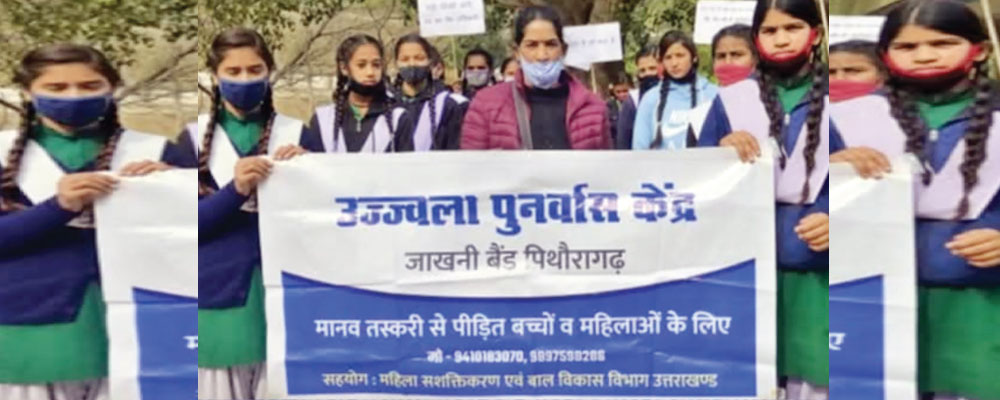
However, he said the organisation has now been forced to shut down due to a lack of funding. “Under the Indian government-supported Ujjwala Programme, we rescued, sheltered and provided legal support to 75 Nepali women and children between 2016 and 2024,” Aryal said.
“After the programme ended, we safely repatriated the survivors to Nepal and filed court cases seeking justice. However, since the victims have returned home, it has become difficult to record statements and complete court procedures.”
According to Aryal, 27 Nepali children rescued from trafficking were placed at the Ujjwala Rehabilitation Centre in Pithoragarh. After the programme’s closure, all of them were sent back to Nepal. The rescued children were from Darchula, Baitadi, Dadeldhura and Kanchanpur districts.
Among the 27 children, 17 were forced into child labour, while 10 girls were victims of sexual exploitation and rape, he said. Poor and orphaned children are particularly vulnerable and often fall into traffickers’ networks before being taken to India.
Legal facilitator Tanuja Pokhariyal said court cases have been filed against several Indian nationals accused of engaging children aged 10 to 18 in forced labour, trafficking and sexual abuse.
Until the cases were resolved, the rehabilitation centre had arranged food, shelter and education for the rescued children.
However, due to budget shortages, the children had to be repatriated to Nepal before the legal cases were concluded.
In another case, a woman from Kanchanpur who had been trafficked to Pithoragarh through the Darchula border was sheltered for two years before being sent back to Nepal after her case was resolved.
Aryal noted that repatriating orphaned children and single women involves complex legal challenges.
“Most of the rescued children are orphans. Some were separated from their parents while working as labourers, while others lost their parents in accidents. Such children easily fall into traffickers’ traps, and legal procedures to bring them back to Nepal are complicated,” he said. With facilitation from India’s Child Welfare Committee, discussions are going on with Nepali authorities to determine proper repatriation procedures.
Chief District Officer of Baitadi, Punya Bikram Poudel, said the issue of Nepali women and children travelling to India for seasonal work will be raised in Nepal–India security committee meetings.
No official data
Local governments have no official data on families travelling to India for work.
Lalmani BK of Sigas-1 said locals are compelled to migrate due to a lack of employment opportunities in villages. “If we do not go to India for work, our families cannot even afford to light the kitchen stove,” he said.
Large numbers of locals from Purchaudi Municipality, Surnaya Rural Municipality, Sigash Rural Municipality and Dilasaini Rural Municipality travel to India for daily wage labour.