- Sunday, 3 May 2026

Poaching puts owls under threat
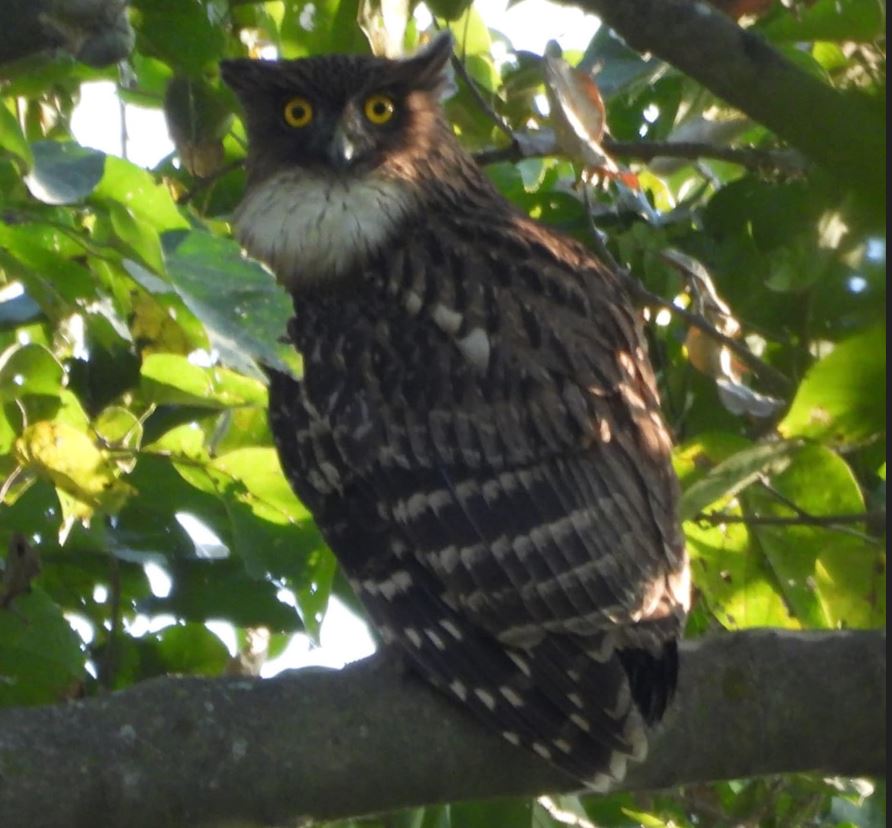
Photo: Baburam Karki/TRN Owl in Koshi Tappu.

By Baburam Karki,Barahakshetra, Dec. 6: The population of owls -- found from the lowland plains to the high mountains -- has been declining sharply in recent years.
Population of the species, known locally as Latokosero (owl), is decreasing mainly due to poaching and the loss of habitat. Once regarded as a farmer’s companion, the owl plays an important role in controlling pests, conservationists said.
Raju Acharya, who has long been involved in owl conservation, said a decline in owl numbers will directly affect biodiversity. Owls help farmers by feeding on pests that damage crops, and their loss could harm the natural ecosystem. “Although 225 species of owls are found worldwide, Nepal is home to only 23,” Acharya said.
As owls feed on field rodents, their decline could also reduce crop yields. Ornithologist Anish Timilsina said that owls, once commonly seen along the riverbanks of the Koshi Tappu Wildlife Reserve, have now become rare.
“The use of pesticides in farmlands is also contributing to the decline,” he added. Owls prey on rats, frogs, snakes, shrews, lizards, small birds, snails, insects and even rabbits. Illegal trade of owls from Nepal to India and China has also fuelled the decline.
Acharya said superstitions like the belief that keeping owl bones in the home brings good fortune have pushed the species further towards danger.
Acharya added that habitat loss is another major threat. Owls do not build their own nests but live in existing nests, hollow trees or buildings. With the disappearance of large trees, the cutting of village trees, the construction of more concrete houses and increasing urbanisation, their nesting sites are being destroyed.
Of the 23 species found in the country, eight are considered rare. In recent years, lack of conservation efforts and illegal export have further worsened the situation, he added.
Owls, worshipped as the vehicle of the goddess Laxmi, are also known locally as Huchil, Hapsilo and Bhudrung. Their heads can rotate up to 270 degrees. With hearing ability ten times stronger than humans, they turn their heads to identify which ear detects sound first.
Owls see poorly in daylight but have excellent night vision and hearing, making them active hunters at dawn and dusk. Their talons and beaks are strong and adapted for hunting, and their sharp hearing helps accurately judge distance and movement even in low light.
Acharya said owls begin breeding before the monsoon, but habitat destruction and illegal trade have threatened their existence.
Conservationists believed that community participation is essential to protect these beautiful creatures of nature.