- Saturday, 6 June 2026

Commitment To Poll
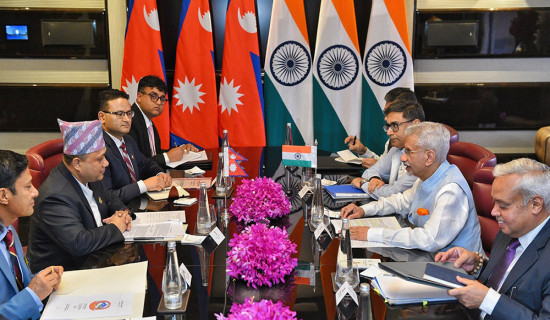
A tripartite meeting, convened by Prime Minister Sushila Karki on Wednesday, concluded on a positive note. This was the first meeting held between the government, political parties and the Gen-Z representatives after the formation of the new interim administration after the Gen-Z movement of September 8 and 9. The exchanges of ideas and friendly discussions on various pertinent political issues are expected to create an atmosphere conducive to holding elections in March next year. At a time when differences were being reported between the key political parties and the Gen-Z group, the parleys of Wednesday evening have opened the door for cooperation.
Initiating the key meeting, Prime Minister Karki stressed that uninterrupted dialogue was important to address the challenges the country has been facing. She also urged one and all to take ownership of and engage in the nation-building mission. Gen-Z representatives asserted that the election was crucial, but fighting corruption and maintaining good governance should be the electoral promises of all the parties and their commitment should translate into action. The Gen-Z have not envisioned elections without participation of the political parties. Conducting free and fair elections is the main priority of the newly formed government after the two-day Gen-Z movement toppled the KP Sharma Oli-led government.
Political parties have also expressed readiness to participate in the upcoming elections. However, CPN-UML has demanded the reinstatement of the parliament. This party has termed the dissolution of the House of Representatives unconstitutional although the government led by same party had dissolved the House twice in a gap of six months in 2020 and 2021. The UML's position has not gone well with other parties committed to the polls. At the moment, an election is the only way to end the current stalemate triggered by the Gen-Z revolt on September 8 and 9.
Nepali Congress representatives asserted their commitment to the upcoming election, but raised concern about the security issues as scores of prisoners have escaped from the jails and many arms were looted during the second day of the movement. The Madhes-based parties have also shown their commitment to elections. The Minister for Information and Communication Technology, Jagdish Kharel, affirmed, after the key meeting, that the political parties are ready to participate in the upcoming election, although they called for strong security guarantees and logistical preparedness.
Gen-Z representatives have urged the political parties to reflect on their weaknesses and prioritise good governance and anti-corruption measures while bracing for the polls. The parties' concern for security stands valid because voters, candidates, and staff of the Election Commission cannot go to the field in an insecure environment. Prime Minister Karki has rightly underscored the fact that the parties and Gen-Z should have a common goal of participating in the polls, crucial to bringing the democratic process back on track.
More importantly, the Gen-Z revolt has shaken the foundation of the old parties, accused of indulging in various corruption cases. The message of Gen-Z uprising is clear: maintain good governance, control corruption and create job opportunities. Although it needs the consent of all forces to amend the constitution for introducing the provision of direct election of the Prime Minister or the President, the parties must embrace the sentiments of the youths, who want stability and common prosperity of the people. The upcoming polls must reflect the spirit of change.