- Tuesday, 5 May 2026

Successful Sambaad


Nepal has set another milestone in climate diplomacy with the successful conduct of Sagaramatha Sambad, which has made a clarion call to fight the disastrous impacts of climate change. The three-day conference issued a 25-point 'Sagarmatha Call for Action' that has emphasised limiting the global average temperature to 1.5 degrees Celsius, building adaptive capacity and resilience, addressing loss and damage and strengthening partnerships among the nations. The convergence of national and foreign dignitaries, policy makers and experts succeeded in drawing global attention to the urgency of collective action to tackle the biggest threat facing humanity.
While reaffirming commitments to implement the United Nations Framework Convention on Climate Change (UNFCCC), the Paris Agreement and the 2030 Agenda for Sustainable Development, it has acknowledged the contribution of mountain glaciers in regulating hydrological cycles and providing essential environmental services to people living downstream in glacier-fed river basins. They are the source of major perennial rivers in the South Asian region, including the Ganges, Bhahmaputtra and Indus. More than 1.6 billion people depend on these rivers for drinking water and irrigation. They also serve as the source of electricity generation in the region.
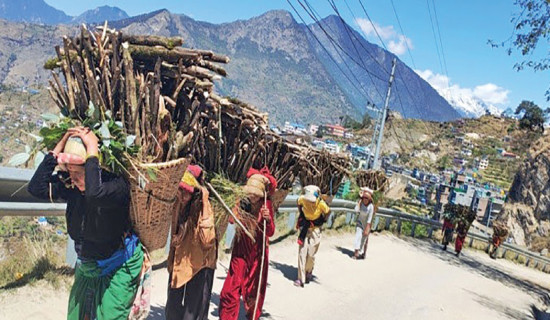
Fragile mountain ecosystems and the communities that are dependent on mountains for sustenance are immensely affected by climate change and global warming. The Sambaad has asserted that the role of the Himalayan glaciers is immense for food security in the South Asian region. Also known as Everest Dialogue, Sagarmatha Sambaad had the theme of ' Climate Change, Mountains and the Future of Humanity' that sought to enhance dialogue on climate change, sustainable development and international cooperation for the purpose. Minister for Foreign Affairs Dr. Arzu Rana Deuba said that the Sambaad was not just an event, but a coming together of ideas and a celebration of shared responsibilities. The 'Sagarmatha Call for Action' is expected to serve as a call for action for global collaboration.
Recommendations of the dialogue will be presented and discussed at the upcoming high-level International Conference on Glacier Preservation in Tajikistan later this month, the 80th United Nations General Assembly, and the UN Climate Change Conference (COP30) to be held in Brazil later this year. Home to the world's highest peak, Mt Everest, Nepal hosts many other taller mountains that not only promote adventure tourism but also play a crucial role in the mountain ecosystem. So it is natural for Nepal to attach priority to mountains and the climate change agenda, given their profound impact on regional climate, monsoons, cryosphere and public health. The second edition of the Sagarmatha Sambaad will be held in 2027 to give a new impetus to the efforts at mitigating the effects of global warming.
The entire world is facing the unprecedented challenges posed by climate change, although the contribution of countries to climate change and global warming varies. Thus, it is the shared responsibility of all countries to work for the mitigation of the effects of climate change. Equal focus should be given to climate financing and global cooperation to address the disproportionate impact of climate change in the Himalayan region. The funding should be made available and accessible to meet the needs of those affected by the climate-induced crisis.




-original-thumb.jpg)