- Monday, 25 May 2026

12,000 Biratnagar squatter families anxious about losing homes
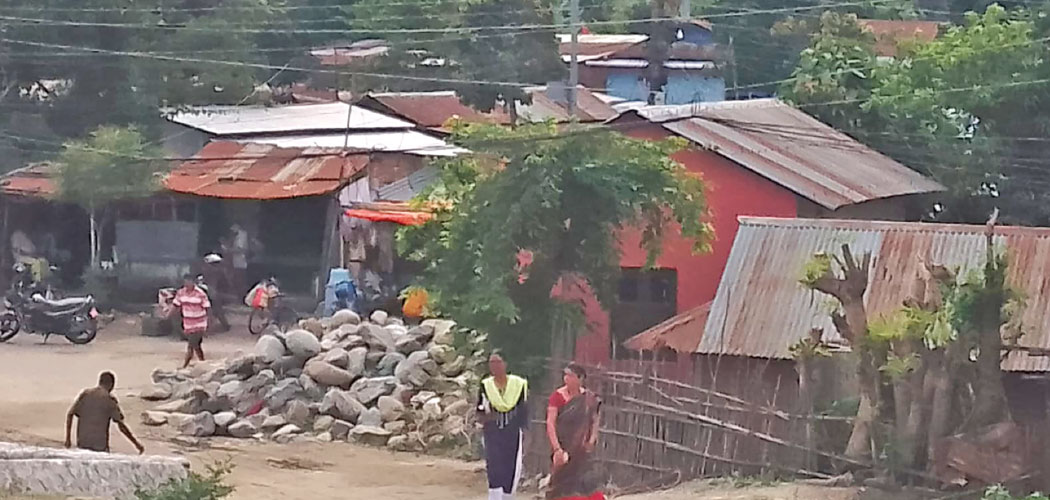
Photo: Shashidhar Parajuli A squatter settlement in Tinpaini East, Biratnagar–2.

By Shashidhar Parajuli/ Nisha Rai,Biratnagar/ Dharan, May 4: Nearly 12,000 squatter families living within Biratnagar Metropolitan City are now gripped by a single fear: “Will we lose our shelter in the coming days?”
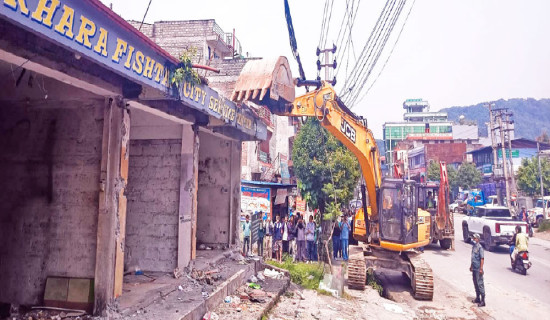
For years, these families have been living in makeshift structures along the banks of the Singhiya and Kesaliya rivers. However, recent demolition drives targeting unplanned settlements in Kathmandu and other areas have created anxiety among low-income communities in Biratnagar as well.
From tea shops to local gathering spots, one question dominates conversations, “If we are evicted, where will we go? How will we survive?”
Prem Prasad Niraula, 80, of Biratnagar–3, is deeply distressed. Having already lost his wife, he now fears what life would be like if he is also forced to leave the shelter he has relied on in his old age.
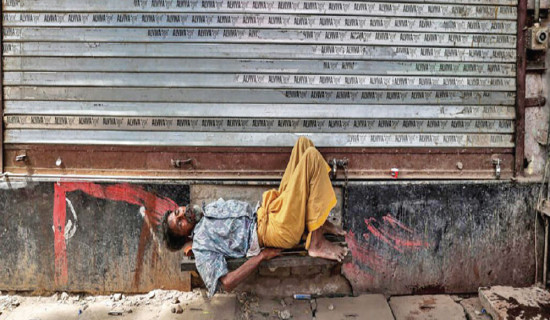
Chandramaya Ramtel, a single woman who migrated from Khotang three decades ago, shares a similar story. She survives on daily wage labour while living along the Singhiya riverbank. Following her husband’s death, she has struggled alone, but now, due to her age, she is no longer able to work regularly. She survives on the government’s old-age allowance.
“We have nothing but this small hut. There is nowhere else to go,” she said.
Saving from her allowance and living frugally, she invested Rs. 170,000 six years ago to build a modest shelter. Now, rumours of eviction have left her deeply shaken. Holding back tears, she said, “At this age, where shall I go? The government must arrange something for us before evicting us, otherwise, we have nowhere to go.”
Like her, many locals fear that their homes could be demolished without consultation. According to local tea shop owner Binod Acharya and youth Sunil Karna from Paropakar Ghat in Biratnagar–1, uncertainty about the future has left locals deeply anxious.
The squatter issue exists across all 19 wards of Biratnagar. According to the Settlement Protection Society, there are around 400 households in ward-1, 500 in ward-2, 80 in ward-3, and over 1,000 in ward-4.
Similarly, there are around 300 households in ward-6, 500 in ward-14, and about 700 in ward-19. These figures only include areas in contact with the organisation. Including those living on private land and those not yet identified, the total number of squatter families in Biratnagar is estimated to be between 10,000 and 12,000.
The metropolitan office currently lacks precise data on squatters. Although records were collected and identification slips distributed in the past, many documents were destroyed in arson during the Gen-Z movement. As a result, the metropolitan authority is now recollecting data using its own resources. Bimal Niraula of the Settlement Protection Society argues that squatters should not be treated as criminals and calls for solutions with viable alternatives.
“Land registered in our names elsewhere is often unsuitable for settlement or farming, some are even on riverbanks. If the government needs those lands, it can take them, but we should be allowed to stay where we are. Those in high-risk areas can be relocated nearby with consent. Using force without alternatives is an injustice against the poor,” he said.
Many of these squatters work as urban labourers and fear starvation if relocated to rural areas. They are accustomed to earning a living through city-based work rather than farming. Their demand is clear: if relocation is necessary, it should be near urban centres with access to employment.
Amid rising concerns, Deputy Mayor of Biratnagar Metropolitan City, Shilpa Niraula Karki, has offered some reassurance. She stated that no settlement would be removed arbitrarily without proper arrangements.
“The metropolitan office will not evict any settlement without providing an alternative or leaving people homeless. We are working towards a systematic solution,” she said.
For now, squatters in Biratnagar remain caught between official assurances and an uncertain future. For them, their small huts are not just structures; they represent years of hardship, survival, and their only means of living.
Meanwhile, a rally was staged in Dharan Sub-Metropolitan City on Saturday in protest against the removal of squatter settlements.
Organised by the Nepal Settlement Protection Society, participants marched expressing strong opposition to what they described as forced evictions without any alternative arrangements.
During the rally, demonstrators also chanted slogans against the policies of the government led by Prime Minister Balendra Shah.
Participants stated that development should not come at the expense of marginalised and low-income communities. They argued that removing settlements without ensuring alternative housing is unjust and called on the state to guarantee immediate rehabilitation for the displaced.