- Monday, 25 May 2026

Kalinga LitFest provides int'l forum for Nepali authors: Niraula

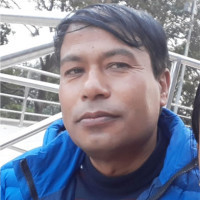
Kathmandu is hosting the fourth edition of the Kathmandu Kalinga Literary Festival 2026, scheduled for June 6 and 7, at Hotel Himalya in Lalitpur. Talking to The Rising Nepal, Festival director Ranjana Niraula said that the festival will bring together prominent writers, artistes, filmmakers, musicians, diplomats, and intellectuals from across South Asia. Excerpts-
What are the highlights and key attendees of the fourth Kathmandu-Kalinga Literary Festival ?
This year's festival will host in-depth discussions on literature, art, philosophy, cinema, folk culture, translation, women’s writing, indigenous discourse, diaspora, sports, the climate crisis, and South Asian cultural relations.
One of the main highlights of the festival is the multidimensional exchange among writers, poets, historians, artistes, and intellectuals from different countries. Renowned literary figures, cultural scholars, artistes, and young creators from Nepal, India, and beyond will participate. Among those attending are Acharya Prashant, Piyush Mishra, Raj Shekhar, Yatindra Mishra, Pratibha Ray, Vikas Swarup, Milli Aishwarya, Neena Verma, Archana Singh, Jai Prakash Pandey, Chandra Shekhar Hota, Satish Padmanabhan, Shakeel Azmi, Azhar Iqbal, Ila Arun, Badri Narayan, Malini Awasthi, Dr. Beena Biswas and others.
What is the purpose of its Nepal edition ?
The Kalinga Literary Festival began in Odisha, India, and has been running for the past ten years. It is now held in various cities of India as well as in Nepal. Literature cannot be confined within the borders of a single nation. Nepal and India share thousands of years of cultural, linguistic, and philosophical ties. Therefore, the Nepal edition aims to connect this shared cultural consciousness with contemporary discourse. The Nepal edition not only connects Nepali writers with global literary trends but also offers a platform to present Nepal's multilingual literary traditions on the international stage.
Some complain the same authors are invited every year, while the participation of Marxist and leftist writers is almost absent?
Criticism is natural, and it should come; we take it positively. Sometimes, certain writers are invited repeatedly because of their thematic relevance, international networks, or association with specific intellectual discourses. However, with every edition, we strive to include new faces, fresh ideas, and younger generations.
As for the question regarding leftist and Marxist writers, the festival's doors are not closed to any ideology. The essence of literature lies in plurality and respect for dissent. If writers from certain ideological backgrounds appear less represented, it is not due to any deliberate exclusion. Rather, we see it as a challenge to further broaden the scope of dialogue and participation.
What role has it played in internationalising Nepali literature and art ?
Nepali literature has gained a permanent platform for international dialogue. Nepali writers are no longer confined within their own linguistic boundaries; they are now engaging directly with South Asian and global literary communities.
The festival has expanded possibilities for translation, strengthened ties with international publishers, and created an environment through which Nepali creative works can reach global readers.
Moreover, the festival has helped present Nepal not merely as a country of mountains and tourism, but as a nation with profound cultural consciousness and a rich literary heritage.
In the field of art as well, efforts have been made to establish connections among literature, music, theatre, cinema, and folk culture. In this sense, the festival has acted as a cultural bridge linking Nepali art with the wider world.
How would you describe the position of Nepali literature on the international stage ?
Nepali literature is immensely rich, sensitive, and filled with lived experience. However, its international presence is still relatively limited. The main reasons are the lack of linguistic accessibility and insufficient translation.
Today, world literature seeks the universal meaning of local experiences, and Nepali literature possesses that strength in plenty. Our mountains, ways of life, struggles, memories, myths, and multicultural society offer deeply original narratives.
However, we still need to work more systematically on translation, international publishing, and cultural networking.
Whenever Nepali authors present their works on international platforms, they are warmly welcomed with curiosity and respect. This demonstrates that Nepali literature has the power to attract the world. What is now needed is to present it continuously and in a more organised manner before the global audience.