- Tuesday, 5 May 2026

Toward Climate Justice

Climate change is a global crisis, transcending international borders. Only by mounting a coordinated global response can we address it. To galvanise the countries' leaders towards this goal, the Sagarmatha Sambaad (Everest dialogue) is being held in Kathmandu. The first day of the third-day event saw the participation of 350 persons, 175 of whom are from foreign countries, including high-level dignitaries from 12 countries. Themed "Climate Change, Mountains and the Future of Humanity", the Sagarmatha Sambaad aims to foster animated discussions, mutual knowledge exchange and collective action.
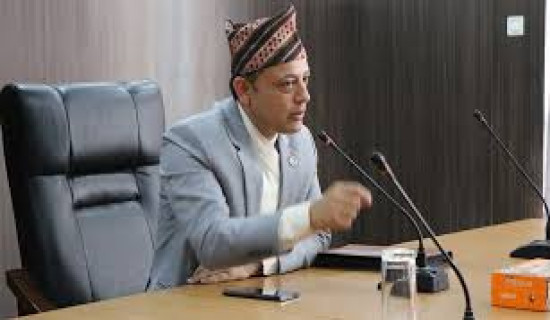
Addressing the inaugural session on Friday, Prime Minister KP Sharma Oli said that to protect the mountains is to protect the Earth, the oceans, and humanity itself, underscoring the deep sense of interdependence. These words encapsulate the undeniable truth of climate change and its global ramifications. As explained by PM Oli, climate change is a harsh reality of everyday life for people in disproportionately impacted countries like Nepal, and it's also becoming a fact of life for countries hitherto deemed relatively immune to its impacts.
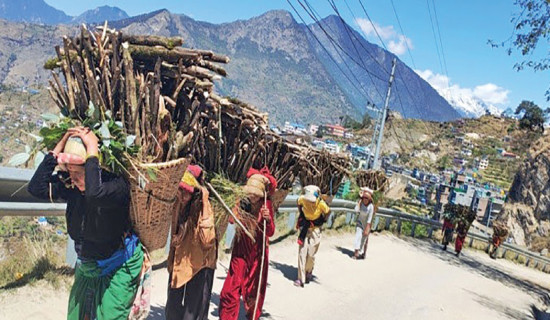
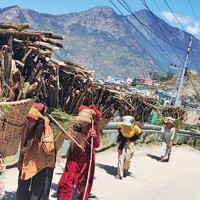
When mountains melt, sea levels rise, displacing settlements in coastal regions thousands of kilometres away. The scarcity of fresh water, critical to life and livelihoods, is not only felt by nearby countries but also extends to distant countries. For a mountain country like Nepal, the ramifications ripple through every aspect of life. Hydropower, the main energy source, takes a harsh blow. The biodiversity sustained by the mountain ecosystem is imperilled, putting the entire civilisation dependent on it on life support. So, it would be fair to state that mountains are the window into the health of the Earth. Mountain regions are found to be warming at twice the global average, triggering glacier retreat, floods, landslides and disrupted water systems.
By hosting such a conference on a grand scale, Nepal has sent a strong message about its commitment to global climate action and its vulnerability to the impacts of climate change, as well as galvanised the countries largely responsible for the crisis to rise to the challenge of decarbonisation. It is also pushing the climate-vulnerable countries, which are bearing its brunt despite negligibly contributing to it, towards climate justice, as nothing less than a global alliance based on justice and solidarity can address this existential crisis. Climate justice advocates for a fair distribution of resources and burdens related to climate action, ensuring that disadvantaged communities are not left in the lurch. The country's eagerness to foster collaboration globally to that end was also on stark display.
Enhancing the importance of the meeting is the attendance of Mukhtar Babayev, COP29 Presidency and Representative of the President of the Republic of Azerbaijan on climate issues. As made clear by President Babayev, to mitigate and adapt to the impacts of climate change, public funds must be mobilised, which will help address the irreversible losses and damages faced by states. Various wealthy and developed nations have already presented clear roadmaps to mobilise USD 1.3 trillion annually by 2035. He also highlighted the urgency of its implementation, expressing his commitment to hold the governments accountable so they can mobilise the necessary USD 300 billion to implement this agenda. Undoubtedly, the conference has worked to burnish the country's global image as a force that is more than eager to take the lead towards climate justice.


-original-thumb.jpg)