- Tuesday, 5 May 2026

Grassland to prevent wild animals from entering settlements
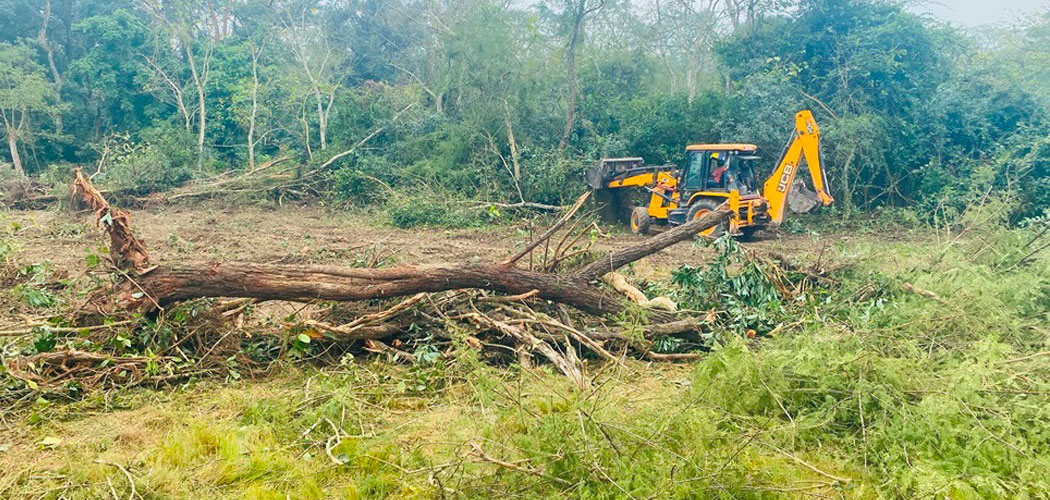
Photo: Bomlal Giri/TRN Grasslands grown at buffer zone community forests in Kawasoti.

By Bomlal Giri,Nawalpur, Mar. 8: With increasing incidents of wild animals entering human settlements and attacking people, community forest groups in Nawalpur have increased efforts to create grassland areas as a preventive measure.
Three buffer zone community forests in Kawasoti have already established such grasslands.
Krishnasar Buffer Zone Community Forest in Ward 7, Kumarwati Buffer Zone Community Forest in Ward 11 and Shantikunja Buffer Zone Community Forest in Ward 13 have cleared invasive shrubs, including Banmara, to develop the grasslands.
According to Lekhnath Dawadi, Secretary at the Lamichaur Consumer Committee, the three community forests have jointly spent Rs. 700,000 to create over 40 hectares of grassland.
The Chitwan National Park has been providing an annual budget for grassland expansion to minimise human-wildlife conflict. This year, the allocated budget was used to develop grasslands in the three buffer zone community forests.
Due to a lack of sufficient food and water sources, rhinos often enter human settlements, causing damage to property and attacking people. To prevent such incidents, grasslands have been created to keep rhinos within the jungle, said Basudev Paudel, Chairman of the Lamichaur Consumer Committee.
“There was a noticeable shortage of grassland in the buffer zone community forests. With limited grazing areas, food sources and wetlands, wild animals began venturing into settlements. The grasslands have been created to ensure that animals remain and thrive within the forest,” said Paudel. Grassland management is also important from a tourism perspective. With the development of these grazing areas, the habitat and feeding grounds for rhinos and other wildlife will improve. Paudel added that this would also enhance the experience for tourists on jeep and elephant safaris, as they could observe wildlife more easily.
Narayan Prasad Timilsina, former Chairman of Kawasoti Ward No.10, said that increased human interference in nature has forced animals to leave their natural habitat. He pointed out that wild animal arrivals in villages have become more frequent in recent years.
“There were extensive grasslands in the past, but with the rise of community forest conservation, the forests became denser. As trees grew taller, animals struggled to find accessible food, leading them to enter human settlements. Thus, managing grasslands became a necessity,” Timilsina explained.
According to Chitwan National Park, rhinos require grasslands with Siris trees and water ponds, while animals, like spotted deer and sambar, need leafy plants and grasses. Even tigers are less likely to enter human settlements if sufficient food is available in the jungle.
In the past eight months of the current fiscal year, human-wildlife conflicts in and around the buffer zone areas have resulted in five fatalities and six injuries.
-original-thumb.jpg)



-square-thumb.jpg)