- Monday, 25 May 2026

Comedy must evolve beyond body-shaming humour: Prabhat Lama
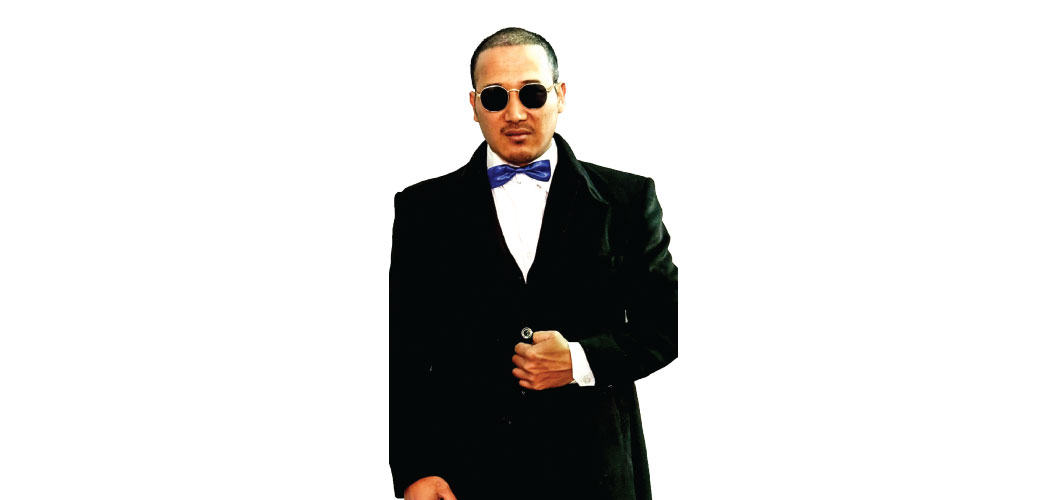

Prabhat Lama, a renowned stand-up comedian who is a permanent resident of Mahottari district, spent more than 10 years in radio programmes, struggling to be an artist. After arriving in Kathmandu, he joined Radio-Audio, the first comedy-themed radio channel in Nepal. From where he geared up his career as a radio performer. While working on the radio, he gave some stage performances during the Gaijatra. However, some of his performances on Comedy Nights with Champions gained appreciation and love from millions of viewers, taking his career to the next level. In recent times, his mimicries of some famous personalities such as Mahabir Pun, Sudan Gurung, and Rajesh Hamal have elevated his career. Raman Paudel from The Rising Nepal talked with Prabhat Lama about his struggle and career.
You worked in radio for a long time. How was the transition from radio to stand-up comedy?
I worked in radio as a sound director and in various positions for a long time. During that time, I did one or two comedy programmes. After joining the Radio Audio, which is the only comedy-themed radio in Nepal, I got an opportunity to explore my ideas on comedy content. Gradually, I started writing comedy for Radio Audio.
There is not that much pressure to make people laugh on the radio. If you express your emotions and do a few funny things, it will be enough. But when you go on the stage, there is pressure to make people laugh after every punch line.
The facial appearance also needs to be adjusted accordingly. Comedy on stage is definitely more difficult than on the radio. Initially, every time I went on stage, I felt scared and anxious. Now, it's a bit of a habit; I have become accustomed to it.
How much time and preparation is needed for a stage performance? How challenging is it?
In the past, I wished I had more time to prepare. These days, Comedy Nights with Champions provides 15 days for preparation. Since it's a guest-oriented programme, guests sometimes change at the last minute. Which is a challenge for us.
Is roasting a guest spontaneous or scripted?
Usually, it is planned in advance, as we know about the guest's background. The spontaneous punch line is something that grabs the attention and satisfies the comedian's artistic self.
Among the characters you have played, which one do you like the best?
The mimicry of Mahabir Pun, Member of Parliament, is what introduced me most prominently to the audience. I had done that comedy at the Gaijatra in 2080. Later, I did it at Comedy Nights. Many viewers liked it.
Mahavir Pun himself had also commented after watching it. I had prepared the comedy as a tribute to him. When he was talking about the need to sell the award he received, I attempted to connect that emotion. At that time, I got so deep into the character of Mahavir Pun that I cried at the end.
Similarly, a satire towards Sudan Gurung was also appreciated by many.
When I was a mentor in Comedy Champion Season 3, I had to perform. During that time, I performed a comedy on Keshav Sthapit, the former KMC Mayor. But I did not like it myself and did not want it to be broadcast. However, my comedy performance featuring Deepak Raj Giri, Rajendra Khadgi, and Rajesh Hamal received a lot of praise.
If Comedy Night closes, how would you continue reaching audiences?
In such a situation, I have been actively showcasing my work through social media, including Facebook, to connect with the audience. However, I have not thought much about the future. Maybe some efforts can be made together with contemporary friends. Or maybe I can work in a cinema.
Body-shaming in stand-up comedy is now facing strong criticism, requiring adaptation to changing expectations. What is your take on it?
Artists need to be aware of such things. Such body-shaming content is filtered depending on how aware we are. We must be sensitive to national integrity, religion, and caste while making a joke.
In changing circumstances, body shaming and community-targeted content should be removed from comedy. Overall, the culture of comedy needs to evolve, as our society has long found amusement in body shaming. This is the time to enhance the comedy culture.