- Monday, 8 June 2026

Deputy Speaker Ranamagar bats for education in school level to end GBV
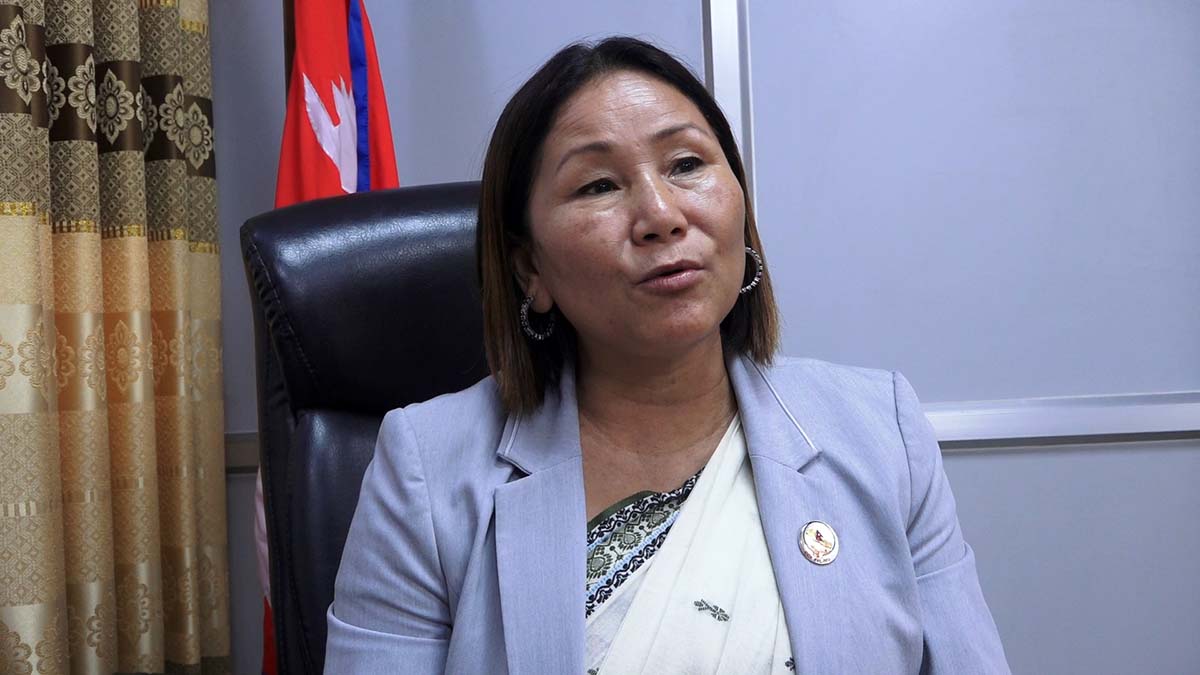
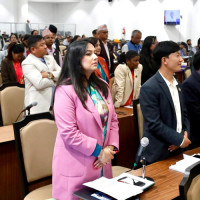
Kathmandu, Dec 10: Deputy Speaker of House of Representatives (HoR) Indira Ranamagar has asserted that education should be provided from school level to eliminate gender-based violence (GBV).
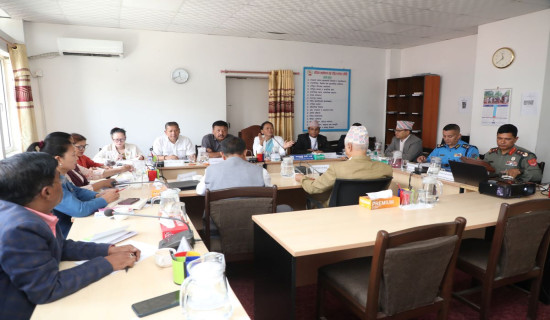
Deputy Speaker Ranamagar said so at a programme organized here on Tuesday marking the seventh year of launching of 'Khabar Garaun 1145 helpline' by the National Women Commission as well as the last day of the 16 Days of Activism against Gender-Based Violence (GBV).
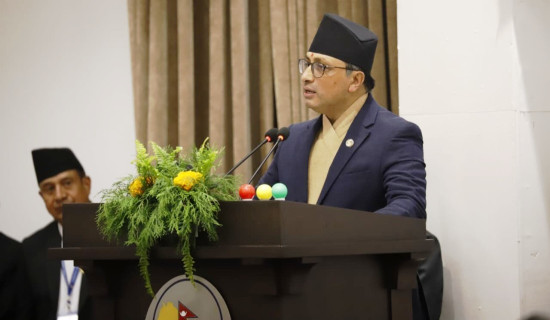
Delivering her remarks, Ranamagar argued that the stringent law alone would not contribute in ending GBV. Thus, she called for educating and sensitizing people on this issue from the school level through academic programmes.
The Deputy Speaker further asserted, "Although more and more people were becoming educated lately, the cases of GBV do not show a sign to wane. Both sons and daughters should be taught to respect each other. It is imperative to teach children at home and schools that there should not be violence on any basis and in any form."
Also speaking in the programme, Commission's Chairperson Kamala Kumari Parajuli reaffirmed her commitment for enhanced collaboration with the stakeholders and relevant authorities to minimize the GBV in coming days.
She took the occasion to extend her gratitude to all those supporting the campaign-16 Days of Activism against Gender-Based Violence.
Similarly, Commission's Secretary Parbati Aryal reiterated the Commission's commitment to make the free helpline more effective and more accessible for GBV survivors.
The constitutional body which was commissioned to protect the rights of women and girls in the country at present has been running a wide range of programmes for the GBV survivors such as rescue, treatment, relief and compensation, psychological and legal counseling, rehabilitation, skill-oriented training others, Secretary Aryal informed.
Of the total complaints received by the Commission from GBV survivors between 2075 BS to 2080 BS, domestic and mental violence accounted for 42 percent which economic violence constituted 30 percent, she shared.
Furthermore, 24 per cent of the complaints were related to physical violence and 4 per cent was sexual violence.
On the occasion, a drama was staged which showed how the Commission's Helpline was coming to the rescue of the GBV survivors and serving justice.
Also, various 11 NGOs and INGOs were honoured in recognition of their role in reducing GBV in collaboration with the Commission.
Moreover, the Commission's employees working round-the-clock in its Help Desk were feted.
Through the Helpline 1145, the Commission received 1,222 complaints within a year while 2,877 follow-up calls were made in a year. Overall, 4,100 GBV survivors were directly benefitted from the helpline service in a year, it was shared.
Last fiscal year alone, the Commission held 2,200 discussions for reconciling and resolving as many as 379 GBV complaints, it was notified.
The Helpline was launched on the same day in 2074 BS. The GBV survivors or someone on their behalf can register complaints in the Commission through helpline as well as by being physically present in the Commission.
Complaints could be lodged round-the-clock through letters from postal service, telephone, fax, email or any other means round, said the Commission.(RSS)
-square-thumb.jpg)