- Thursday, 7 May 2026

Hybrid seeds displacing local ones in Karnali
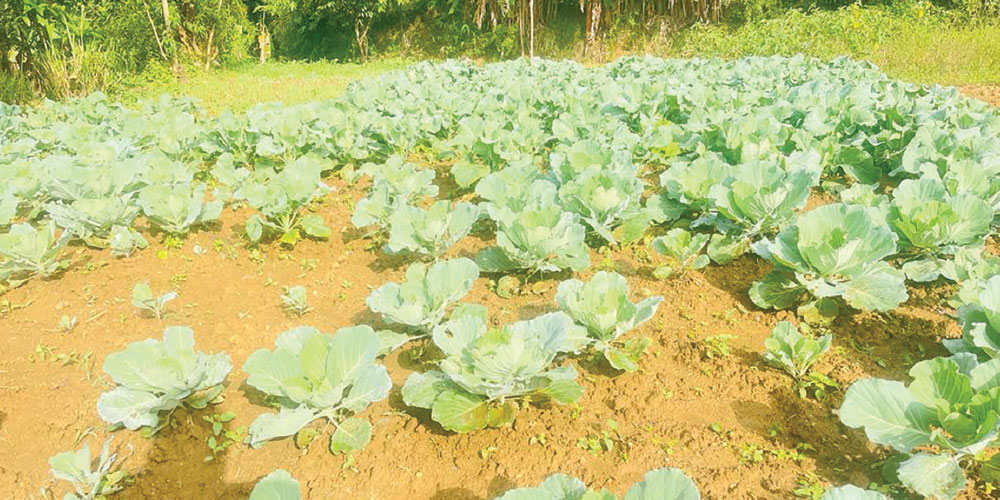

By Our Correspondent,Dailekh, Sept. 24: When Prabhakhar Jaisi, 63, of Bhagwatimai Rural Municipality-2 of Dailekh district planted local corn seeds in his garden, three Muri (about two quintals) corn was produced.
However, he has been planting improved seeds of corn instead of the local ones for the last two decades which has resulted in three-fold increment in the production.
"We don't need to buy corn when we plant advanced varieties of the crop to get good yield. After planting advanced varieties of corn, there is no need to buy additional corn for our domestic use," said Jaisi.
Likewise, Krishna Adhikari, 55, of Bhagwatimai-4 Jaganath used to plant Gude variety of paddy until 10 years ago. Now, he plants hybrid variety of paddy.
He says that he ceased to plant the local seeds varieties as there is little production and it is difficult to recover the cost. Farmers started looking for more advanced varieties of paddy seeds than what they have been used for years.
Adhikari said that they buy hybrid rice seeds from the seed market. As imported seeds are used to increasing agricultural production, the threat of substitution of local crops is increasing. Farmers have complained that according to the climate and soil of the hilly areas, traditional seeds are not available and they are forced to buy and plant imported seeds.
It is said that although the Karnali provincial government and the local levels have introduced the local (raithane) crop preservation programme, it has not been implemented effectively, so the farmers have to rely on imported seeds.
The traditional seeds of local food crops, fruits, vegetables and pulses are disappearing after the farmers stopped using them because the imported and advanced hybrid seeds give faster and better production. Farmers have said that the production of local food crops like rice, corn and millet is also decreasing. Man Kumari Thapa, a farmer of Dugeshwar Rural Municipality-2, said that because it was difficult to get local crop seeds, she brought seeds from local seed shop and started planting them.
However, seeds bought from the market come with problems like late or no germination and if chemical fertilisers are not used, there will be a decline in production. Thapa said that due to the use of chemical fertilisers, the productivity of the soil has been decreasing over the years.
Although the Karnali provincial government has taken a policy to support the farmers in the province to grow local crops and protect seeds, and declared it an organic province by producing organic vegetables, the crop protection campaign has been overshadowed since the policy itself has been poorly implemented.
The farmers have complained that they are not interested in local crop protection even though the provincial government is limited to the rhetoric of organic province and cannot provide information about agricultural education, skills, seed sowing, capacity development training, tools, and methods of climate adaptation farming for the farmers.
Kalpana Bhandari, a farmer of Dullu Municipality-11, said that due to the problem of real farmers not getting the subsidy given by the provincial and local government, they have stopped planting not only local crops but also advanced varieties of crops.
Similarly, Khagisara Bhandari of Narayan Municipality-2, Jaharkot said that in the past, it was a practice to plant local crops and keep the seeds at the time of harvesting it, but now they do not even keep the seeds of local varieties of crops.
According to her, it is necessary to increase the use and protection of traditional crops and emphasis should be given to the local climate-friendly production.
Raju Bhuj, Head of District Agricultural Development Office, Dailekh, said that although necessary policy for local crop protection has been formulated, it has not been protected because the local government has not been able to implement it.
Even if the local crops are produced, there is a problem of not getting organic fertilisers in the village. So, the farmers should be given animals in subsidy to make fertilisers, said Bhuj.

-square-thumb.jpg)