- Saturday, 9 May 2026

Farmers in India are hit hard by extreme weather
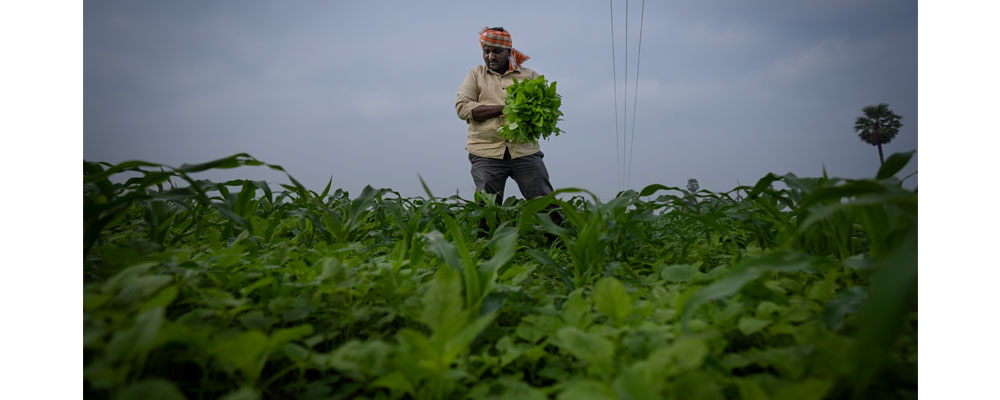

Guntur, India, Apr. 8: There's a pungent odor on Ratna Raju's farm that he says is protecting his crops from the unpredictable and extreme weather that's become more frequent with human-caused climate change.
The smell comes from a concoction of cow urine, an unrefined sugar known as jaggery, and other organic materials that act as fertilizers, pesticides and bad weather barriers for his corn, rice, leafy greens and other vegetables on his farm in Guntur in India's southern Andhra Pradesh state. The region is frequently hit by cyclones and extreme heat, and farmers say that so-called natural farming protects their crops because the soil can hold more water, and their more robust roots help the plants withstand strong winds.
Andhra Pradesh has become a positive example of the benefits of natural farming, and advocates say active government support is the primary driver for the state's success. Experts say these methods should be expanded across India's vast agricultural lands as climate change and decreasing profits have led to multiple farmers' protests this year. But fledgling government support across the country for these methods means most farmers still use chemical pesticides and fertilizers, making them more vulnerable when extreme weather hits. Many farmers are calling for greater federal and state investment to help farms switch to more climate change-proof practices.
For many, the benefits of greater investment in natural farming are already obvious: In December, Cyclone Michaung, a storm moving up to 110 kilometres per hour (62 miles per hour) brought heavy rainfall across India's south-eastern coast, flooding towns and fields. A preliminary assessment conducted a few weeks later found that 600,000 acres of crops were destroyed in Andhra Pradesh state.
On Raju's natural farm, however, where he was growing paddy at the time, "the rainwater on our farms seeped into the ground in one day," he said. The soil can absorb more water because it's more porous than pesticide-laden soil which is crusty and dry. Planting different kinds of crops throughout the year — as opposed to the more standard single crop farms — also helps keep the soil healthy, he said.
But neighbouring farmer Srikanth Kanapala's fields, that rely on chemical pesticides and fertilizers, were flooded for four days after the cyclone. He said seeing Raju's crops hold firm while his failed has made him curious about alternative farming methods.
"I incurred huge losses," said Kanapala, who estimates he lost up to $600 because of the cyclone, a substantial sum for a small farmer in India. "For the next planting season, I plan to use natural farming methods too."
Local and federal government initiatives have resulted in an estimated 700,000 farmers shifting to natural farming in the state according to Rythu Sadhikara Samstha, a government-backed not-for-profit launched in 2016 to promote natural farming. (AP)