- Saturday, 9 May 2026

Myanmar's worst violence since military takeover intensifying
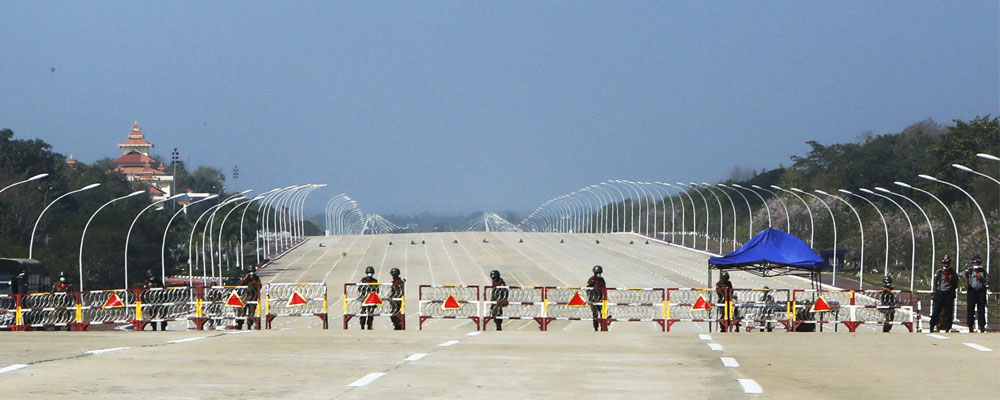

United Nations, Apr. 6: Myanmar's escalating conflict and worst violence since the military takeover in 2021 are having a devastating impact on human rights, fundamental freedoms and basic needs of millions of people — as well as “alarming spillover effects” in the region, U.N. officials said Thursday. Assistant Secretary-General for political affairs Khaled Khiari told the U.N. Security Council that “the civilian toll keeps rising” amid reports of indiscriminate bombing by Myanmar's armed forces and artillery shelling by various parties.
The nationwide armed conflict in Myanma r began after the army ousted the elected government of Aung San Suu Kyi in February 2021 and suppressed widespread nonviolent protests that sought a return to democratic rule.
Thousands of young people fled to jungles and mountains in remote border areas as a result of the military’s suppression and made common cause with ethnic guerrilla forces battle-hardened by decades of combat with the army in pursuit of autonomy.
Despite its great advantage in armaments and manpower, the military has been unable to quell the resistance movement. Over the past five months, the army has been routed in northern Shan state, is conceding swaths of territory in Rakhine state in the west, and is under growing attack elsewhere.
Myanmar’s main pro-democracy resistance group said Thursday its armed wing launched drone attacks on the airport and a military headquarters in the capital, Naypyitaw, but the ruling military said it destroyed the drones as they attacked. It wasn’t possible to independently verify most details of the incident, but the military’s acknowledgement that it had taken place in one of the country’s most heavily guarded locations will be seen by many as the latest indication that it is losing the initiative.
Khiari did not mention the attack but said the National Unity Consultative Council — formed after the 2021 military takeover to promote a return to democracy and comprising ethnic, political, civil society and resistance groups — convened its Second People’s Assembly on Thursday “to further define their common vision for the future of Myanmar.”
He singled out the fighting between the Arakan Army and the military in Rakhine State, Myanmar’s poorest, which he said “has reached an unprecedented level of violence.”
“The Arakan Army has reportedly gained territorial control over most of central Rakhine and seeks to expand to northern Rakhine” where many minority Rohingya Muslims still live, he said.
The Buddhist Rakhine are the majority ethnic group in Rakhine, which is also known by its older name of Arakan, and have long sought autonomy. They have set up their own well-trained and well-armed force called the Arakan Army. (AP)