- Saturday, 9 May 2026

Internal translocation of rhinos aims to boost lineage
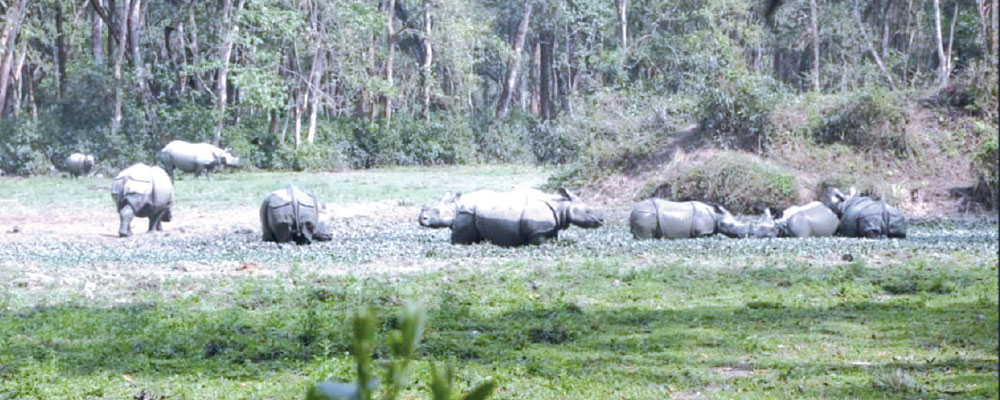

By Shaligram Nepal,Chitwan, Mar. 15: Internal translocation of rhinoceros has started in Chitwan National Park to expand the population’s lineage in the eastern region of the park.
Dil Bahadur Purja Pun, Chief Conservation Officer of Chitwan National Park, said that rhinos will be moved from the western to the eastern parts to ensure their safety and promote lineage expansion. Despite both areas being suitable habitats, the relocation to the east is prioritised due to the higher rhino population in the west.
Due to recurrent floods in the eastern region, rhinos have been gradually migrating towards the western region of the park. The park authorities have observed a rising concentration of rhinoceros in this area. So, preparations are underway to relocate rhinos internally from the eastern sector of the park, including Sauraha, to suitable areas like Kumroj, Kuchkuche, and others.
A few years ago, the eastern region used to have abundant rhino population . However, due to numerous migrations from east to west over time and the resulting decline of the species, the park authorities have decided to undertake internal translocation. “Having rhinos narrowed to the same area is not favourable to their growth and development,” Pun informed.
Breeding among various rhinos is crucial for expanding lineages and enhancing genetic diversity. Recognizing this necessity for transfers, the process was initiated on Wednesday, stated Pun.
He explained that relocating from a high-density area to a low-density one is considered appropriate from all perspectives. At the same time, preparations are in progress to translocate a male rhinoceros to the Koshi Tappu Wildlife Reserve, Pun added.
“We can translocate six rhinos internally within two weeks. This includes relocating three male and three female rhinos. Despite the increasing risks observed in the western areas such as Amaltari, along the Narayani River, and in the Chure region, it was believed appropriate to relocate rhinos from the eastern area due to the suitable habitat,” Pun explained.
Bijay Kumar Shrestha, Senior Veterinarian, said that the relocation process is being conducted under the direction of the Department of National Parks and Wildlife Conservation. This step is considered essential to transfer the rhinos to the eastern region to expand their lineage and enhance genetic advancement .
“We arranged a meeting and finalised all preparations on Wednesday. The search for the rhinoceros will commence on Thursday. Healthy rhinos will be relocated using darting techniques,” he informed.
He expressed confidence that the relocation efforts would successfully address the long-standing demand from tourism businesses in the Sauraha region, due to the low rhino population in the eastern parts .
Ganga Giri, President of the Regional Hotel Association of Sauraha, expressed delight among tourism businessmen regarding the relocation of rhinoceros to the Sauraha area. He said that it would have a positive impact on both foreign and domestic tourists, as they would have the opportunity to see rhinoceros soon after entering the park.
Giri said that tourism professionals would warmly welcome this action, as it addresses a longstanding concern that has been previously demanded.
Jungle safari is the top choice for both domestic and foreign tourists visiting Chitwan. They come to explore the park, catch a glimpse of rhinos and tigers, and enjoy elephant rides. “The ease of spotting rhinos in Chitwan, renowned for its jungle safaris, will significantly boost the tourism sector as a whole,” he added.
According to the latest statistics, there are currently 694 rhinos in the park out of a total of 752 one-horned rhinos in Nepal.

-square-thumb.jpg)
-square-thumb.jpg)