- Sunday, 10 May 2026

SC issues directive order to amend NHRC Act
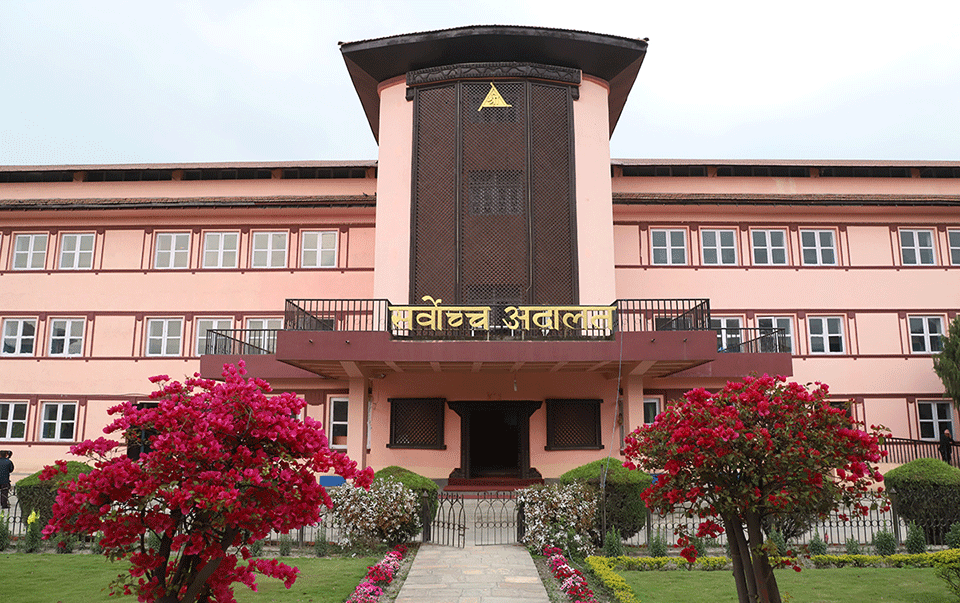

By A Staff Reporter,Kathmandu, Jan. 29: The Supreme Court has recently published the full text of the directive order issued in September last year in a writ petition filed five years ago regarding the lack of effective implementation of recommendations by the National Human Rights Commission.
In the writ petition, the petitioner had claimed that section 13 (3) of Investigation of Enforced Disappearances Persons, Truth and Reconciliation Commission Act, 2014 is inconsistent with the constitutional provision providing the functions and powers of the National Human Rights Commission viz. Art. 249 of the Constitution of Nepal, accordingly, the Commission should have jurisdiction to investigate the cases of human rights violations during armed conflict.
Furthermore, the petitioner claimed that the name of Human Rights violators be made public, the Commission’s recommendations be implemented effectively, human rights violators be restricted from recommendation, appointment, promotion or any career development in any constitutional or public post and the human rights violators be directly prosecuted by Attorney General as per the recommendation of the Commission.
Part of the petitioner’s claim included providing the Commission authority to punish for contempt those officials, persons or agencies that do not implement or observe the recommendations or orders or directives made by the Commission about violations of human rights.
The writ petition was dismissed by the Court on the ground of positive assurance made by the defendant regarding the claims through their written response and initiation of the amendment process of the National Human Rights Commission Act.
However, the Court issued the directive order providing the significant basis for the empowerment and reform of the Commission. The directive order inter alia includes the order to expedite the amendment process of the National Human Rights Commission Act as per Commission’s recommendation, prosecute as per the recommendation of the Commission, publish names of Human Rights violators, restricting
the Human Rights violators from in recommendation, appointment, promotion or any career development in any constitutional or public post, transfer the complaints of human rights violations in the period of armed conflict to Commission on Investigation of Enforced Disappearances Persons and Truth and Reconciliation Commission if these commissions are operating independently and autonomously after the amendment to the relevant statues as per the decision of the Supreme Court.
While issuing the directive order expanding the constitutional mandate and powers of the National Human Rights Commission in the writ filed by Advocate Birendra Thapaliya, the Supreme Court has done a comprehensive analysis of the national, international and comparative laws as well as previous decisions of the Supreme Court.


-original-thumb.jpg)
-square-thumb.jpg)