- Thursday, 11 June 2026

Nepal’s Standing In NAM

Nepal is one of the founding members of the non-aligned movement (NAM), a group of countries that chose to stay away from major power blocks during the cold war time. Since its establishment in 1961, there have been numerous transformations in the global landscape, such as the fall of the Soviet Union, the formation of NATO, and the emergence of China as a global power. The ongoing Russia-Ukraine war and Israel-Hamas war depict that the Cold War is manifested in other forms. Given the unprecedented challenges in global politics, diplomats frequently question the economic, political, and strategic relevance of the Non-Aligned Movement (NAM) at a time when power rivalries and conflicts are still going on around the world. However, for a country like Nepal, which is situated between two emerging economic powers, maintaining a balanced and non-aligned foreign policy is considered to be in its best interest.
Nepal has consistently refrained from joining any military alliances and power blocs instead advocates for an inclusive global order where all nations can thrive collectively with a sense of development justice. By adhering to a non-aligned policy, Nepal aims to pursue its national interests while fostering peaceful relations and cooperation with various countries worldwide. Nepal's foreign policy is based on the non-alignment principle, which is enshrined in its constitution. Nepal is committed to maintaining its independence by not aligning itself with any major power bloc.
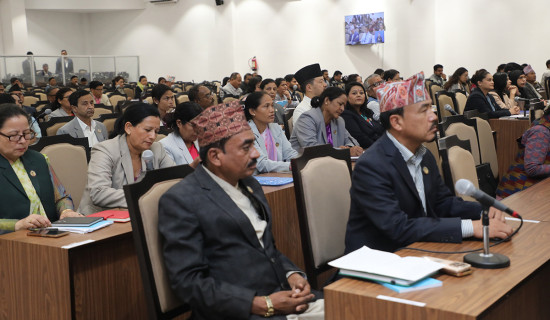
Prime Minister Pushpa Kamal Dahal Prachanda on Friday addressed the 19th NAM Summit in Kampala of Uganda where he emphasised the importance of achieving lasting peace in Nepal through the resolution of transitional justice issues. PM Prachanda stresses that Nepal's foreign policy is built on the principles of sovereign equality, mutual respect, and peaceful resolution of disputes. As a leader who emerged from a conflict, he believes that peace is possible and so is addressing historical, sociocultural, and economic injustice both within the nation and globally.
Nepal’s foreign policy is based on sovereign equality, mutual respect, mutual benefits, and peaceful settlement of disputes. Stating that Nepal, as a peace-loving country, deplores all kinds of conflict and geo-political rivalries in the world, the Prime Minister described the situation in Ukraine and Gaza as deeply distressing. He expressed his wishes to see peace in the Middle East with a two-state solution for Israel and Palestine, living side by side in peace and security within secured and recognised international borders based on a United Nations resolution.
Amid the doubts on the relevance of the NAM in the present scenario, Prime Minister Prachanda said it can play a crucial role in reforming the global financial architecture to enable countries in special situations to secure finance in achieving their development visions and goals. To provide development justice to these countries, the developed countries must fulfill their financing commitment without delay, the Prime Minister said.
Nonetheless, some of the nations that were in leading roles during the inception of the non-align-movement have themselves drifted away from the ideology of NAM. In this regard, the member countries should work to ensure its relevance so that this forum can evolve into an effective deterrent of war and ensure global peace. In the context of changing global order, non-alignment policy can be Nepal's approach for its meaningful presence as a free and independent nation in the global arena.