- Sunday, 10 May 2026

Shanghai's Education Success: Lessons For Nepal
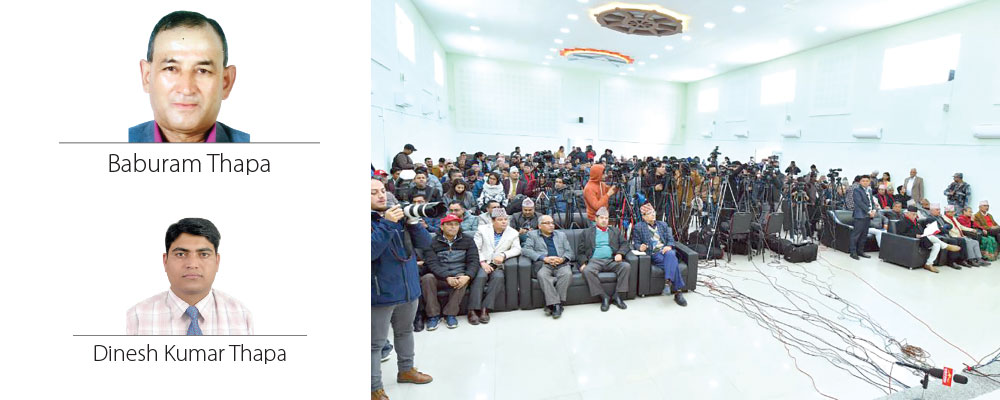

In recent times, statistics and narratives on educational success are often cited from Shanghai, China, for having a highly successful education system, as evidenced by its students' strong performance in international assessments such as the Programme for International Student Assessment (PISA) that concerns students’ performance in reading, mathematics, and sciences, as well as in the Teaching and Learning International Survey (TALIS) regarding teachers' professional practices, job satisfaction, collaboration with colleagues, professional development opportunities, and other factors that contribute to the overall teaching and learning environment. The scribe duos participated in the “Integrated Training of Teachers Before and After Service” organised by the UNESCO Teacher Education Centre and Shanghai Normal University with support from Shanghai Municipal Council from November 9–20, 2023. This article attempts to highlight the key features backing up the successful educational landscape of Shanghai, China, and the implications Nepalese educational policymakers, educators, and teachers can draw from Shanghai’s education system.
Involvement and observations
The ‘Belt and Road Shanghai Exchange Project on Integrated Training of Teachers Before and After Service’ project was organised with the aim of exploring system design and performance mechanisms of pre-service training and life-long development of teachers through the exchange of knowledge, ideas, and experiences among education administrators, university educators, researchers, principals, and teachers from the Belt and Road countries. The programme was comprised of two modules: the first was dedicated to discussing the process and outcomes for excellence in teacher education through seminars and lectures, and the other was directed to experiencing the implementation of educational programmes at school and classroom levels for quality students’ learning.
Research sharing and presentations during the project highlighted how Shanghai attracts the best talents in teacher education programmes, prepares able teachers, and provides continuous teacher development opportunities while teachers are in service. The seminars gave us the idea that quality education is never an accident, but it is always the result of intelligent effort. We understood that a strong and systemic collaboration between the Normal University, which prepares teachers, teacher educators, and educational researchers, and schools, which implement the educational programmes, is the precursor to quality teacher preparation. There are about 100 normal universities in China, which intensively collaborate with governments and schools across the country in preparing the required strength of educational human resources to realise the goal of ‘developing students morally, educationally, and physically to make them both “red” (loyal to the party) and “expert” (well-educated and trained for the job)”.
Like in other provinces, Shanghai too has placed aspiring candidates through open competition in the bachelor and master level programmes in education. The normal universities offer rigorous courses on core and specialisation subjects differently for elementary and secondary levels of education. One remarkable feature of the university courses is the provision of intense and rigorous internships, which the students need to complete by working in schools. The interns are well tended to by mentor teachers and are monitored and supported regularly in their teaching activities. Graduates, thus, would develop the philosophy, knowledge, and skills required for implementing the ambitious curricula and standards and educating the children of Shanghai, who perform excellently in academics, ethics, and life skills.
Our exposure to schools and classrooms gave us the realisation that, with adequate educational infrastructure and the dedication of the teachers and students, it is possible to harness the extreme talents in children. We found the school curricula were well balanced with their focus on literacy, numeracy, physical education, moral education, and service education. Service education started right in the third grade, which would connect the students to topics related to domestic and industrial production. Topics related to history, geography, culture, the Chinese Communist Party, national pride, heritage, tradition, and modernity were incorporated into moral education. We also learned that there was an equal focus on the skills of arts, calligraphy, dramatics, music, and athletics in the elementary level of education, which would provide the foundation of expression, virtuosity, and all-round development in the children. We were spellbound by the excellent performances of elementary school children at Shannan Elementary School,Anhui, a partner school of Huainan Normal University. The school was highly spacious and well equipped for individual and group learning and performances. Investment in buildings, classrooms, tools, playgrounds, and equipment was praiseworthy. When the children reached the secondary level, the focus seemed to shift to physics, mathematics, and modern languages, while maintaining studies in moral education and service education continuously. We could sense a visible linkage between mental, moral, and physical development as well as production and industry at the secondary level of school education. At Pudong Secondary School, Shanghai, we found a harmonious blend of culture and science, tradition and modernity, and arts and morality in the students and teachers. In addition to laboratory work, experiments, sports, and the arts, we found that Pudong School, which was one of the partner schools of Shanghai Normal University, had well-managed counselling sessions, therapy, extended study time, coaching on specific areas, etc. for the students. Teachers’ performance was also standardised, with a heavy emphasis on the planning of materials and lesson activities before classroom delivery. Besides the conventional academic subjects, students also learned national pride, production, self-management, and volunteer spirit.
Learning for Nepal: smart education policy
The project led us to contemplate and reflect on how an education system can yield excellent results. The inspiring words of Professor Dr. Minxuan Zhang, Head of the Teacher Education Centre, UNESCO, resonate that a successful education system could only be built on the sound foundation of the soil of the nation and shaped by the needs and priorities of the nation. China at present is a reality of miracles in infrastructure, manufacturing, massive production, and efficient management. ‘ From ‘P’ [pin] to ‘P’ [plane] is the slogan of the Chinese, and Shanghai, being an industrial and commercial hub in east-central China, has no less aspirations to realise among its students. Shanghai, a city of about 23 million people, has now achieved complete primary and junior high school enrollment, and it is the first city in China to achieve almost universal secondary school attendance. At present, 80 per cent of children are studying in the public education system, and the rest are in international schools. Backing up these successes, Professor Bo Ning, the coordinator of the project, shared the immense role of Shanghai Normal University and the Teacher Education Centre, UNESCO, which work in collaboration with the Shanghai Municipal Education Commission to carry out research in teacher education, organise exchange programmes, and promote reforms in education through innovative teaching methods to improve teachers’ capability. At this juncture, we conclude that it is only through collaboration and commitment that education policies result in excellent learning.
Our involvement in the Shanghai Project gave us some insights that might be key strategies for possible reforms in education in Nepal. We conclude that an efficient education system and transformation can be achieved only with a comprehensive reform, including reforms in policies, financing, teacher development, and having proper standards of curricula, assessments, work processes, and mechanisms of check and balance in place. Likewise, we reflect that educational policies and programmes recognise the role of the teacher workforce, regard teaching as an attractive and respected profession, and have clear career advancement mechanisms in place wherein teachers are supported and evaluated systematically to improve performance.
Our reflection further led us to the conclusion that teachers need to be highly qualified and well-trained through rigorous pre-service training and well-supported in-service professional development so that they can improve their instructional activities to evaluate and modify their own pedagogy in relation to student outcomes. Our learning also suggests that the curriculum should be carefully designed to cover key academic concepts and skills with a balance of subject-specific knowledge and skills, vocational and career skills, critical thinking, and problem-solving skills. We also contend that the education system recognises and involves parents at a high level, tapping their enormous cultural values, time, resources, and support for students’ learning.
Finally, we deeply hold that schools should become a fulfilling space for the students wherein their mental, physical, vocational, and moral spheres are developed through their regular and extended involvement in academics, sports, athletics, arts, drama, production, and welfare-related activities.
(Babu Ram is the Chief Advisor of the Confederation of Nepalese Teachers, and Dinesh Kumar is a PhD Fellow at the School of Education, Kathmandu University.)
-original-thumb.jpg)
-square-thumb.jpg)