- Sunday, 10 May 2026

Reconstruction Urgency


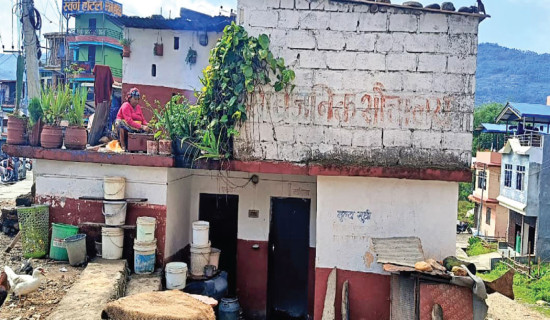
Two months into the November 3 earthquake, by now all those who were left homeless should have been rehabilitated in decent houses strong enough to provide shelter from the elements. But in a heart-wrenching scene, many victims – several of whom are elderlies, newborns, expectant mothers and others – in the worst affected districts of Jajarkot and West Rukum continue to languish in tents in the middle of biting winter cold. The reason: delay in the construction of temporary houses. And the more delay it gets, the more things will turn from bad to worse.
Aware of this reality and intent on addressing the issue, Prime Minister Pushpa Kamal Dahal Prachanda has said that the National Disaster Risk Reduction and Management Authority (NDRRMA) would be given all the responsibility of the reconstruction works of private and government infrastructure damaged by the quake. He acknowledged that the state's mechanism is deeply rooted and based on completing many formalities rather than delivering result-oriented works in swift way to any kind of disaster victims. We have taken this as a positive sign. But to bring about radical change, first we must identify the problem.
We are shocked to learn the victims have yet to get the money the government pledged – Rs. 50,000 – to make available as a relief to each victim in the immediate aftermath of the quake for the construction of temporary shelters. The Prime Minister attributed this problem to the procedural arrangements made in the Act, regulation and policies and has vowed to remove this hassle within his term. The government is said to have arranged Rs. 10 billion for the victims. However, the NDRRMA estimates the reconstruction could cost at Rs. 70-75 billion in the two quake-hit provinces of Karnali and Sudurpaschim.
As things stand, recovery effort is far from satisfactory. Minister for Finance Dr. Prakash Sharan Mahat's pledge that there won't be a situation of non-availability of budget for the reconstruction has raised hope but arranging that big amount is surely a herculean task. The minister should make it clear how he is going to bridge the budget shortfall. Without donor agencies stepping in, that would, of course, remain a far-fetched dream, and to prod them to support our effort, we must first be able to pour the earmarked money into reconstruction effort, and fast enough.
We hope reinvigorating the NDRRMA will be a game changer. There's no doubt that its long experience in rebuilding hundreds of thousands of houses levelled by the 2015 mega earthquake in a host of districts, including Gorkha, Dhading, Sindhupalchowk, Kathmandu, Kavre, among many others, is an invaluable asset, and we must be able to harness it to the fullest to repeat its glory. The delay has already taken a devastating toll on the victims. That said, we must give credit where it's due: In Rukum West, the government has succeeded in constructing 7,079 houses while the construction of another 9,341 houses is in progress. The situation is similar in Jajarkot. Why can't we fast-track work even when it's a matter of life and death? Unless we get rid of the bureaucratic hassles that prevent the work from getting done, the efforts to give urgent delivery to the disaster victims will remain a far cry.