- Sunday, 10 May 2026

Winter adds air pollution as people make fires to beat cold
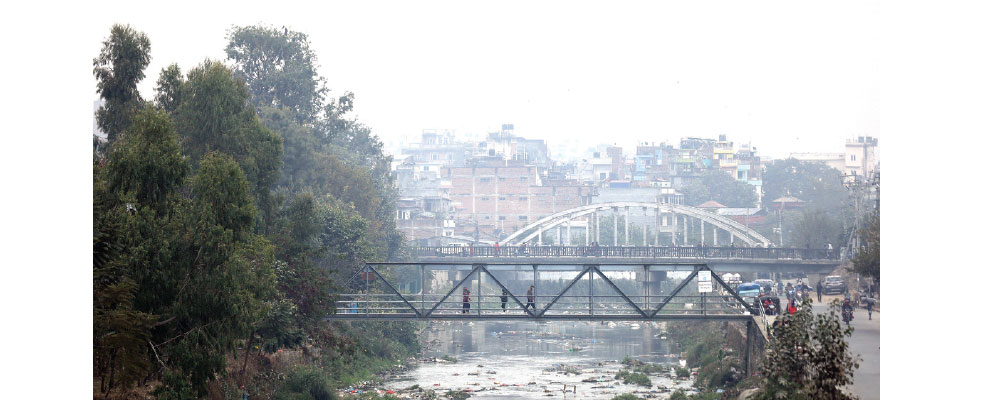

BY A STAFF REPORTER,KATHMANDU, Dec. 8: The denizens in Kathmandu were seen donning their warm jackets and woollen caps from early in the morning, as they felt it too cold.
Others were seen making fires on the roadside, near their homes and even in open spaces from early in the morning and sitting by them to chase the biting cold of the chill winter morning.
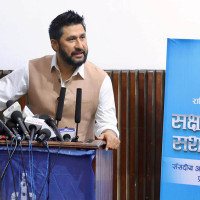
According to the metrologists, the fires made by denizens contributed to pollution in the environment. Till Wednesday, only mist was covering the sky, but from Thursday smoke was mixed because of the fires, Rojan Lamichhane, a senior meteorologist at the Meteorological Forecasting Division under the Department of Hydrology and Meteorology (DMH), said.
"The current pollution levels are relatively lower than the same period last year. However, the abrupt onset of colder weather has prompted people to light fires in multiple locations, leading to an increase in pollution level,”Lamichhane added.
Unfortunately, this has led to a noticeable increase in pollution over the skies of Kathmandu, he said. “We have observed the scent of smoke permeating open areas, indicating a rise in the particulate matter in the air.”
The sudden shivering cold was due to the weather conditions that brought moisture in the various parts of the country including Kathmandu. Many people considered Thursday to be the coldest day of this season.
Currently, Nepal is experiencing the partial effects of the western wind, along with the low-pressure area situated in Chhattisgarh, India.
Lamichhane attributed the current misty sky to the partial effects of the western wind and the low-pressure area situated in Chhattisgarh, India.
Lamichhane said that the situation was expected to gradually clear from Friday as the influence of the low-pressure area would diminish from Thursday night.
According to the Meteorological Forecasting Division, Friday is anticipated to have generally clear weather in regions other than Karnali and Sudurpashchim provinces while rainfall is expected in Koshi Province.
“The colder temperatures and the resulting practices contribute to a temporary decline in air quality, and people are urged to exercise caution and adopt measures to mitigate the impact of these localised sources of pollution," Lamichhane explained.
According to DHM, the weather is expected to clear in Koshi, Madhes and Bagmati provinces from Friday morning, with light rainfall anticipated at one or two locations in Koshi Province, along with a slight chance of light snow in high-altitude hilly and mountainous areas.
On Thursday morning, Kathmandu experienced a minimum temperature of 9.7 degrees Celsius, with visibility reported at 3,500 kilometres, according to DHM. Although the temperature increased because of the current cloud cover, there is a possibility of a further temperature decrease once the sky clears.
During the winter season, the country witnesses numerous suffocation-related deaths due to the improper use of heating systems. Traditional methods such as burning coal and firewood result in smoke production, underscoring the importance of proper ventilation achieved by keeping doors and windows open.
Experts caution that gas geysers and heaters, while efficient, consume oxygen, posing a significant risk of suffocation and carbon monoxide inhalation in inadequately ventilated spaces, which can be life-threatening.