- Monday, 11 May 2026

Israel expands ground operation in Gaza, bombs Hamas tunnels
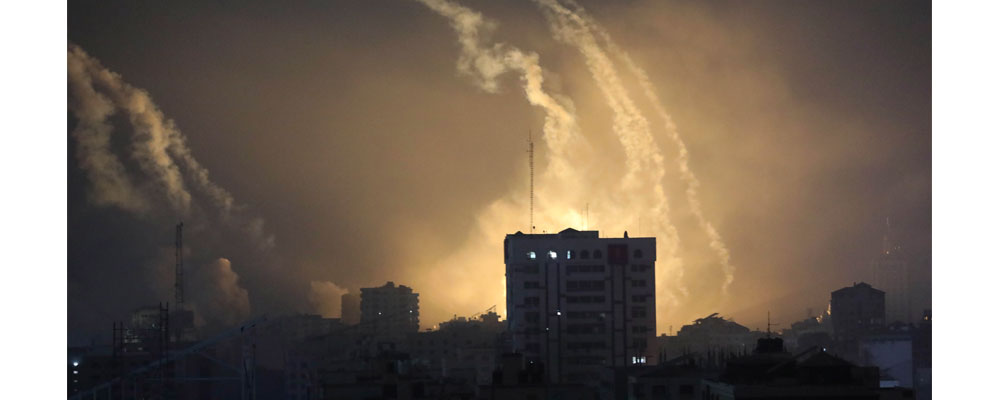

Jerusalem, Oct. 29: Israel on Saturday expanded its ground operation in Gaza with infantry and armored vehicles backed by "massive" strikes from the air and sea, including the bombing of Hamas tunnels — a key target in its campaign to crush the territory's ruling group after its bloody incursion in Israel three weeks ago.
The bombardment also knocked out communications in Gaza, creating a near-blackout of information from the besieged enclave and largely cutting off the territory's 2.3 million people from the outside world.
The military released grainy images Saturday showing of tank columns moving slowly in open areas of Gaza and said warplanes bombed dozens of Hamas tunnels and underground bunkers.
"The forces are still on the ground and are continuing the war," said the army spokesman, Rear Adm. Daniel Hagari, indicating that the next stage has begun in what is expected to evolve into an all-out ground offensive in northern Gaza.
Early in the war, Israel had already amassed hundreds of thousands of troops along the border. Until now, troops had conducted brief nightly ground incursions before returning to Israel.
Hagari said the ground forces were backed by what he described as massive strikes from the air and sea. He said two key Hamas military commanders were killed overnight, arguing that Israel was facing a "weakened" enemy. There was no immediate confirmation from Hamas.
Communications in Gaza were knocked out by Israel's intense bombardment late Friday, enabling the military to largely control the narrative during a key new phase in fighting. Palestinians were thrown into isolation, huddling in homes and shelters with food and water supplies running out. Electricity was knocked out by Israel in the early stages of the war.
With the internet cut, Palestinians in Gaza travelled by foot or car to check on their relatives and friends after a night of airstrikes described by some as the most intense they had witnessed, even during previous Gaza wars.
"The bombs were everywhere, the building was shaking," said Hind al-Khudary, a journalist in central Gaza and one of a few people with cell phone service. "We can't reach anyone or contact anyone. I do not know where my family is."
The loss of internet and phones also dealt a further blow to a medical and aid system that relief workers say was already on the verge of collapse under Israel's weeks long seal. More than 1.4 million people have fled their homes, nearly half crowding into U.N. schools and shelters. Aid workers say the trickle of aid Israel has allowed to enter from Egypt the past week is a tiny fraction of what is needed.
Gaza hospitals have been scrounging for fuel to run emergency generators that power incubators and other life-saving equipment.