- Monday, 11 May 2026

Climate Change Adaptation

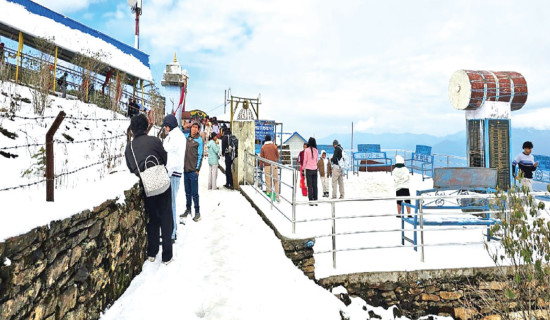
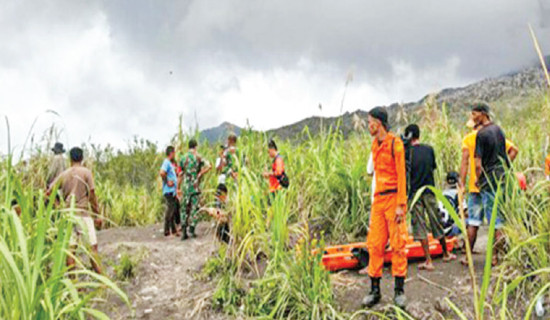
Monsoon rains are getting increasingly erratic. Droughts have increased in frequency and duration. Floods have never been this devastating. Heat waves are getting increasingly oppressive and lasting longer. Climate change has become a reality of everyday living for people in almost every country, developing or developed. And perhaps nowhere is this reality more starkly felt than in the high mountains. The warming climate is rapidly melting our glaciers, denuding our mountains of snow. In mid-August, locals in Kagbeni, in the mountainous district of Mustang, woke up to the uncommonly catastrophic flood climate scientists attributed to climate change.
What's more, to stave off starvation, highland natives are being forced to leave for land in lower altitude following successive crop failures due to prolonged droughts and degrading soil fertility. Cases of once fertile land turning barren have become frighteningly common, threatening food security. With every passing year, yak herders are finding it harder to find grazing land for their animals. With dwindling food and deprived of livelihood, many are left with the only option of leaving for good. With the vast section of the population reliant on agriculture, this has undermined our efforts to reduce poverty and threatened to annul impressive developmental gains. And worryingly, this is happening to us despite our negligible contribution to greenhouse gas emissions and climate change.
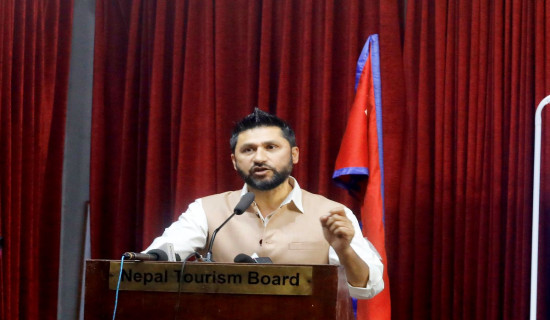
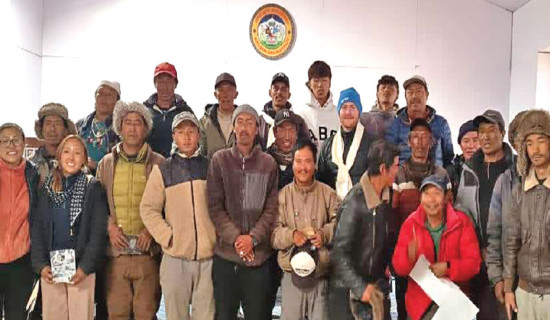
In addition, rising temperature has paved the way for mosquitoes to migrate to higher altitude where vector-borne diseases like dengue, which used to be unheard of until recently, is becoming more and more common. Climate change has made diseases more pervasive and people more under risk. Addressing a climate dialogue event held in Jomsom of Mustang, Prime Minister Pushpa Kamal Dahal Prachanda has stressed his commitment to addressing this climate issue in the international forum. His recognition that mountains are bearing the brunt of climate change and assurance to take necessary measures is a step in the right direction. Making concrete effort for the release of reparation fund meant for climate-vulnerable countries and communities is also crucial.
Mountains in Nepal are much more than wonders of nature. A source of life and livelihood for countless people, they are magnets for tourism. Rivers originating from them not only provide the critically needed water for a variety of purposes, including for drinking, for millions of people downstream, they are also the source of hydropower. However, melting glaciers means that all these life-sustaining resources are under threat. In 2019, scientists warned that even if the most ambitious climate goal is met, at least a third of the Himalayan glaciers would melt by the end of the century. The consequences would be profoundly dire for the millions of people in the plains.
Though much depends on the climate actions of big greenhouse gas emitters, we have to do our part too. One major step is adaptation. For instance, scientists have been working to develop crop seeds that are not only drought and heat resistant, but also grow in less water. And some have come up with promising results. This implies that wide-scale use of such seeds in on the horizon. We should be careful not to miss out on that opportunity. Besides, building climate-resilient infrastructure can go a long way to save lives and properties in the event of a disaster. Climate change mitigation may take longer but adaptation involved immediate action for survival from hostile impacts. But vulnerable communities cannot work in this front without financial and technical support from the crucial climate fund.