- Monday, 11 May 2026

Fishing Families In Crisis

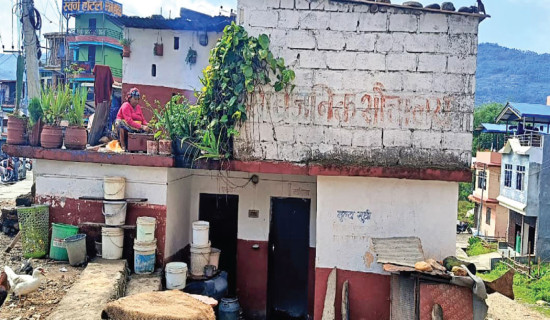
The Malaha community (Gudi) is facing hardship as the once-thriving fisheries along the Saptakoshi River face an existential threat. This community has long relied on the abundant fish populations in the Koshi River, which have been their lifeline for sustenance and livelihood since the distant past. However, the decline in fish is pushing the community into a state of financial suffering, casting a shadow over both its cultural and financial stability. The Koshi River, which used to provide enough fish for nine months each year, now appears incapable of sustaining them as it did in the past. The news report published in this daily sheds light on a representative figure within the community, an individual who has dedicated decades to fishing. For this individual and many others, fishing is more than an occupation; it encompasses education, employment, and the very sustenance upon which families rely.
However, the situation is not confined to a single individual; it echoes across numerous families that are now grappling with the stark reality of an occupation fading away. As the fish in the Koshi River declines, slipping through the meshes of once plentiful nets, the very livelihood of the people is slipping through their fingers. It is an emotional story of families facing the relentless challenges of the community's daily life. The community, connected through its tight network, laments not only the loss of fish but also the disappearance of vital species that were the bedrock of their survival. The once flourishing nets, loaded with the bounty of the river, now yield emptiness, transforming the pursuit of daily sustenance into a battle for survival. An official from the Wildlife Conservation Office acknowledges the harsh reality of the declining fish population. Despite collaborative efforts to revive the river with wild fish fry, the crisis persists.
While fishing permissions are still extended to experienced hands, the plea for alternative livelihoods resounds louder than ever. In their desperate appeal to the government for support, the community is crying out for an alternative income source — a heartfelt plea for survival. The urgency for collaboration between governmental bodies and environmental organisations is imperative, demanding comprehensive plans to rescue these communities from the looming threat of hardship. The Malaha community needs empowerment and needs to be provided with alternative occupations for survival. The government's role exceeds immediate solutions; it demands visionary thinking to carve a future where the Malaha not only survive but thrive independently.
The Malaha community faces significant challenges, from job insecurity to the struggle for survival. Neglecting this issue is not merely overlooking a river; it is letting an entire community suffer. The concerned authorities must act collaboratively, introducing new rules and committing to sustainable practices. Urgent steps are imperative to save the healthy river environment and secure a better future for the Malaha community. Preserving rivers and other natural resources is vital for the sustenance of humans, animals and plants. This is also necessary for minimising the negative repercussions of the climate change. All relevant authorities should work together, revising policies and adopting practices that not only maintain the health of the river but also ensure the enduring prosperity of the traditional fishing communities.