- Monday, 11 May 2026

Relief To Quake Victims


On Tuesday, far-western Nepal experienced two earthquakes epicentred in Bajhang district. The National Earthquake Monitoring and Research Centre reported a 5.3 on the Richter scale, occurring at 2:40 pm, followed by another tremor of 6.3 magnitude in less than one hour. In terms of human casualties, it was a minor earthquake but this should serve as an alarm bell for the region where big quakes are seismically long overdue. There is no technology to make an accurate quake prediction but the big one tends to strike when we are unprepared. Building quake-resistant structures and staying prepared to cope with potential calamity is the key. Nepal lies on the fault line of two massive tectonic plates, the Indian and Eurasian plates, making the country highly prone to the quake in the world.
The United Nations Development Programme (UNDP) ranks Nepal as the eleventh most earthquake-prone country in the world. The 2015 earthquake with epicenter in Gorkha with a 7.8 magnitude killed nearly 9,000 people and injured more than 220,000. Almost seven years later, a 6.6 magnitude earthquake struck Doti district on November 2022. The rather slow response during the recent Bajhang earthquake demonstrates Nepal has not learned sufficient lessons from the 2015 earthquake. Building earthquake-resilient structures, including houses, hospitals, schools and other infrastructures, by strictly following the building code is the topmost requirement. However, a study shows that about 85 per cent of the houses in Kathmandu do not have received ‘construction completion certificate’ as they have not complied with the existing building code.
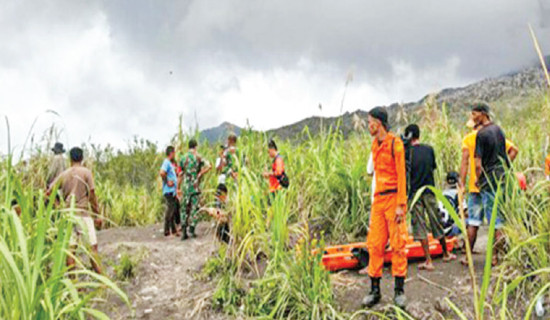
Bajhang, being one of the most remote districts, certainly has no earthquake-resilient structures. The same is the case with its neighbouring districts. A lack of earthquake-resistant infrastructures, difficulty in disbursing immediate relief materials owing to a lack of transportation facilities, a lack of good communication networks, limited medical professionals and essential medicines complicate the rescue and relief operation and reconstruction works.
Prime Minister Pushpa Kamal Dahal Prachanda visited Bahjang on Friday, and announced immediate relief package of Rs.50,000 per family to the victims for the construction of temporary shelters. He assured that the government would assess the damage to estimate the number of houses needing maintenance, retrofitting and reconstruction. After inspecting the damage, the Prime Minister announced a 14-point relief aid package, rehabilitation and reconstruction plan. Relief materials such as tents, blankets, medicines, clothes and other essential items to the victims, including the people with disabilities have been managed. In case of the need for additional support they will be arranged in coordination with all three-level of the government.
It is essential to make sure that the actual victims get the relief packages. Delays in getting aid can result in the loss of lives and healthy people getting sick. When we talk of staying prepared for devastating jolts, there should be a plan in place regarding what kind of steps will be taken in the event of a big earthquake. This includes search and rescue operations, medical treatment, provide temporary shelters, supply of safe water and food and rehabilitation. The local level government has an important role to play in this mission. Mobilisation of necessary manpower and logistics is important. In order to minimise the impact of the disaster, public awareness programmes related to precautions and safety measures need to be conducted. Safety drills should be conducted for students at schools. Students and teachers should take leading role regarding quake safety education. The topic should also be included in the school curriculum. Efficient use of communication gadgets such as mobile during emergency hours can assist the rescuers and save many lives.