- Monday, 11 May 2026

Economic Growth Prospect

Nepal’s economy is gradually getting back on track. The country’s economic projections, made by global and regional lending agencies, indicate satisfactory improvement in overall financial performance. On Tuesday, the World Bank (WB) said that Nepali economy would rebound to 3.9 per cent in the current Fiscal Year 2023/24. However, this projection stands lower than the government’s growth projection of 6 per cent made in this year’s budget. The WB also downgrades the projection of Asian Development Bank (ADB) that puts Nepal’s economic growth at 4.3 per cent (at market prices) two week back. In the last fiscal year, the economic growth was barely 1.9 per cent against the government’s target to achieve 8 per cent. There is a gap between the goal and outcome. The successive governments aim to secure higher growth but prevailing economic trends and performance are not supporting such ambitious targets.
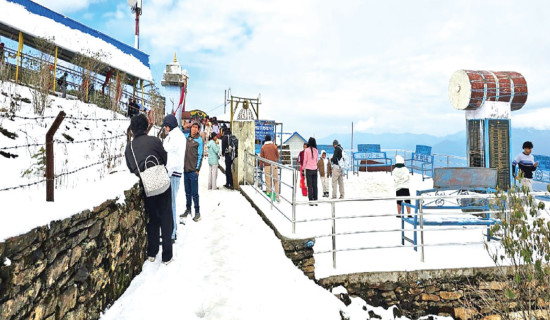
This contradiction should be a stark reminder of the unfavourable situation that needs to be addressed through pragmatic and rational approach. The WB’s forecast shows the economy is on recovery path, overcoming the negative repercussions of lingering recession. With the Russia-Ukraine conflict, prices of petroleum products have soared, which have in turn led to spike in the prices of goods. The people have to spend a large chunk of their savings in food, energy and other basic supplies. The runaway inflation has affected economy both at macro and micro levels. Against this backdrop, the WB's enhanced growth forecast is positive for the national economy. It has mentioned the lagged impact of the lifting of import restrictions, strong rebound in tourism, and gradual relaxing of monetary policy for the improved growth.
The WB has also predicted that Nepal will achieve around 5 per cent growth in the coming FY 2024/25. However, the multilateral donor has warned of various risks that could hurt the growth prospect. Nepal has of late witnessed erratic monsoon, affecting the agriculture production. The renewed increase in commodity prices or continued food export bans by India will further lead to higher inflation and increase in domestic debt servicing costs. The WB's report paints the country's declining competitiveness at regional level. Its total exports stand at 6.9 per cent of the GDP in FY 2022/23. That is only a third of the exports of other South Asian middle-income countries on average. Another important point is the labour productivity deficit that Nepal is facing in all three sectors – agriculture, industry, and services – compared to peer countries and its main trading partner, India. Most of the youths – educated and semi-skilled – are leaving for foreign nations for work and education.
The industrial and service sectors have been projected to grow by 3.2 per and 5.1 per cent respectively. Last year the both sectors registered lacklustre 0.6 per cent and 2.3 per cent growth respectively. The industry will grow by 6.3 per cent for the next fiscal while service sector will see 5.9 per cent growth. The industry and service sectors form vital components of economy but the role of agriculture can't be underestimated. For this fiscal, agriculture growth will see 2.1 per cent against the expansion rate of 2.7 per cent last year. Even in the coming fiscal year, it will be confined to 2.5 per cent. The inflation rate for this year is estimated at 7.5 per cent. The country must boost domestic productivity and reduce inflation to improve external competitiveness essential for fast recovery and attaining green, resilient and inclusive development.