- Monday, 11 May 2026

Removing Fukushima's melted nuclear fuel more tougher

Okuma, Japan, Aug. 29: At a small section of the Fukushima Daiichi nuclear plant's central control room, the treated water transfer switch is on. A graph on a computer monitor nearby shows a steady decrease of water levels as treated radioactive wastewater is diluted and released into the Pacific Ocean.
In the coastal area of the plant, two seawater pumps are in action, gushing torrents of seawater through sky blue pipes into the big header where the treated water, which comes down through a much thinner black pipe from the hilltop tanks, is diluted hundreds of times before the release.
The sound of the treated and diluted radioactive water flowing into an underground secondary pool was heard from beneath the ground as media, including The Associated Press, toured the plant in northeastern Japan for the first time since the water release began.
"The best way to eliminate the contaminated water is to remove the melted fuel debris," said Tokyo Electric Power Company Holdings spokesperson Kenichi Takahara, who escorted Sunday's media tour for foreign media.
But Takahara said the scarcity of information from inside the nuclear reactors makes planning and development of the necessary robotic technology and a facility for the melted fuel removal extremely difficult.
"Removal of the melted fuel debris is not like we can just take it out and be finished," he said.
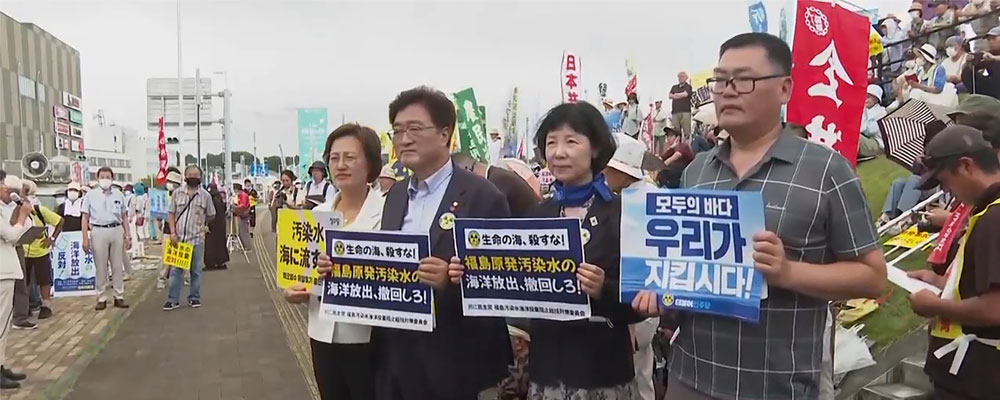
The projected decades-long release of treated water has been strongly opposed by fishing groups and criticized by neighboring countries. China immediately banned imports of seafood from Japan in response. In Seoul, thousands of South Koreans rallied over the weekend to condemn the release, demanding Japan to keep it in tanks.
Japan's Foreign Ministry on Sunday issued a travel advisory to Japanese citizens to use extra caution while in China. It said act of harassment, including massive phone calls, have targeted to the Japanese embassy, consulate and Japanese schools in China, and it urged Japanese in China to stay away from those places and from protests of the water release, and not to talk loudly in Japanese to avoid attention.
Managing the ever-growing volume of radioactive wastewater held in more than 1,000 tanks has been a safety risk and a burden since the plant was wrecked by a massive earthquake and tsunami on March 11, 2011. The tanks are already filled to 98% of their 1.37 million-ton capacity.
Releasing the water into the sea is a milestone for the decommissioning of the plant, which is expected to take decades. But it is just the beginning of the challenges ahead, such as the removal of the fatally radioactive melted fuel debris that remains in the three damaged reactors, a daunting task if ever accomplished.
The plant's operator, Tokyo Electric Power Company Holdings, started releasing the first batch of 7,800 tons from 10 of the group B tanks, among the least radioactive water at the plant. (AP)