- Monday, 11 May 2026

Passengers leave hantavirus-hit cruise ship in Spain
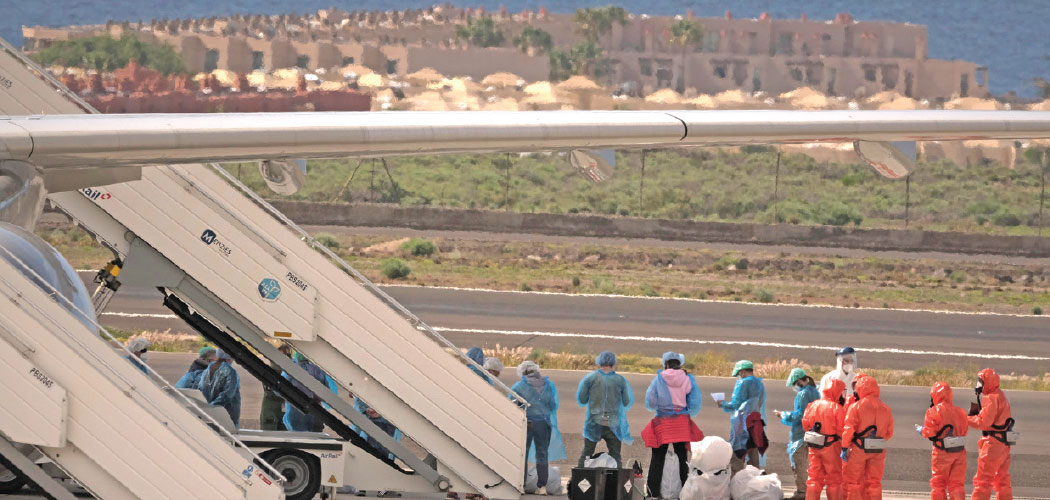

Tenerife, Canary Islands, May 11: Passengers started disembarking on Sunday from the hantavirus-hit cruise ship anchored off Tenerife in Spain's Canary Islands, hours after arriving there as evacuation plans got underway.
An Associated Press journalist at the scene saw people reaching land after leaving the ship. Nobody among the more than 140 people on the MV Hondius is showing symptoms of the virus, Spanish authorities, the World Health Organization and cruise company Oceanwide Expeditions said.
Those disembarking and personnel working at the port of Granadilla in Tenerife were wearing protective gear during the evacuation process, including face masks, hazmat suits and respirators.
Spanish nationals were the first to leave the ship, authorities said, and were ferried off in small launch boats that carry between five and 10 people.
The cruise ship reached Tenerife early Sunday morning, after leaving Cape Verde on May 6.
Three people have died since the outbreak, and five passengers who left the ship are infected with hantavirus, which can cause life-threatening illness.
Everyone disembarking will be checked for symptoms, and are being taken off the ship only once evacuation flights are ready to fly them to their destinations.
"The entire operation is proceeding normally," Spanish Health Minister Mónica García said.
Authorities are aiming to complete the evacuation flights between Sunday and Monday. There are people of more than 20 different nationalities on board.
WHO Director-General Tedros Adhanom Ghebreyesus, along with Spain's health and interior ministers, will supervise the operation in Tenerife, the largest of Spain's Canary Islands off the coast of West Africa.
Authorities have said the passengers and crew members who will disembark will have no contact with the local population.
Hantavirus usually spreads when people inhale contaminated residue of rodent droppings and isn't easily transmitted between people. But the Andes virus detected in the cruise ship outbreak may be able to spread between people in rare cases. Symptoms usually show between one and eight weeks after exposure.
Passengers and crew members disembarking are leaving behind their luggage, and are allowed to take only a small bag with essential items, a cellphone, charger and documentation.(AP)