- Tuesday, 2 June 2026

We have a lot to offer to tourists: Rishing Chairman
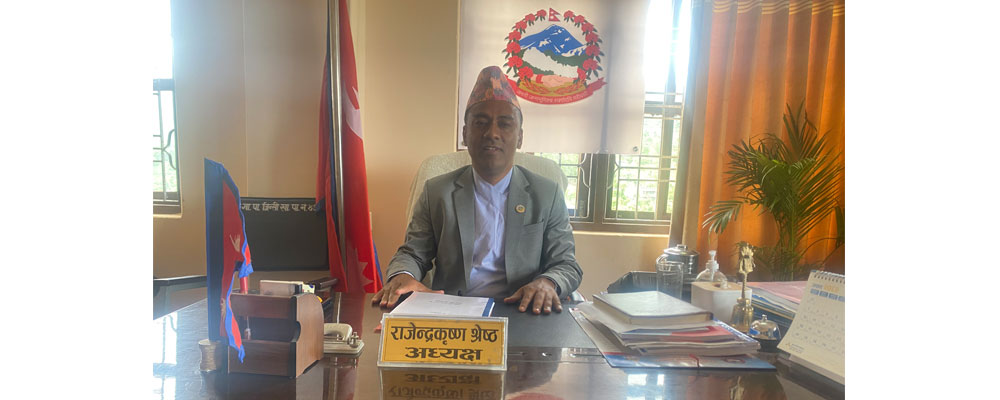

Rishing Rural Municipality is the largest of the six rural municipalities in Tanahun district. It is led by Rajendra Krishna Shrestha, who was elected as the local level's chairman for a second term last year from the Nepali Congress. Since his re-election, Shrestha has reaffirmed his commitment to developing Rishing's agriculture, preserving its culture, promoting tourism and building infrastructure. The Rising Nepal's Amar Raj Naharki talked to him about how he planned to do that. Excerpts:
What changes do you think you have brought in while leading Rishing as it chairman?
As we enter our seventh year in office, I can't help but feel that there have been some changes. We have implemented the 'Return to Rishing' campaign. We have achieved success in replacing thatched roofs and expanding access to electricity. We have built roads to connect Rishing with its neighbouring local levels and districts and a bridge to facilitate travel to the former district of Nawalparasi. Also, in a rural municipality that had nearly no asphalt roads, we have blacktopped the road from Bhirkot to Dubhung.
The rural municipality, today, has a 10-bed hospital. Community health units have been formed. Additionally, we have introduced campaigns like 'One Ward, One Product', 'Mother-in-law, Daughter-in-law' and 'One House, One Tap'.
We are especially proud that we have enabled our students to receive secondary-level education in the rural municipality itself. They do not need to travel far to attend high school now. We have adopted the Shringapath Motor Road and Jhaputar-Kahun Chalise Motor Road as rural municipal pride projects and are working on them with great care. All the wards of our local level are connected by road.
What has the rural municipality focused on?
We have prioritised agriculture and tourism.
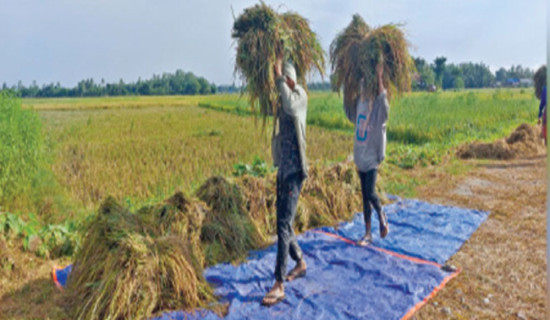
In agriculture, we have taken initiatives to increase the sector's production and productivity by managing fruit orchards, implementing the 'Model Village for Orange Cultivation' programme and providing subsidies to those who cultivate the fallow land. We have set up a land bank by collecting data of all the untilled land within the rural municipality and have been encouraging commercial and intensive farming practices, when and where appropriate.
To increase the production of dairy and meat products, we have made our breed improvement and pasture improvement programmes more effective. We have arranged production-based subsidies and incentives for the husbandry of cows, buffaloes, goats, pigs, fish, chickens and other animals. We have also been providing technological support to agricultural entrepreneurs.
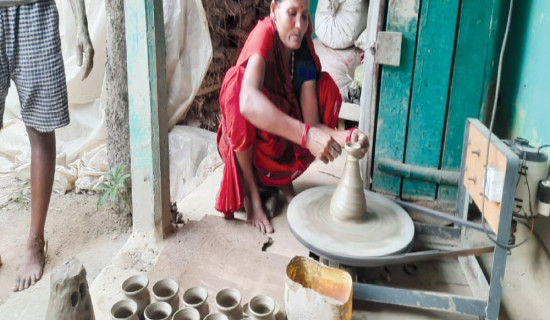
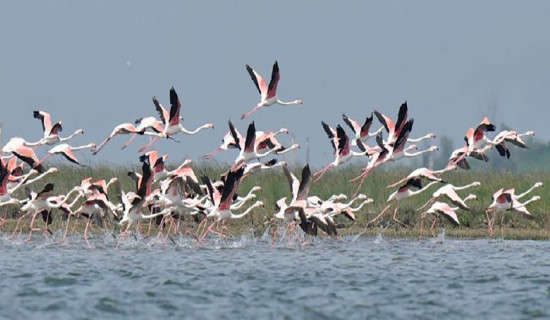
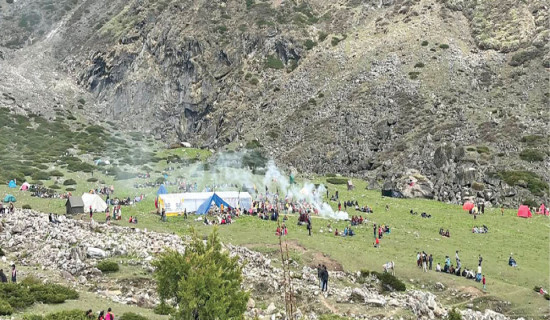
We are building infrastructure to attract tourists to our religious, historical, cultural and natural sites. We have so much to offer. The beautiful Kali Gandaki River flows from Rishing's arms, the banks of the Seti Gandaki River were where historical civilisations flourished, the temples of Ajammari Mai and Gargeshwor are sacred sites like no other, and the Rishing Palace, Rani Pokhari Pond, Bhirkot and Dubhungkot are must-visit destinations. We are currently producing a documentary to promote these places as well as highlight our unique settlements, culture, traditions and lifestyle.
We have made the homestays in Setang and Dubhung better managed.
In the future, we plan on building museums that highlight the identities of the various ethnic groups living in our rural municipality. We also want to boost people's income by promoting commercial production through cooperatives.
Just like the whole country, unemployment is a big problem in Rishing. What plans have you proposed to create jobs for the youths here?
To encourage youths to enter agriculture, we have focused on consolidating land and introducing modern tools and techniques.
We are providing a grant of Rs. 3,000 per Ropani to people cultivating barren land. We are trying to create short and long-term jobs by identifying and exploiting key sectors. We are working to promote self-employment through commercial agriculture and animal husbandry, among other things.
We are also in coordination with the provincial and federal governments to get the Pipaltar Industrial Village completed as soon as possible. If completed, the village will host many factories which will hopefully employ locals.
Can you elaborate on the 'Return to Rishing' campaign you mentioned earlier?
Emigration has left villages empty. The streets are deserted and the lands lie unused. So, we implemented this campaign to bring back people who left for education and jobs. We are providing a subsidy of Rs. 200,000 to the returnees to purchase land and houses. Hopefully, this will make Rishing lively again.
Have you done anything to improve the quality of education here?
We continuously monitor the schools under our jurisdiction and check the work of the teachers and the performance of the students. We have set up electronic attendance systems in schools.
We provide scholarships to best-performing pupils and offer free coaching classes for students studying for the Secondary Education Examination (SEE). We also provide a scholarship of Rs. 500,000 to local students who seek to study MBBS.
Meanwhile, our decisions to merge schools, and add or subtract grades have been based on the number of students.